The Climate Lie: Why Your Smart Thermostat Is A Trojan Horse for Energy Control
Forget high-tech fixes. New data reveals US indoor temperature control is a behavioral battlefield, not a technological one. Who profits from this illusion?
Key Takeaways
- •Behavioral choices in setting US home temperatures significantly outweigh current technological gains in efficiency.
- •Smart thermostat adoption is primarily beneficial for utility grid management (demand response), not just consumer savings.
- •The cultural expectation of extreme indoor comfort resists technological nudges toward energy moderation.
- •Future energy policy will likely move toward mandatory, less user-overrideable temperature controls.
The Climate Lie: Why Your Smart Thermostat Is A Trojan Horse for Energy Control
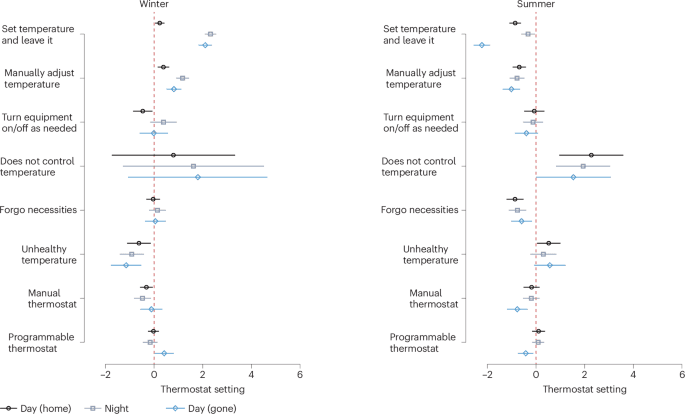
We are being sold a comforting fantasy. The narrative around climate change and energy efficiency dictates that the savior is always a chip, a sensor, or a subscription service. We eagerly purchase the latest smart home technology, believing we are optimizing our lives and battling global warming one degree at a time. But a recent study from Nature drops a cold reality check: behavioral choices are dwarfing the impact of technological advancements on US indoor temperatures.
This isn't about insulation or HVAC efficiency; it’s about the messy, unpredictable human element. We fiddle with the settings. We override the algorithm when we feel a draft. We crank the AC when the neighbors are watching. The massive investment poured into energy technology—smart grids, AI-driven HVAC systems—is being neutralized by the simple, stubborn fact that Americans like to be comfortable, even if it costs them.
The Unspoken Truth: Who Really Wins?
The real winner here isn't the consumer, nor is it necessarily the planet—yet. The winner is the utility provider and the regulatory bodies pushing for demand-response programs. When utilities offer rebates for smart thermostats, they aren't just selling efficiency; they are buying control. They gain the ability to remotely throttle energy usage during peak demand, smoothing out volatility and avoiding costly infrastructure upgrades. The user, meanwhile, gets a slightly lower bill but trades autonomy for convenience.
The technology is merely the Trojan horse. It embeds monitoring and remote access directly into the most intimate space of the modern home. The data generated on when you are home, what temperature you prefer, and how much you are willing to pay for comfort is far more valuable to future energy markets than the marginal kilowatt savings achieved by a few degrees of automated setback. This dependence on smart home systems creates a new form of energy vulnerability.
Deep Analysis: The Culture of Override
Why is behavior so dominant? Because comfort is deeply ingrained in the American psyche, a cultural artifact of cheap, abundant energy. We have normalized extreme indoor temperatures—arctic air conditioning in summer, tropical heat in winter. Technology is trying to gently nudge us back toward historical norms, but human resistance is fierce. People view the thermostat as the final frontier of personal sovereignty. Override features are not bugs; they are critical user requirements.
The failure to achieve predicted energy savings isn't a failure of engineering; it’s a failure of social science integration. We need radical behavioral economics applied to home energy use, not just better software updates. For deeper context on how human behavior shapes energy policy, look at historical energy consumption trends (Source: U.S. Energy Information Administration).
What Happens Next? The Prediction
Expect a regulatory pivot. Since voluntary behavioral change is failing, expect utilities and governments to move toward mandatory, non-overrideable temperature limits during extreme weather events. This will be framed as grid reliability and public safety, but it is a direct response to the behavioral gap highlighted by this Nature study. The next generation of smart devices will feature hardware locks or tiered pricing structures that make overriding the system financially crippling. The era of absolute thermostat freedom is ending, not because of perfect technology, but because imperfect humans refuse to cooperate.
For a look at the economic pressures driving utility infrastructure decisions, see analysis from the Federal Energy Regulatory Commission (FERC).
Frequently Asked Questions
What is the main finding of the Nature study on US indoor temperatures and technology adoption in 2024/2025 timeframe (assuming publication context)? (Target Keyword: US indoor temperatures)
Why are behavioral choices impacting energy use more than smart home technology? (Target Keyword: energy technology)
How does the rise of smart home technology affect utility companies' control over energy distribution? (Target Keyword: smart home technology)
What is the biggest barrier to achieving energy savings through smart thermostats?
Related News

OpenAI's New 'Social Science Scaling' Isn't About Ethics—It's About Control
OpenAI is scaling social science research, but the unspoken truth is this isn't about safety; it's about preemptive regulatory capture.

The Hidden Cost of 'Data Science for Education': Why This Fellowship Signals a Quiet Tech Takeover of Our Schools
The appointment of Jennifer Noble as a Data Science for Education Fellow isn't just an honor; it's a roadmap for the future of **educational technology**.

The Digital Divide Isn't About Access; It's About Exploitation: The Hidden Cost for Seniors
The push for 'digital inclusion' for older adults masks a darker truth: engineered obsolescence and data harvesting.
