Zhuoyu's Double Deal: The Hidden War for Automotive Data Control You Haven't Seen
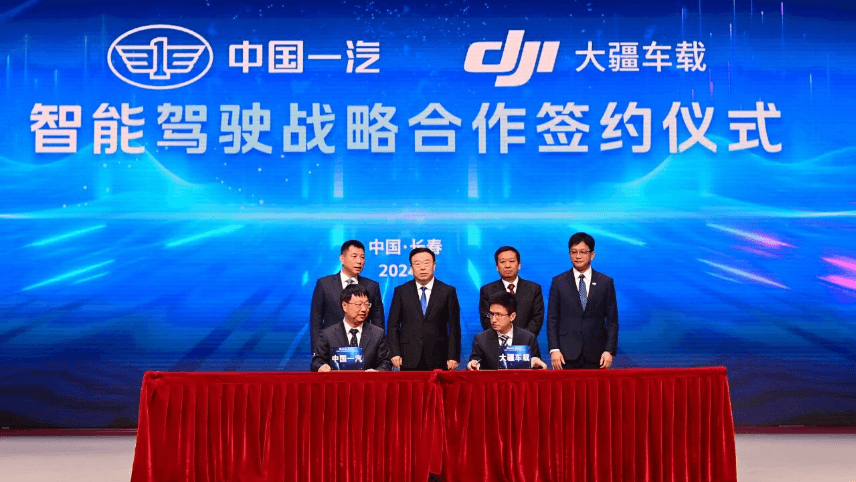
Zhuoyu Technology's dual partnerships signal a dark consolidation in the automotive tech space. Is this about hardware or data dominance?
Key Takeaways
- •Zhuoyu's rapid double partnership suggests strategic desperation to lock down market access before larger rivals consolidate.
- •The true goal is controlling data pipelines and establishing regulatory insulation, not just component supply.
- •This high-velocity expansion risks severe integration indigestion if both partnerships aren't perfectly aligned.
- •The move signals further consolidation, squeezing out smaller, specialized automotive tech suppliers.
The Hook: Why Two Deals in 24 Hours Scream Desperation, Not Triumph
In the frenetic world of automotive technology, speed often masks strategy. When Zhuoyu Technology announced two significant partnerships in a single day, the industry noise machine immediately spun it as a massive win. But a closer look at this rapid-fire maneuvering reveals something far more cynical: a frantic scramble for market share in the increasingly valuable domain of intelligent vehicle networks. This isn't just about winning contracts; it's about controlling the data pipelines that will define mobility for the next decade. The real story isn't the deals themselves, but who is being cut out.
The surface narrative suggests Zhuoyu is solidifying its position as a key supplier in the evolving automotive electronics sector. They secured alliances that seemingly bolster both their hardware integration capabilities and their software deployment reach. But the sheer velocity of these announcements—two major moves back-to-back—suggests a strategic imperative driven by fear. They are attempting to lock down necessary infrastructure before larger, better-capitalized competitors (like established Tier 1 suppliers or tech giants) can choke off their access points. This is defensive expansion masquerading as offense.
The Unspoken Truth: Data Moats and Regulatory Arbitrage
The true battleground in modern automotive tech isn't horsepower; it's the terabyte. Every sensor reading, every user preference logged, and every OTA update transmitted is digital gold. Zhuoyu’s move appears designed to construct an unassailable data moat. By partnering across different segments simultaneously, they are aiming to create redundancy and increase the switching cost for OEMs. If you integrate Zhuoyu's stack, you are not just buying a component; you are buying into an ecosystem that becomes exponentially harder to disentangle later.
Furthermore, consider the regulatory landscape. As governments worldwide grapple with data localization and cross-border data transfer rules (a major concern in the global auto market), establishing footholds via localized partnerships offers a crucial layer of insulation. The hidden agenda here is regulatory arbitrage—using these dual agreements to ensure compliance across disparate jurisdictions, positioning Zhuoyu as the 'safe' middleman when data sovereignty becomes the ultimate gatekeeper. This is the secret sauce behind their aggressive timeline.
Why This Matters: The Death of the Boutique Supplier
For years, the automotive supply chain has been dominated by legacy giants. Now, the shift to electric and autonomous vehicles favors software-defined architectures. Zhuoyu is attempting to leapfrog the legacy structure entirely. However, this strategy carries immense risk. Spreading resources thin across two major, simultaneous integrations increases the probability of failure in one or both. If either partnership falters due to technical incompatibility or internal friction, the resulting fallout could be catastrophic, revealing the fragility beneath the surface confidence. We are witnessing the high-stakes gamble required for mid-sized players to survive the industry's seismic shift. For more on the historical pressures forcing consolidation in tech, see the analysis from the [U.S. Department of Justice on antitrust concerns](https://www.justice.gov/atr/antitrust-guidance-and-enforcement-policy).
Where Do We Go From Here? The Prediction
The next 18 months will reveal the true cost of this speed. Prediction: One of these two new partnerships will become the primary focus, while the other will quietly atrophy or be fully absorbed, becoming a footnote in Zhuoyu’s eventual core offering. The market cannot sustain two equally weighted, diverse strategic thrusts. I predict the partnership focused on deeper vehicle operating system integration will win out, forcing the other partner to adopt a subservient, component-supplier role, effectively turning their 'alliance' into a client relationship. The industry will then watch to see if Zhuoyu can digest this rapid expansion without succumbing to integration indigestion.
The race for control over intelligent vehicle networks is heating up, and Zhuoyu just made a bold, perhaps reckless, opening move. The losers won't be the OEMs who buy the tech, but the smaller, specialized firms who can no longer compete against this newly consolidated front.
Gallery





Frequently Asked Questions
What is Zhuoyu Technology's core business focus?
Zhuoyu Technology primarily focuses on providing advanced solutions within the automotive electronics sector, often specializing in connectivity, software platforms, and integrated smart cockpit systems for modern vehicles.
Why is data control so critical in the new automotive industry?
Data control is critical because vehicle data fuels AI training, enables over-the-air updates (OTA), provides valuable consumer insights for monetization, and is central to developing fully autonomous driving capabilities, making it the most valuable asset in a connected car.
Are these partnerships a sign of market strength or weakness?
They are a high-risk maneuver. While they signal ambition, the speed suggests Zhuoyu feels significant pressure from larger competitors and is attempting to rapidly build scale and redundancy before being locked out of key supply chains.
What is the primary risk associated with Zhuoyu's strategy?
The primary risk is 'integration debt'—the difficulty and cost associated with successfully merging two distinct strategic pathways simultaneously, which can lead to technical failures or strategic misalignment.


DailyWorld Editorial
AI-Assisted, Human-Reviewed
Reviewed By
DailyWorld Editorial