The Tumbleweed Robot Lie: Why Biomimicry is Hiding the Real Crisis in Autonomous Mobility

Forget cute desert bots. The new tumbleweed robot signals a desperate pivot in **autonomous systems** away from complex AI toward brute-force, low-power **robotics design**. This is the unspoken truth.
Key Takeaways
- •The tumbleweed robot is an admission that complex AI mobility is currently too computationally expensive and brittle for unstructured environments.
- •This trend favors cheap, passive, mechanical solutions for remote inspection over advanced AI development.
- •The immediate winner will be industries requiring low-power surveillance in arid or remote locations.
- •True urban autonomy research may slow down as funding shifts to these simpler, 'successful' biomimetic models.
The Tumbleweed Robot Lie: Why Biomimicry is Hiding the Real Crisis in Autonomous Mobility
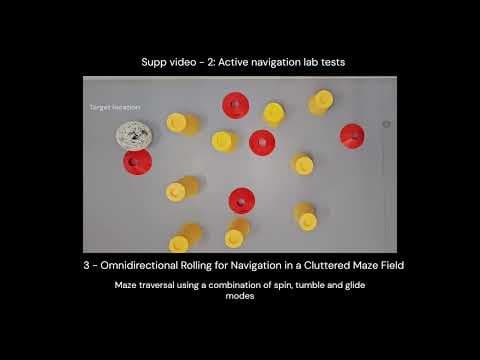
We are being sold a vision of elegant, nature-inspired engineering: a robot that rolls like a tumbleweed. It sounds whimsical, efficient, and green. But beneath the surface of this latest **biomimicry** headline from Popular Science lies a deeply troubling admission: the AI revolution has hit a wall. This isn't about celebrating clever engineering; it’s about recognizing retreat. When engineers turn to the most basic, non-sentient, wind-driven object in the ecosystem—the dead plant—to solve mobility challenges, it signals a failure to scale complex perception systems like LIDAR and advanced pathfinding algorithms in unpredictable environments. The goal isn't resilience; it’s **cost reduction** and avoiding the computational nightmare of real-time decision-making. ### The Unspoken Truth: AI Fatigue and the Return to Mechanical Simplicity The real story here is the budget crunch and the computational impasse facing last-mile delivery and off-road exploration. True generalized autonomous systems require immense power and processing, leading to high failure rates in unstructured terrain—think mud, snow, or dense urban clutter. The tumbleweed robot circumvents this entirely. It doesn't *think*; it *reacts* to physics. It’s a sophisticated passive system masquerading as an active one. Who wins? The defense contractors and logistics firms who can deploy cheap, low-maintenance inspection units across vast, empty tracts of land (like border surveillance or agricultural monitoring) where power sources are scarce. Who loses? The consumer expecting true, general-purpose autonomous vehicles. This robot proves that for now, the dirty, complex world still requires complex, expensive processing, and nature’s low-tech solutions are only viable for the simplest tasks. ### Why This Matters: The Stagnation of 'True' Autonomy We are witnessing a bifurcation in **robotics design**. On one side, you have the multi-billion dollar pursuit of Level 5 autonomy, which remains perpetually five years away. On the other, you have these biomimetic curiosities, which are incredibly effective at one narrow task: rolling when pushed or blown. This pivot toward passive mechanics suggests a chilling reality: perhaps true, generalized AI mobility is fundamentally harder than we anticipated, forcing innovation backward into simpler, more robust mechanical analogues. It’s a concession that the digital solution is currently too brittle for the physical world. Look at the history of automation; this pattern—retreating to simpler mechanics when computation fails—is common, but rarely celebrated this loudly. (For context on the challenges of robust field robotics, see the foundational work in Wikipedia’s entry on **robotics**.) ### What Happens Next? The Desertification of Robotics My prediction is that we will see a massive influx of 'dumb' biomimetic designs targeting arid, low-infrastructure environments first. Instead of Mars rovers, expect these rolling systems to dominate desert agriculture, pipeline inspection across remote areas, and even specialized military reconnaissance where signal jamming makes complex communication impossible. The next iteration won't just roll; it will burrow or inflate using similar passive principles. However, this success will lull investors into believing they have solved the autonomy problem, slowing investment in the computationally intensive research required for urban, high-density autonomous navigation. The gap between 'dumb' field robots and 'smart' city robots will widen dramatically. This is not innovation; it’s pragmatic capitulation to the laws of physics where computing power fails.

Gallery
Frequently Asked Questions
What is the main advantage of a tumbleweed-inspired robot?
The primary advantage is extreme energy efficiency and resilience. By relying on external forces like wind or slopes for movement rather than complex internal motors and batteries, these robots can operate for long periods in remote areas with minimal power requirements.
Why is this considered a step back for robotics?
Critics argue it is a step back because it sidesteps the core challenge of robotics: advanced perception, decision-making, and path planning (AI). Instead of solving complex navigation problems digitally, it reverts to a purely passive, physics-driven mechanism.
What is biomimicry in robotics?
Biomimicry is the practice of looking to nature for design inspiration. In this context, engineers mimic the aerodynamic shape and passive rolling motion of a natural tumbleweed to solve engineering problems related to mobility and stability.
Which industries are most likely to adopt this technology first?
Industries needing wide-area, low-maintenance monitoring in hostile or remote environments, such as agriculture (crop monitoring), border security, and infrastructure inspection across deserts or large fields, are the most likely early adopters.