The Trust Paradox: Why Science's Diversity Push Might Be Cracking Public Faith
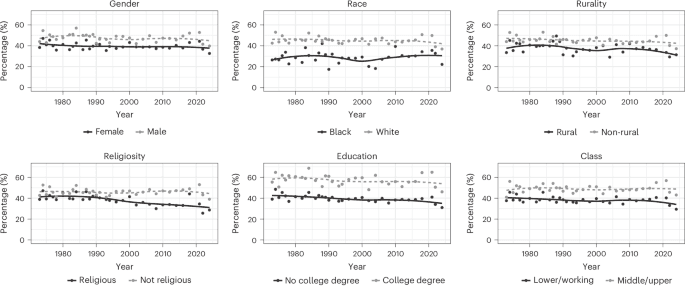
The push for diversity in science is laudable, but the hidden cost is a dangerous erosion of public trust in scientific authority. Analyze the data.
Key Takeaways
- •The immediate focus on demographic shifts in science risks alienating segments of the public who prioritize perceived institutional neutrality.
- •A failure in institutional messaging is turning necessary diversity efforts into perceived political mandates, eroding generalized public confidence.
- •Scientific bodies will likely pivot to showcasing 'apolitical' breakthroughs to quietly rebuild generalized trust before tackling complex social issues.
- •Low public trust makes implementing critical scientific consensus on issues like climate change or public health significantly harder.
The narrative is simple: Increase representation in science, and trust will follow. But the latest data emerging from studies on public trust in scientists suggests a far more volatile reality. We are witnessing a critical juncture in American science where the pursuit of equity clashes, perhaps unintentionally, with the bedrock of public confidence. This isn't about whether diversity is good—it is—but about the *timing* and *implementation* of these sweeping changes within institutions that already struggle with transparency.
The Unspoken Truth: Representation vs. Perceived Expertise
The core issue, largely ignored by institutional PR machines, is that shifting demographics within the scientific community, when paired with highly publicized internal conflicts or perceived political alignment, can create a **trust deficit**. When the public sees institutions prioritizing demographic shifts over, say, radical transparency in funding or methodology, the message received is often: 'The agenda has changed.' This is the hidden agenda nobody wants to discuss. The goal of increasing science representation is crucial for innovation, but if the primary communication strategy feels like a political mandate rather than a commitment to objective truth, the entire enterprise suffers.
Consider the data. While marginalized groups are often those who *need* to trust science most—regarding health outcomes or environmental justice—they are also the groups most rightly skeptical of historical institutional failures. A sudden, visible overhaul of who is speaking can be interpreted by the skeptical majority as 'politics entering the lab,' further fueling the anti-expert sentiment already rampant on social media. This creates a dangerous feedback loop. We are trading perceived institutional neutrality for demographic optics, and the market—the public—is currently valuing neutrality over representation.
Why This Matters: The Fragility of Scientific Authority
Scientific authority, unlike political power, is not inherited; it must be constantly earned through consensus and predictability. When the public sees high-profile scientists publicly embroiled in ideological battles, or when funding priorities seem dictated by cultural trends rather than pure scientific merit (as perceived by the layman), the entire edifice of science communication wobbles. This isn't a failure of science itself, but a failure of institutional management during a period of intense cultural flux. The institutions that manage this transition—like major universities and federal agencies—are becoming political actors in the eyes of many citizens. See the ongoing debates around funding transparency, for example, often discussed in reports from organizations like the National Institutes of Health (NIH).
The most significant danger is the creation of two parallel scientific realities: one highly diverse and culturally competent within academia, and one increasingly skeptical and fragmented outside of it. This bifurcation makes addressing national crises—from pandemics to climate change—exponentially harder, regardless of how scientifically sound the advice is.
What Happens Next? The Great Scientific Retreat
My prediction is that we will see a tactical retreat by major scientific bodies over the next five years. Faced with sustained, low-level public distrust that hampers policy adoption, institutions will pivot away from overtly political communication surrounding diversity initiatives. Instead, they will double down on hyper-specific, non-controversial scientific wins—think medical breakthroughs or engineering feats—to slowly rebuild generalized trust. Expect a surge in funding announcements directed toward 'apolitical' areas like fundamental physics or materials science, used as Trojan horses to re-establish the image of science as purely objective. This quiet rebuilding will be necessary before the more complex, socially embedded issues of equity and representation can be effectively communicated without triggering immediate backlash.
The battle for science representation is not over, but the battle for *public belief* is currently being lost due to clumsy messaging. Only by demonstrating unimpeachable, tangible results can the institutions regain the high ground.
Gallery
Frequently Asked Questions
What is the primary threat to public trust in scientists today?
The primary threat is the perception that scientific institutions are prioritizing cultural or political agendas over objective, transparent methodology, especially when coupled with historical skepticism from certain demographics.
How does representation in science affect public trust?
Ideally, it should increase trust by making science relatable. However, if representation changes are perceived as forced or politicized before foundational trust is established, it can trigger a backlash among segments of the public who feel excluded or alienated by the perceived shift in institutional values.
What does 'science representation' actually mean in this context?
It refers to increasing the proportion of researchers, leaders, and communicators in scientific fields who come from historically underrepresented groups, including women, racial and ethnic minorities, and those from diverse socioeconomic backgrounds.
Are trust levels different across different scientific fields?
Yes. Generally, fields perceived as having direct, tangible benefits (like medicine or engineering) often retain higher public trust than fields dealing with complex, long-term, or politically charged issues (like climate modeling or certain areas of social science).
Related News
Hawking's Final Theory Isn't About Black Holes—It's About Who Controls Scientific Legacy
The true battle over Stephen Hawking's final theory isn't physics; it's about legacy curation and the multi-million dollar industry of posthumous genius.

The Hidden Cost of Compassion: Why Local Charity Support for Stem Cell Science is a Trojan Horse
Local support for stem cell research hides a massive ethical and economic battleground. Who truly profits from this 'good cause'?

The Real Reason Scientists Are Backpedaling on Intermittent Fasting: It's Not About Your Health
Intermittent fasting studies are facing a scientific reckoning. Discover the hidden conflict behind the sudden shift in the intermittent fasting debate.
