The Silicon Shield: Why Taiwan's Chip Dominance Is the World's Most Dangerous Geopolitical Asset
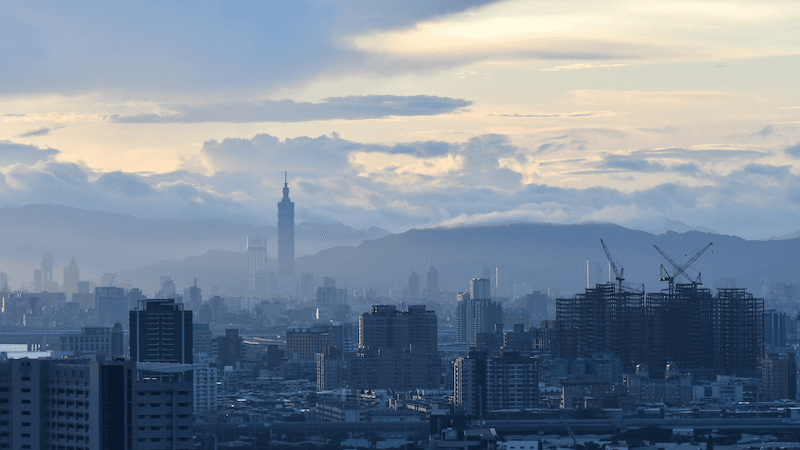
Forget missiles. Taiwan's true global leverage lies in **semiconductor manufacturing**. This is the real choke point.
Key Takeaways
- •Taiwan controls the critical, leading-edge nodes of global chip production, making it indispensable.
- •Economic self-preservation among world powers prevents immediate escalation, creating a 'Silicon Shield'.
- •The true winners are the incumbent chipmakers benefiting from massive government incentives for 'friend-shoring'.
- •Diversification efforts will be slow and expensive, failing to match Taiwan's current technological lead soon.
The Hook: The World’s Most Dangerous Factory
We talk endlessly about tanks, treaties, and territorial claims, but the real flashpoint in global power dynamics isn't a naval fleet—it's a silicon wafer. Taiwan, specifically TSMC, doesn't just make chips; it holds the planet hostage. This isn't just about consumer electronics; it’s about military hardware, AI supremacy, and the very backbone of modern civilization. The obsession with **Taiwan technology** supply chains is not paranoia; it's strategic realism.
The Meat: Beyond the Hype of Semiconductor Manufacturing
The narrative usually focuses on the sheer volume of advanced chips coming out of Taiwan. That misses the point. The critical factor is **process leadership**. TSMC isn't just the biggest; they are years ahead in extreme ultraviolet (EUV) lithography and sub-5nm nodes. This isn't a commodity market; it’s an oligopoly where one entity holds the keys to the kingdom. If TSMC stops, the global economy doesn't slow down; it enters a hard reboot. Every advanced server, every cutting-edge fighter jet, and every next-generation smartphone relies on this single, geographically precarious island.
The Unspoken Truth: Who Really Wins When Supply Lines Fray?
The hidden beneficiary of this tension isn't the US or China—it’s the established oligopoly itself. Massive government subsidies poured into 'friend-shoring' (like the US CHIPS Act) will not replicate TSMC's ecosystem overnight. It will take a decade and billions of dollars simply to catch up to the current state. Meanwhile, the guaranteed demand from global powers for supply security inflates the value and negotiating power of existing producers. The real winners are the incumbents who can now demand premium pricing and favorable geopolitical terms for their established, complex infrastructure. **Semiconductor manufacturing** expertise is the new oil, and Taiwan controls the deepest well.
The Why It Matters: The Fragility of Digital Life
The concentration risk is staggering. A natural disaster or, worse, a military blockade instantly cripples everything from Wall Street trading algorithms to critical medical devices. This fragility forces global diplomacy into a bizarre stalemate. Major powers are hesitant to escalate tensions because the economic fallout of disrupting advanced **Taiwan technology** production would trigger a depression far worse than 2008. This dependence grants Taipei an outsized, albeit passive, defensive moat. It turns the island into an economic nuclear deterrent.
What Happens Next? A Prediction
We will see a rapid, but ultimately insufficient, geographical diversification effort over the next five years. Intel and Samsung will spend fortunes building 'equivalent' fabs in Arizona and South Korea. However, the 'Silicon Shield' will remain largely intact. Why? Because the talent density and proprietary supply chain integration in Taiwan are non-replicable in the short term. My prediction is that geopolitical posturing will intensify, but direct kinetic conflict becomes less likely, not more. The cost of winning militarily is now inextricably linked to the cost of global economic suicide. The world has tacitly agreed to protect the factories, even if the politics remain volatile.
Key Takeaways (TL;DR)
- Taiwan's strategic value is defined by its sub-5nm **semiconductor manufacturing** monopoly, not just its location.
- Global efforts to diversify supply chains will take over a decade to significantly reduce reliance on TSMC.
- The economic interdependence created by advanced **Taiwan technology** acts as a powerful, albeit fragile, deterrent against major conflict.
Frequently Asked Questions
What is the primary reason Taiwan dominates the chip industry?
Taiwan, primarily through TSMC, dominates due to unparalleled expertise and massive investment in cutting-edge process technology, especially extreme ultraviolet (EUV) lithography for sub-5nm nodes, which no other company can reliably match at scale.
What does 'Silicon Shield' mean in the context of Taiwan?
The 'Silicon Shield' theory suggests that Taiwan's critical role in the global technology supply chain makes a military invasion prohibitively costly for any aggressor due to the guaranteed, catastrophic global economic collapse that would follow.
How are governments trying to reduce reliance on Taiwan technology?
Governments like the US (via the CHIPS Act) and the EU are offering massive subsidies to encourage domestic or allied 'friend-shoring' of advanced semiconductor manufacturing facilities, although these fabs take years to become operational and match current output.
Is semiconductor manufacturing an oligopoly?
Yes, the production of the most advanced logic chips (under 7nm) is effectively an oligopoly dominated by TSMC, with Samsung as the only other current competitor at that leading edge, and Intel working to catch up.
Related News

The Irish Tech Boom Isn't Just Alive—It's a Trojan Horse for Global AI Supremacy
Forget the doom-and-gloom narratives. Apple, Microsoft, and OpenAI's massive Irish investments signal a dangerous, hyper-concentrated shift in global **technology employment**.

The Silicon Curtain: Why Denmark’s Tech Boycott of US Brands Is a Warning Shot to Silicon Valley Giants
Danish consumers are weaponizing consumer choice against US politics, using technology as their primary tool. This isn't just a boycott; it's a geopolitical shift.
The $22 Trillion Shadow: Why Sovereign Funds Are Buying Your Future Tech (And Who They Really Serve)
The surge of sovereign wealth funds into tech at $22.5trn signals a geopolitical shift, not just an investment trend. Analyze the hidden winners.

DailyWorld Editorial
AI-Assisted, Human-Reviewed
Reviewed By
DailyWorld Editorial