The Secret War for the Shelf: Why PepsiCo's AI Bet Signals the Death of Traditional Supply Chain Management
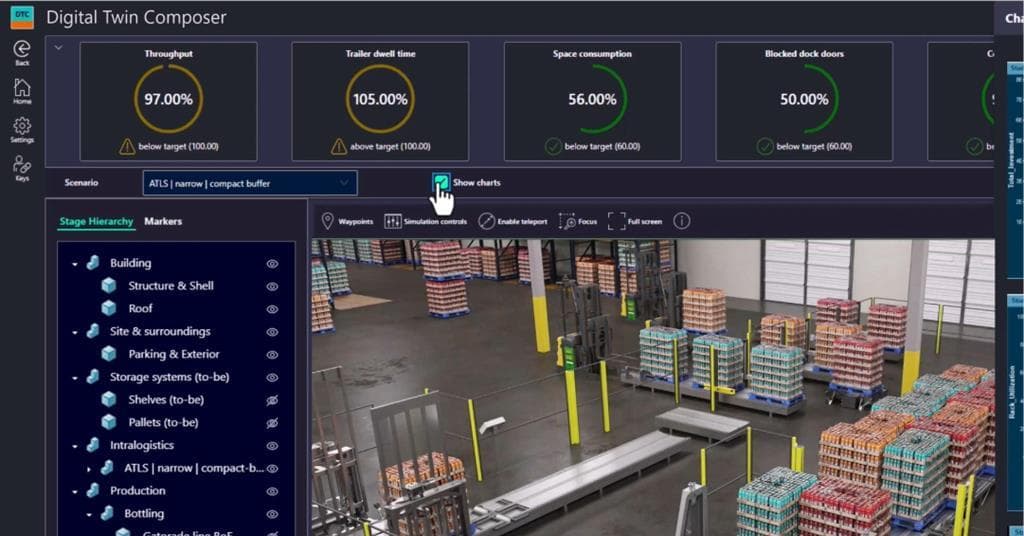
PepsiCo's massive leap into AI and Digital Twins with Siemens and NVIDIA isn't about efficiency; it's about predictive dominance in the volatile world of **consumer goods technology**.
Key Takeaways
- •PepsiCo's partnership focuses on creating a 'digital twin' of its entire global operations, simulating risk.
- •This is an AI arms race move to achieve predictive dominance over competitors relying on reactive supply chain methods.
- •The biggest winner, operationally, is NVIDIA, solidifying its dominance in industrial AI simulation platforms.
- •Expect this technology to drive hyper-localized, on-demand production within the next five years.
The Hook: When Bottling Soda Becomes Quantum Physics
Everyone is talking about PepsiCo’s new partnership with Siemens and NVIDIA to deploy AI and digital twin technology across its operations. On the surface, it sounds like standard corporate optimization—a push for better inventory management and faster production lines. That’s the press release narrative. The *unspoken truth* is far more chilling: This is a declaration of war on the inherent chaos of the global supply chain, and it’s a move designed to choke out smaller, less technologically agile competitors.
This isn't just about making sure you have enough Mountain Dew on the shelf; this is about perfecting the entire lifecycle of a product, from raw material sourcing to the final moment of purchase, all simulated flawlessly inside a virtual environment. The key players here—Siemens (industrial automation expertise) and NVIDIA (the engine of modern AI computation)—signal that PepsiCo is building a moat of predictive power that few in the consumer goods technology space can cross.
The Meat: Beyond Efficiency—The Pursuit of Omniscience
Why the urgency? Because the last three years exposed the fragility of 'just-in-time' manufacturing. A port closure in Asia, a trucker shortage, or a sudden spike in sugar prices—these variables used to be managed reactively. Now, PepsiCo is attempting to manage them proactively.
The digital twin, in this context, is not a 3D model of a factory floor. It’s a living, breathing, synthetic replica of PepsiCo's entire global footprint. Imagine simulating the impact of a 20% tariff hike on aluminum foil in Q3, testing dozens of mitigation strategies in the twin before committing real capital. This level of simulation capability gives PepsiCo an almost prescient advantage in navigating geopolitical and economic volatility. They are trading massive upfront investment for near-perfect foresight.
The real winner here is arguably **NVIDIA**. Every complex simulation, every AI model trained to optimize packaging lines or predict consumer demand spikes, runs on their GPUs. For PepsiCo, the investment is in operational defense; for NVIDIA, it’s securing their industrial metaverse footprint deep within one of the world's largest CPG empires. This partnership validates the industrial application of high-end compute far beyond gaming or standard cloud services.
The Why It Matters: The End of the Margin Game
For decades, CPG giants competed on shelf space, marketing spend, and marginal cost reduction. This shift signals the new competitive axis: Data Supremacy. Companies that can model reality better than their competitors will win, regardless of how catchy their Super Bowl ads are. Smaller beverage companies relying on traditional ERP systems and human intuition will find themselves consistently surprised by market shifts that PepsiCo has already modeled and buffered against.
This move forces the entire industry—from Coca-Cola to Kraft Heinz—to accelerate their own **digital transformation** or face structural obsolescence. It’s an arms race where the weapons are algorithms, not advertising dollars. The danger is that this creates a two-tiered system: the 'Digitally Omniscient' giants and everyone else struggling to keep pace.
Where Do We Go From Here? Prediction: The Hyper-Personalized Shelf
Within five years, this technology won't just optimize production; it will dictate it. My prediction is that PepsiCo will use this granular control to move beyond broad regional forecasting toward hyper-localized, on-demand production. Imagine a digital twin predicting a sudden, localized heatwave in Phoenix driving demand for specific Gatorade flavors by 400% next Tuesday. The system will automatically reroute production capacity, adjust ingredient orders, and schedule logistics *before* the first consumer even checks the weather app. We are moving toward a world where inventory shortages become the exception, not the rule, but only for those who can afford the simulation engine.
This is the future of manufacturing: less about building things, and more about accurately predicting the need for them. It’s fascinating, and frankly, a little terrifying for the incumbents who are still stuck on spreadsheets.
Gallery




Frequently Asked Questions
What exactly is a digital twin in the context of PepsiCo?
A digital twin is a virtual replica of a physical system—in this case, PepsiCo's entire manufacturing, packaging, and distribution network. It allows engineers to run complex simulations (like testing new factory layouts or reacting to sudden supply shocks) without affecting real-world operations.
How does this partnership benefit NVIDIA?
NVIDIA provides the high-performance computing power (GPUs) necessary to run these massive, real-time simulations. This deal validates their industrial metaverse strategy, proving their hardware is essential for optimizing heavy industry operations globally.
Is this technology primarily about reducing costs or improving speed?
While cost reduction and speed are benefits, the primary goal is achieving unprecedented levels of risk mitigation and predictive accuracy. It shifts the focus from reacting to problems to modeling and avoiding them entirely.
Related News

The $10 Billion Lie: Why the Rocky Mountain IP Institute Hides the Real Tech War
The annual Rocky Mountain IP Institute convenes, but the real battle for **technology** dominance isn't in the lecture halls—it's in the shadows of **patent litigation**.

The Addiction Lie: Why YouTube's 'Viewer Value' Claim is Just Genius PR for Surveillance Capitalism
YouTube executives preach 'viewer value,' but the real goal of their massive platform is far darker than mere entertainment.
The $7.8 Billion Bet: Why Gilead's Arcellx Buyout Signals the Death of the Solo CAR-T Dream
Gilead's massive $7.8bn acquisition of Arcellx isn't just about pipeline depth; it’s a brutal market consolidation signal in the competitive **biotech M&A** landscape.

DailyWorld Editorial
AI-Assisted, Human-Reviewed
Reviewed By
DailyWorld Editorial