The Real Target Isn't Climate Science—It's Government Funding Dependence: Unmasking the NCAR Budget Attack
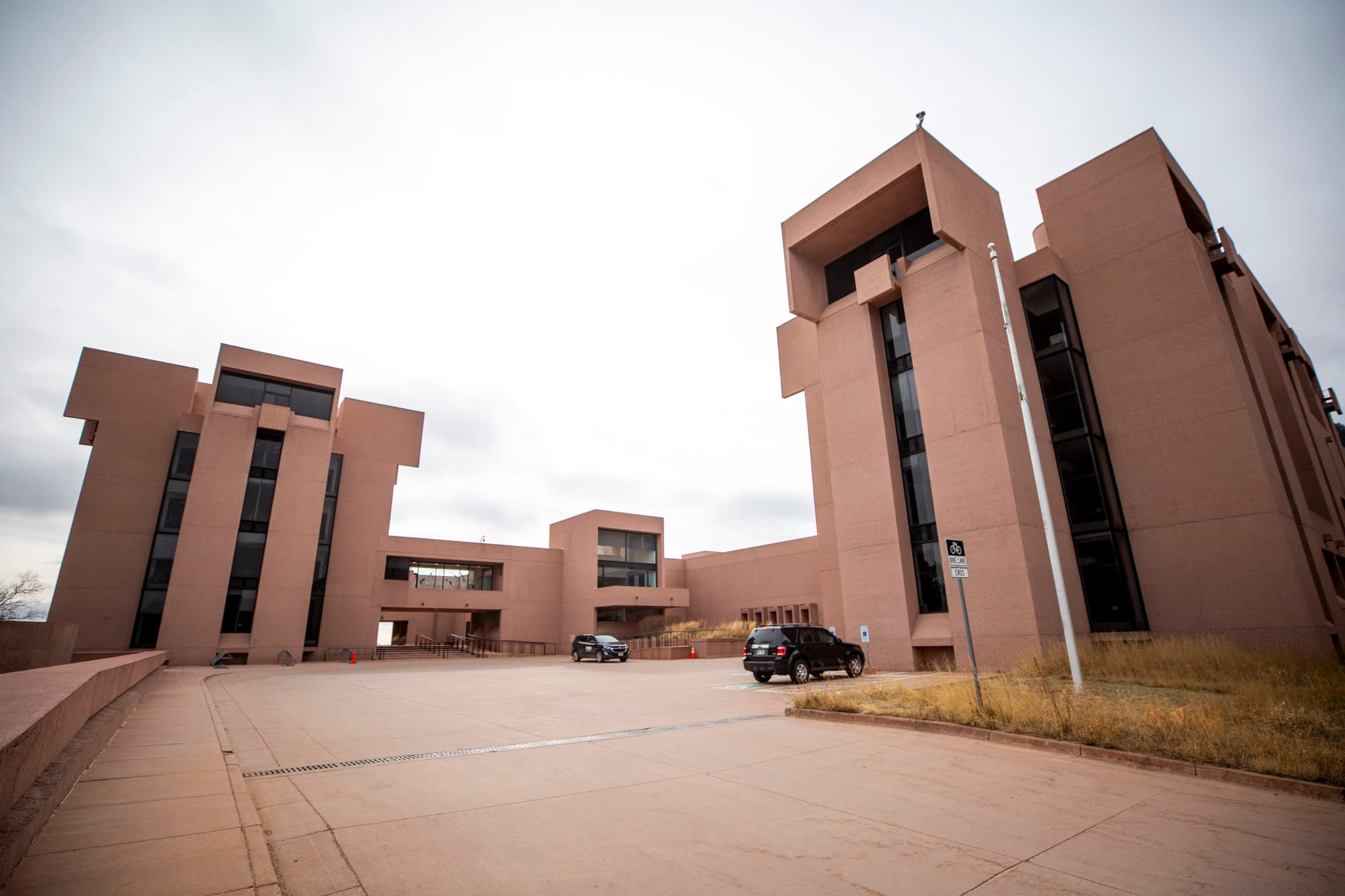
The political assault on NCAR isn't about data; it’s a calculated power play against federal science funding independence. Analyze the hidden agenda.
Key Takeaways
- •The NCAR budget fight signals a political desire to control or fragment centralized federal scientific infrastructure.
- •Weakening NCAR degrades national resilience against complex weather events.
- •The long-term risk is scientific balkanization, leading to fragmented and incomparable research data.
- •This aggressive stance sets a dangerous precedent for future political interference in objective scientific institutions.
The Hook: The Quiet War on the Weather Gods
When the Trump administration targeted the National Center for Atmospheric Research (NCAR) for deep budget cuts, the media framed it as a predictable skirmish over climate change science. That’s the surface noise. The unspoken truth, the real battlefield, is far more cynical: this is a strategic decapitation strike aimed not just at specific research findings, but at the very infrastructure of federal scientific autonomy. This isn't about bad weather models; it's about control over the perception of reality and the flow of taxpayer dollars that fuel American scientific dominance.
The 'Mothership' Under Siege: Beyond Partisan Squabbles
NCAR, headquartered in Boulder, Colorado, is often called the 'mothership' of atmospheric research. It’s where supercomputing meets meteorology, where the foundational models for everything from hurricane tracking to drought prediction are forged. The proposed cuts weren't minor trimming; they were designed to hobble core operations. Why? Because NCAR represents a highly effective, centralized, and largely untouchable hub of government-funded, peer-reviewed research. For political actors seeking to dismantle the administrative state, these independent, influential scientific bodies are prime targets. They produce inconvenient truths.
The scientists rallied, defending their work with data, as expected. But the real defense needs to be political and structural. The immediate casualty won't be the science itself—the talent will simply migrate or scatter. The long-term loser is the nation's baseline capability to predict and prepare for extreme weather events, a capability that underpins agriculture, insurance markets, and national security. This attack on atmospheric research is a direct attack on resilience.
The Hidden Agenda: Funding Autonomy vs. Political Loyalty
Who truly wins when NCAR is weakened? Not the taxpayer, and certainly not the public reliant on accurate forecasts. The winners are those who seek to replace centralized, long-term scientific investment with short-term, politically aligned, or privatized solutions. If the federal government signals it will not protect its premier research institutions, it creates a vacuum. This vacuum is traditionally filled by private industry—which prioritizes profit over public good—or by smaller, fragmented academic projects that lack the computational muscle of a center like NCAR. This move de-legitimizes the very concept of large-scale, non-partisan federal science.
We must understand that budget slashing in science is often a proxy war for ideological dominance. When you undermine the authority of institutions like NCAR, you create fertile ground for misinformation to flourish. If the public cannot trust the objective output of the 'mothership,' they become susceptible to alternative narratives about everything from extreme weather to long-term climate projections. This is classic institutional erosion, a tactic far more potent than simply arguing about the science itself. The keyword here is government funding, and the agenda is shifting who controls the purse strings.
What Happens Next? A Prediction on Scientific Balkanization
The immediate defense of NCAR may succeed in staving off the worst cuts this cycle, thanks to the bipartisan outrage from the scientific community and local political allies. However, the genie is out of the bottle. Future administrations, armed with the precedent set by this attack, will use budget threats as a standard lever against unwelcome scientific findings. My prediction is that we will see accelerated scientific balkanization. Major research efforts will become increasingly siloed. We will see a rise in 'shadow science' initiatives funded by non-governmental organizations or private entities attempting to replicate federal work, leading to fragmented, non-comparable datasets. The coherence of American atmospheric modeling, a global gold standard, will begin to degrade over the next decade, not through malice, but through calculated resource starvation. This is the slow-motion collapse of scientific infrastructure.
Key Takeaways (TL;DR)
- The attack on NCAR is a political move against centralized federal science autonomy, not just a critique of climate data.
- The true beneficiaries are those seeking to replace public research infrastructure with private, profit-driven alternatives.
- Long-term resilience against severe weather will be compromised by undermining core modeling capabilities.
- Expect future administrations to use budget threats as leverage against independent scientific findings.
Frequently Asked Questions
What is the National Center for Atmospheric Research (NCAR)?
NCAR is a federally funded research and development center managed by the University Corporation for Atmospheric Research (UCAR). It is a critical hub for supercomputing, observational studies, and developing the foundational models used globally for weather and climate prediction.
Why are budget cuts to NCAR considered controversial?
Cuts are controversial because NCAR supports fundamental research that underpins public safety (like severe weather warnings) and national infrastructure planning, making it a non-partisan necessity rather than a political luxury.
What is the 'Unspoken Truth' behind the funding threats?
The unspoken truth is that dismantling strong, centralized federal science bodies allows political actors to shift research priorities toward areas that align with short-term political or corporate interests, undermining long-term, objective scientific inquiry.
How does this relate to climate change science specifically?
While the immediate debate focuses on climate models, the strategy targets the entire ecosystem of atmospheric research—including weather forecasting—to diminish the perceived authority of any science that contradicts a specific political narrative.
Related News

The Tiny Typo That Reveals NASA's Real Space Priority: Why 'C.13' Correction Hides a Robotic Power Grab
Forget Mars. NASA's Amendment 49 reveals the hidden focus: **Robotic Innovation** is the new frontier, sidelining bigger missions.

The Invisible Hand Crushing American Science: Who Really Profits From Funding Cuts?
The slow erosion of **science funding** isn't an accident; it's a strategy. Unpacking the hidden winners in the war on **research grants** and **scientific advancement**.

The Culture War Erupts in Yellowstone: Who Really Benefits From Erasing Park Science?
A lawsuit over removing history and science displays in national parks reveals a deeper battle over American narrative and federal land control.
