The Quiet Exit: Why Sonia Patel's NHS CTO Departure Signals a Digital System Collapse
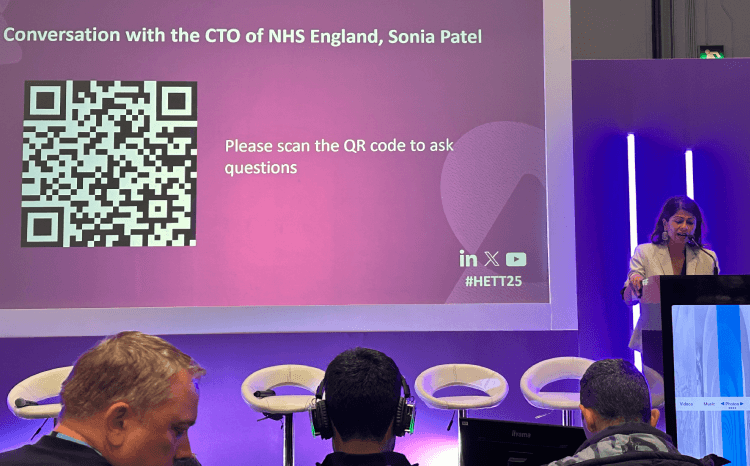
Sonia Patel's exit as NHS England CTO isn't a routine transition; it's a massive red flag for the future of UK digital health.
Key Takeaways
- •Patel's resignation signals deep structural resistance to necessary, large-scale NHS IT modernization.
- •The core conflict remains centralized mandates versus local operational control.
- •Expect a near-term slowdown in major national digital projects as the successor assesses the 'landscape'.
- •The failure highlights governance issues, not just technical capability, in transforming public sector technology.
The Quiet Exit: Why Sonia Patel's NHS CTO Departure Signals a Digital System Collapse
The news broke with typical bureaucratic understatement: Sonia Patel, the Chief Technology Officer (CTO) for NHS England, is stepping down. While the press release spins this as a planned transition, seasoned observers of UK digital health know better. This isn't just a departure; it’s a potential harbinger of deep-seated structural failure within the largest healthcare system in the world. The real story isn't who replaces her, but why the person tasked with modernizing the entire NHS IT backbone is walking away now.
Patel’s tenure was defined by ambitious, yet often stalled, national digitization projects. Her role demanded navigating a labyrinth of legacy systems, entrenched political resistance, and perpetual budget constraints. The key operational challenge in NHS technology has always been standardization versus localized autonomy. Patel was caught in the middle. Her exit suggests the friction point—the inability to force necessary, large-scale change—became insurmountable.
The Unspoken Truth: Who Really Loses?
The immediate losers are the frontline staff and, ultimately, the patient. The promise of interoperable patient records, seamless data sharing, and AI-driven efficiency remains largely theoretical. Patel was the architect attempting to bridge the gap between outdated infrastructure and 21st-century medical demands. Her departure creates a vacuum precisely when the pressure for performance and efficiency is peaking due to record waiting lists.
The winners? The incumbents. The established suppliers of legacy software and the internal factions resistant to radical, top-down technological overhaul breathe a sigh of relief. A new CTO will likely inherit the same Gordian knot, leading to another multi-year cycle of review, pilot projects, and eventual compromise, further delaying meaningful transformation in healthcare IT.
Deep Analysis: The Failure of Centralized Tech Mandates
The fundamental flaw in the NHS's approach to technology leadership is expecting a single CTO to command cultural change across thousands of independent trusts. This is less a technology problem and more a governance crisis. A CTO needs executive teeth to decommission obsolete systems, something often blocked by local operational leaders focused on immediate continuity. Patel’s mandate was to build the digital future while simultaneously keeping the analog present from collapsing. This is an impossible remit.
Consider the wider context. Global tech leaders are increasingly moving towards decentralized, cloud-native solutions, often spearheaded by Chief Digital Officers (CDOs) with more direct authority over application deployment than traditional CTOs focused on infrastructure stability. The NHS structure seems inherently designed to favor stability over necessary disruption. This leadership churn only confirms the political difficulty of enforcing technological evolution.
What Happens Next? A Prediction of Stagnation
My prediction is clear: The next 18 months will see a significant slowdown in large-scale national digital rollouts. The incoming CTO will spend the first year conducting comprehensive reviews—a polite term for hitting the pause button—to 'assess the current landscape' and 'build consensus.' This buys time for existing contracts to run their course and for the pressure to ease. We will see a pivot away from grand national platforms toward smaller, localized digital improvements, effectively sacrificing system-wide interoperability for short-term, measurable wins in specific trusts. The dream of a truly unified digital NHS record is effectively dead until a fundamental change in governance structure occurs, something far beyond the scope of a single CTO appointment.
Frequently Asked Questions
Who is Sonia Patel and what was her role at NHS England?
Sonia Patel served as the Chief Technology Officer (CTO) for NHS England, responsible for overseeing the strategy, architecture, and implementation of national technology and digital solutions across the entire health service.
What are the main challenges facing the next NHS CTO?
The next CTO will face the immense challenge of integrating disparate legacy IT systems, overcoming organizational resistance to change across hundreds of trusts, and delivering modernization amidst severe funding pressures and staff shortages.
Is this departure related to specific failed NHS digital projects?
While specific project failures are rarely cited in executive departures, the move strongly suggests an inability to enforce the strategic technological vision required to overcome systemic inertia and outdated infrastructure.
How does this impact patient care?
The impact is indirect but significant. Delays in seamless data sharing and modernization directly hinder efficiency, increase administrative burden on clinicians, and slow the adoption of advanced diagnostic and treatment technologies.
Related News

The DMV Shutdown Secret: Why This 'Tech Upgrade' Is a Trojan Horse for Massive State Control
New York's DMV closure isn't about speed; it's about data centralization. Unpacking the real cost of this 'technology upgrade' and who benefits.

The Sky-High Cost of Low-Brow Crime: How Drone Surveillance Exposed America's Public Nuisance Crisis
Stoughton's drone capture of a 'serial defecator' isn't about poop; it's the inevitable friction point where public safety tech meets urban decay.

The Colorado DMV Shutdown: It's Not About Tech, It's About Control. Who Really Wins?
Colorado's DMV technology update is more than a software patch. Unpacking the real cost of this massive 'technology' overhaul.

DailyWorld Editorial
AI-Assisted, Human-Reviewed
Reviewed By
DailyWorld Editorial