The NPT's Secret Shame: Why AI and Quantum Computing Are Already Making Nuclear Treaties Obsolete
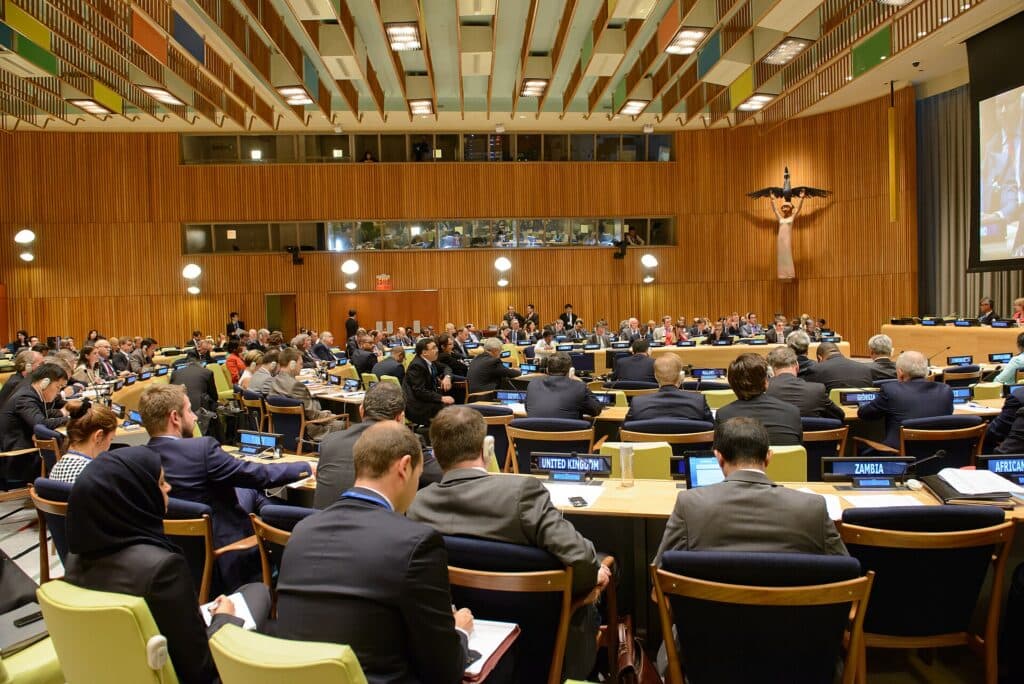
Global powers are desperately trying to update the NPT, but emerging technologies like AI and quantum computing are rendering old nuclear frameworks useless.
Key Takeaways
- •The NPT framework is fundamentally obsolete against AI-driven decision-making in nuclear command systems.
- •Quantum computing threatens the cryptographic security underpinning existing arms control verification.
- •The real winners are 'stealth proliferators' leveraging dual-use technology and advanced computing power.
- •Expect a 'Great Decoupling' where traditional NPT structures coexist uselessly alongside a high-tech, opaque arms race.
The Great Illusion: Why the NPT is Already a Historical Relic
The Non-Proliferation Treaty (NPT), the bedrock of global nuclear stability for over half a century, is gasping for relevance. The recent chatter from bodies like the European Leadership Network about integrating emerging technologies into the NPT framework isn't a sign of robust adaptation; it’s a desperate scramble to wallpaper over a crumbling foundation. The unspoken truth is simple: the treaty was designed for the analog age of ICBMs and visible fissile material stockpiles. It is catastrophically unprepared for the digital battlefield.
We need to talk about nuclear security in the age of algorithmic warfare. The focus remains stubbornly fixed on physical warheads and delivery systems, ignoring the real disruption underway: the erosion of deterrence through speed and stealth.
The Unspoken Victims: Trust and Verification
The real casualty of AI and quantum computing isn't just the treaty itself, but the very concept of verifiable trust. How does the International Atomic Energy Agency (IAEA) verify a 'nuclear decision' when that decision is made instantaneously by a machine learning algorithm interpreting sensor data? The concept of 'breakout time'—the time needed to build a bomb—is becoming meaningless when advanced simulation and material science, powered by supercomputing, can drastically shorten design cycles.
Furthermore, the promise of quantum computing threatens the cryptographic backbone of every existing arms control mechanism. If a state can break the encryption protecting another nation's early warning systems—or even its classified inventory data—the entire structure of Mutually Assured Destruction (MAD) collapses into a terrifying game of electronic bluffing. This is the core issue driving the current crisis in nuclear proliferation, yet policymakers seem fixated on updating definitions of 'nuclear weapon' rather than addressing systemic vulnerability.
Who Really Wins? The Stealth States
The entities that win in this regulatory vacuum are not the established nuclear powers, but the 'stealth proliferators'—those who can leverage dual-use technology without triggering traditional safeguards. Imagine a near-peer competitor developing a sophisticated, AI-driven simulation capability that allows them to model nuclear effects with higher fidelity than the US or Russia, all while staying technically compliant with NPT reporting. They gain strategic parity without ever having to declare a new bomb. This shifts the advantage from verifiable hardware to opaque, proprietary software and processing power.
The West is trapped in a self-imposed time delay, debating treaty language while adversaries are already deploying systems that render that language moot. The focus on arms control must pivot from tracking uranium to auditing algorithms.
What Happens Next? The Great Decoupling
My prediction is stark: Within the next decade, the NPT will officially splinter. We will see two parallel tracks emerge. Track One will be the traditional NPT states, clinging to outdated verification methods and engaging in performative diplomacy, symbolized by meetings near old testing grounds (see image: CTBT Ministerial). Track Two will be the de facto reality: a high-tech, clandestine arms race centered on AI-enhanced command and control, novel materials discovery, and quantum encryption breaking.
This decoupling means the existing framework loses its moral authority. Nations will cite the failure of the major powers to adequately address AI risk as justification for their own non-compliance or withdrawal. The next crisis won't be about a visible missile launch; it will be about a contested, algorithmically-driven early warning failure.
The NPT is not being ignored; it is being actively outpaced by innovation. And that is a far more dangerous reality.
Frequently Asked Questions
What is the primary threat emerging technologies pose to the NPT?
The primary threat is the erosion of verification and trust. AI can speed up decision cycles beyond human oversight, and quantum computing can break the encryption protecting sensitive nuclear data, making reliable monitoring impossible.
What is the significance of the European Leadership Network statement?
It signals that established security bodies recognize the urgency of integrating new technologies into disarmament discussions, but critics argue they are already years too late to implement meaningful controls.
How does AI change the dynamics of nuclear security?
AI shifts the advantage from verifiable physical stockpiles to the speed and sophistication of command, control, and intelligence analysis. It compresses the timeline for strategic response, increasing the risk of automated escalation.
What is the 'Great Decoupling' prediction?
The prediction is that the formal NPT structure will become irrelevant, running parallel to an informal, high-tech arms race where compliance is dictated by technological capability rather than treaty obligations.
Related News

The Hidden Cost of Kano's Tech Boom: Why 'Innovation' in Africa is Often Just Digital Colonialism
Forget the glossy press releases. The true impact of science and tech initiatives in Kano reveals a deeper geopolitical struggle over digital sovereignty.

The Hidden Cost of China's Mushroom Diplomacy: Who Really Profits From African Agri-Tech Training?
Beneath the surface of mushroom training lies a geopolitical play. Unpacking the true winners and losers in this 'Juncao Technology' agricultural push.
China's Digital Cage: The Hidden Cost of 'Convenience' in the World's Largest Tech Lab
Unpacking the true price of China's hyper-digitized daily life: convenience for the state, compliance for the citizen.

DailyWorld Editorial
AI-Assisted, Human-Reviewed
Reviewed By
DailyWorld Editorial