The NASA Satellite That Exposed Tsunami Science: Why the Biggest Wave Isn't the Deadliest
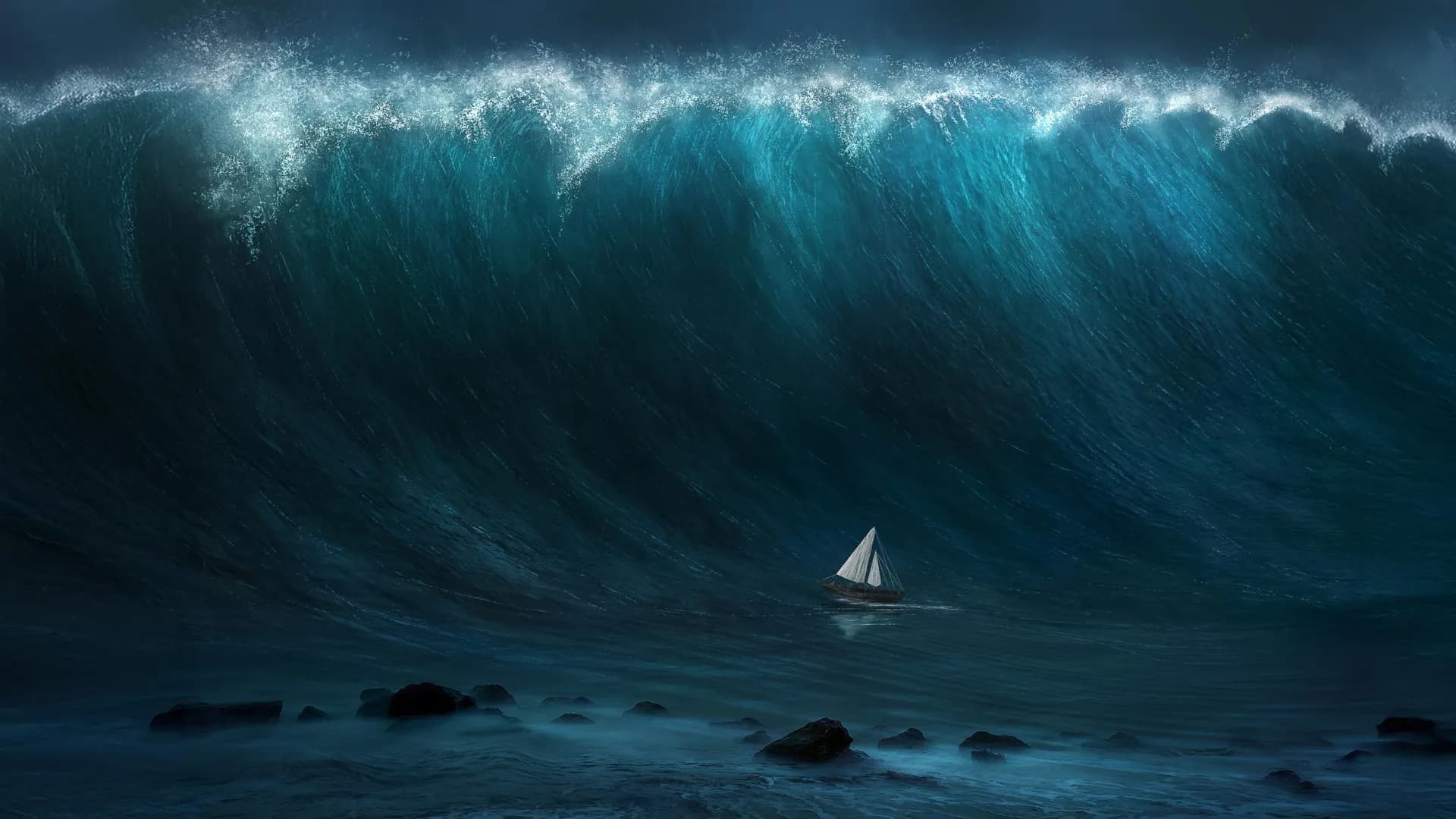
A baffling NASA satellite observation of a giant tsunami reveals a crucial flaw in our understanding of deep-ocean wave mechanics.
Key Takeaways
- •NASA data revealed that massive tsunamis can have deceptively low surface heights in the deep ocean.
- •Traditional tsunami warning models, focused heavily on amplitude, may be fundamentally flawed for rapid evacuation planning.
- •The future of warning systems must integrate deep-ocean velocity and energy density metrics.
- •This scientific shift will force massive economic recalculations in coastal insurance and infrastructure investment.
We are obsessed with the spectacle of destruction. When a giant tsunami strikes, the immediate narrative focuses on the sheer, terrifying scale of the wave—the higher the better for viral clicks. But what if the biggest waves are actually the least threatening? That is the uncomfortable truth NASA’s satellite observations are forcing us to confront regarding tsunami behavior. The data captured from a recent event showed a massive wave displaying anomalous behavior, behaving less like a wall of water and more like a complex, subsurface hydraulic event. This isn't just a scientific curiosity; it fundamentally changes how we model earthquake risk and, crucially, who is prepared to survive it.
The Unspoken Truth: Speed vs. Height
The headline screams 'giant tsunami,' but the real story, the one the scientific community is quietly grappling with, is the decoupling of wave speed and vertical amplitude in the deep ocean. Traditional models predict a direct correlation. What the satellite data suggests, however, is that massive energy transfer can occur with a relatively modest surface signature until the wave shoals. The unexpected finding wasn't the existence of the wave—we expect those after major subduction zone earthquakes—but its internal structure and speed profile.
Who wins here? The coastal infrastructure planners who rely on simplistic run-up predictions lose. They have been preparing for the 'big vertical hit.' The real winners are the deep-sea navigation and telecommunications industries, who now have a clearer (though still incomplete) picture of how these immense energy packets move beneath commercial shipping lanes. The public, however, remains focused on the wrong metric: height. We are being distracted by the visible, ignoring the invisible mechanics of ocean wave dynamics.
Deep Analysis: The Economic Cost of Misinformation
This single data point forces a multi-billion dollar reassessment of coastal defense spending globally. If a tsunami can travel at near-maximum speed with a deceptively low profile, early warning systems based solely on offshore buoy detection—which measure amplitude—might not provide enough lead time for evacuation, especially in densely populated, low-lying regions. This shifts the focus from reaction to pre-emptive zoning and the engineering of resilient, elevated infrastructure.
The economic fallout of getting this wrong is staggering. Consider the insurance industry, which bases its risk models on historical data and established physics. A single anomaly like this forces a systemic repricing of risk across entire coastlines. This is why understanding seismic wave propagation is not just academic; it’s the bedrock of coastal economies. We are witnessing science challenging established, heavily invested capital models.
Where Do We Go From Here? The Prediction
The immediate future involves a frantic race to deploy next-generation altimetry satellites capable of capturing three-dimensional velocity profiles, not just surface height. My prediction: Within five years, we will see the development of an AI-driven 'Tsunami Threat Index' that prioritizes velocity and internal energy density over peak height in its primary alerts. This will lead to localized, highly specific evacuation orders rather than broad regional warnings. Furthermore, expect heightened political tension between nations that possess this superior observational technology (like the US, via NASA) and those that rely on older seismic networks.
This event is a stark reminder that nature operates on scales far exceeding our current modeling capabilities. The sea remains the ultimate contrarian force.
Key Takeaways (TL;DR)
- The giant tsunami showed unexpected internal structure, decoupling surface height from deep-ocean energy.
- Coastal defense planning based only on wave height may be dangerously inadequate.
- The real threat lies in understanding the speed and energy density of the wave, not just its peak.
- Expect significant investment in advanced satellite monitoring to capture 3D wave profiles.
Frequently Asked Questions
What exactly did the NASA satellite observe that was unexpected about the tsunami?
The satellite observed that the giant tsunami exhibited an anomalous internal structure and velocity profile that did not perfectly align with established deep-ocean wave propagation models, suggesting significant energy moving beneath the surface that wasn't fully reflected in the surface amplitude.
How does a tsunami's speed affect its danger level?
Speed dictates warning time. A faster tsunami, even if initially lower in height, reaches the coast sooner, drastically reducing the window available for evacuation and emergency response efforts.
Are current tsunami warning buoys obsolete because of this finding?
Not obsolete, but incomplete. Buoys primarily measure height (amplitude). This finding suggests we need next-generation sensors capable of measuring subsurface pressure and velocity vectors for a more accurate threat assessment.
What is the difference between a normal ocean wave and a tsunami wave?
Normal waves are generated by wind and affect only the surface. Tsunamis are generated by massive displacement (like earthquakes or landslides) and involve the entire water column, traveling across entire ocean basins at jet-plane speeds.

DailyWorld Editorial
AI-Assisted, Human-Reviewed
Reviewed By
DailyWorld Editorial