The Hidden Silicon War: Why the AI Smuggling Bust Isn't About Chips, It's About Control

The recent AI technology smuggling bust reveals a deeper struggle for global **technology** dominance, far beyond simple export control. This is about choke points.
Key Takeaways
- •The smuggling ring reveals severe gaps in securing high-end AI computational resources.
- •Control over advanced microchip production is the new strategic global leverage point.
- •The incident will accelerate adversarial efforts toward independent, parallel technology stacks.
- •Expect immediate regulatory creep tightening oversight on private sector technology sharing.
The Unspoken Truth: This Isn't About Smuggling, It's About Sovereignty
When federal agents announce the takedown of an **AI technology** smuggling ring, the public narrative defaults to national security and export controls. That’s the surface-level headline. The real story, the one Washington doesn't want you reading, is about the terrifying realization that the West is rapidly losing control over the most critical resource of the 21st century: advanced computational power.
This bust, centered around specialized hardware likely destined for adversarial nation-states, isn't just about catching a few bad actors moving boxes. It's a symptom of a fundamental flaw in our current geopolitical strategy. We treat advanced semiconductors and AI models like easily replicable consumer goods, when in reality, they are the new oil—and our supply chains are alarmingly porous. The sheer audacity of the attempt suggests a belief that the enforcement mechanisms are weaker than the profit motive or strategic imperative.
The true winners here aren't the agents; they are the domestic chip manufacturers and the government agencies suddenly granted expanded surveillance powers under the guise of 'protecting innovation.' The losers? The open, decentralized nature of **technology** development itself, which will inevitably be choked by further regulation.
The Grand Scheme: From Hardware to Hegemony
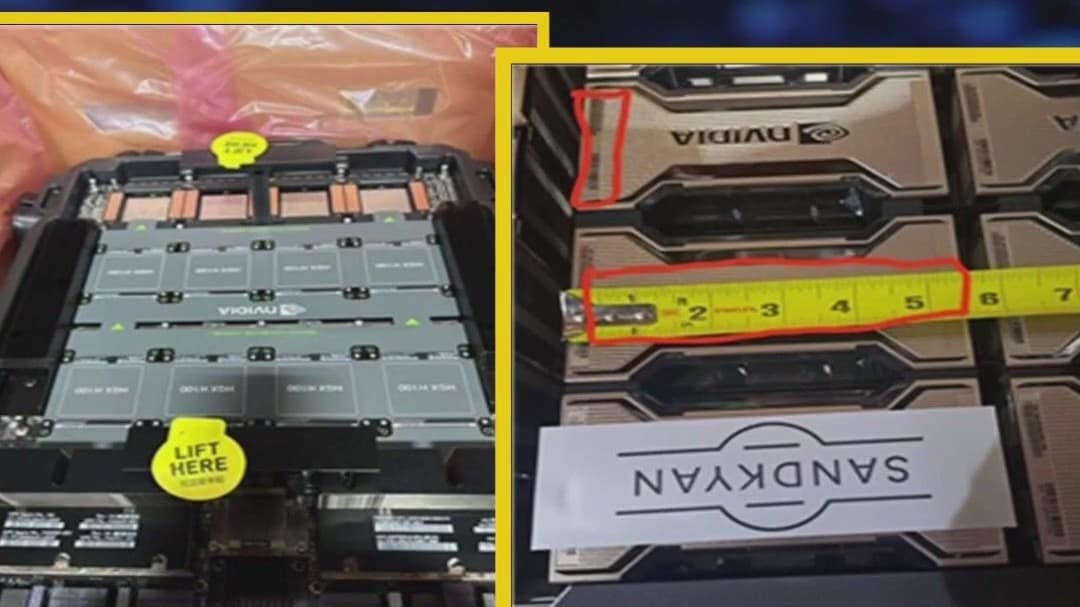
Why does smuggling a few GPU clusters matter? Because modern Artificial Intelligence isn't built on open-source code alone; it’s built on massive, highly specialized, and physically constrained hardware. Think of it as the difference between owning the blueprints for a car and owning the only factory that can forge the engine block. The US and its key allies (Taiwan, Netherlands) currently control the choke points for the most advanced lithography machines and the resulting chips. This bust signifies that adversaries are desperately trying to bypass the gatekeepers.
This isn't just about military applications. It’s about economic leverage. The nation that controls the fastest, most efficient training models—which require access to these very chips—will dominate finance, logistics, and scientific discovery for the next two decades. The current focus on export controls is reactive; it’s like trying to plug a leaking dam with tape. We need to analyze the systemic vulnerability this operation exposed. The market for illicit, high-end **technology** is clearly booming, proving that demand far outstrips legal, monitored supply.
Where Do We Go From Here? The Prediction
Expect a massive, state-sponsored pivot away from reliance on Western-made high-end GPUs (like those from Nvidia). If smuggling is this easy, the next step for major powers will be accelerated, albeit less efficient, domestic production efforts, or a shift towards fundamentally different computational architectures (e.g., photonic computing) that bypass current lithography bottlenecks entirely. This bust will be remembered not for the arrests, but as the catalyst that forced a full-spectrum decoupling in critical computing infrastructure. Furthermore, expect immediate and severe tightening of oversight on academic and private sector R&D sharing, blurring the lines between intellectual property protection and outright technological isolationism.
For a deeper dive into the history of technology export controls, see the analysis from the Council on Foreign Relations on strategic trade restrictions: Council on Foreign Relations. Understanding the physics behind the bottleneck is crucial: Semiconductor Manufacturing.
Key Takeaways (TL;DR)
- The bust highlights desperation to acquire leading-edge AI hardware, not just consumer tech.
- The real battle is over controlling the physical manufacturing choke points for advanced chips.
- Expect increased domestic isolationism in tech R&D and stricter surveillance on legal transfers.
- This signals a hardening of the digital Cold War, focusing on physical hardware dominance.
Gallery
Frequently Asked Questions
What specific AI technology was allegedly being smuggled?
While specific model details are often classified, smuggling rings targeting advanced AI typically focus on high-performance GPUs (Graphics Processing Units) or specialized networking hardware required for large-scale model training, rather than the models themselves.
Why is smuggling AI hardware considered a major national security threat?
Advanced AI hardware, particularly leading-edge chips, is dual-use. It powers everything from medical diagnostics to advanced autonomous weaponry. Allowing unauthorized access to the physical infrastructure needed to run cutting-edge AI grants significant strategic and military advantages to competitors.
How does this relate to the existing US-China tech rivalry?
This incident is a direct consequence of the current rivalry. As the US tightens legal export controls on advanced chips, the black market for these critical components grows exponentially, forcing adversarial nations to seek illicit channels to maintain their AI development timelines.
What is the 'choke point' in semiconductor manufacturing?
The primary choke point is the extreme complexity and geographic concentration of manufacturing equipment, particularly EUV lithography machines made almost exclusively by ASML in the Netherlands, which are necessary to produce the smallest, most powerful chips.

DailyWorld Editorial
AI-Assisted, Human-Reviewed
Reviewed By
DailyWorld Editorial