The Green Tech Mirage: Why 'Sustainable Technology' Is Actually Fueling the Next Resource War
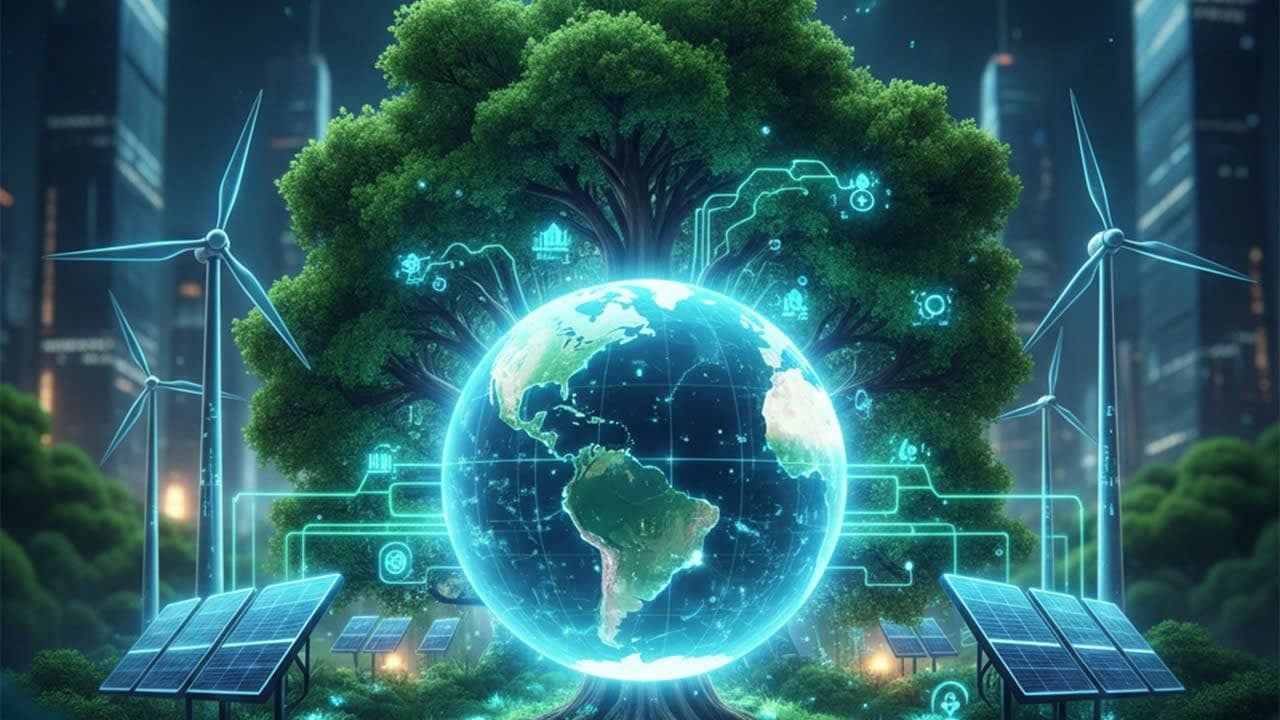
Forget utopian visions. The real story behind the push for 'sustainable technology' reveals a dangerous scramble for rare earth minerals and geopolitical instability.
Key Takeaways
- •The shift to green tech increases dependency on specific, globally concentrated critical minerals (lithium, cobalt).
- •China currently controls the processing bottleneck for these essential materials, creating a new geopolitical vulnerability.
- •Current recycling infrastructure cannot handle the projected volume of end-of-life EV batteries.
- •The next major international resource conflict may stem directly from securing battery supply chains.
The Hook: The Great Green Deception
We are being sold a beautiful lie. The narrative surrounding sustainable technology—solar panels, electric vehicles, wind farms—is one of salvation. It suggests a clean break from the dirty industrial past. But behind the glossy marketing, a far more cynical reality is taking shape. The transition isn't about saving the planet; it's about shifting the choke points of global power. The real battleground isn't over oil; it's over lithium, cobalt, and neodymium. This pivot toward green energy solutions is not just a technological shift; it’s a massive, resource-intensive re-armament.
The 'Meat': Analyzing the Mineral Hunger
The push for renewable energy requires exponentially more raw materials than the systems they replace. A single EV battery demands vast quantities of materials often mined under horrific conditions in politically unstable regions. We haven't eliminated reliance on finite resources; we've merely swapped one dependency (fossil fuels) for another (critical minerals). Consider the supply chain: China dominates the processing of nearly 80% of the world's rare earth elements. This isn't diversification; it's centralizing vulnerability. The West, desperate to appear 'green,' is outsourcing its environmental and ethical footprint to nations with lax regulations. This is not sustainability; it's geographic arbitrage disguised as progress.
The irony is biting. We champion the electric car as the ultimate environmental tool, yet its production requires strip-mining operations that dwarf the localized pollution of traditional fuel extraction. The promise of zero emissions quickly dissolves when you trace the manufacturing lifecycle back to the mine site. This fundamental contradiction is conveniently ignored by policymakers eager for green optics.
The 'Why It Matters': Geopolitics of the Battery Belt
This dependency creates inherent instability. Nations controlling the resource extraction and processing—particularly the Democratic Republic of Congo (cobalt) and South America’s Lithium Triangle—now hold unprecedented leverage. If geopolitical tensions escalate, the flow of these crucial components stops, instantly paralyzing the entire global push toward electrification. The US and Europe are playing catch-up, pouring billions into domestic mining and processing, but the lead time is measured in decades, not quarters. This scramble is creating a new high-stakes resource race, echoing the colonial-era pursuit of oil, but faster and more volatile due to the speed of the mandated energy transition.
Furthermore, the concept of 'circular economy' for these batteries remains largely theoretical at scale. Recycling infrastructure is lagging far behind deployment rates. We are building mountains of future electronic waste, betting on technology that hasn't been perfected yet to clean up the mess. (Reuters on Lithium Shortages).
Where Do We Go From Here? The Contrarian Prediction
The next decade will not be defined by the success of sustainable technology, but by the global friction it causes. My prediction: We will see the first major international conflict directly attributable to resource scarcity in the battery supply chain within seven years. Expect aggressive, non-military economic coercion—sanctions, embargoes, and forced technology transfer—aimed at securing mineral rights. The tech giants who control the intellectual property for battery chemistry (and thus, efficiency) will become more politically powerful than mid-sized nations. The true innovators won't be those making better solar panels, but those who discover scalable, earth-abundant material substitutes (like sodium-ion) that bypass the current cartel entirely. Until then, every new 'green' initiative is simply a strategic vulnerability waiting to be exploited.
The only truly sustainable technology right now is radical **resource efficiency**—doing more with less of everything. Until that becomes the primary focus, the green revolution remains a façade built on shaky ground. (NYT on Rare Earth Minerals). The shift to electric mobility is inevitable, but the path is paved with geopolitical risk, not just clean energy.
Gallery





Frequently Asked Questions
What are rare earth elements and why are they critical for green technology?
Rare earth elements are a group of 17 chemically similar metals essential for high-performance magnets in wind turbines and electric vehicle motors. Their unique magnetic and conductive properties are currently irreplaceable in high-efficiency applications.
Who currently dominates the processing of critical battery minerals?
China dominates the refining and processing stages for most critical battery minerals, including rare earths and graphite, giving them significant leverage over global manufacturing, even if extraction occurs elsewhere.
Is the current 'sustainable technology' infrastructure truly less polluting overall?
No. While operational emissions are lower, the upfront manufacturing and mining processes for batteries and solar panels involve significant pollution and heavy resource extraction, shifting the environmental burden rather than eliminating it.
What is the primary risk associated with relying on lithium for batteries?
The primary risk is geographic concentration. A significant portion of the world's lithium reserves are located in the 'Lithium Triangle' (Chile, Argentina, Bolivia), making the supply chain vulnerable to regional political instability or cartel-like production agreements.
Related News

The Packaging Lie: Why Your 'Smart' Food Container Won't Stop the Next Global Recall
The push for advanced food packaging technology is distracting from the real supply chain weak points. Is this innovation or deflection?

The Hidden Cost of Croom Medical's $100M Bet: Is Ireland Outsourcing Its Future?
The Croom Medical ACOT expansion signals massive medical device manufacturing growth, but what does this mean for Irish tech talent migration?

The Silent Coup: Why Tech Policy Meetings Are a Sham and Who Actually Owns the Future
Forget diversity reports. The real fight over technology policy isn't about representation; it's about regulatory capture and who profits.
