The Ghost in the Machine: How Western Tech Fuels Russia's Missile Arsenal (And Why Sanctions Fail)

Unmasking the hidden supply chains: Western dual-use technology is the secret ingredient in Russia's advanced missile production.
Key Takeaways
- •The core enabler for Russian advanced weaponry is the persistent flow of Western microelectronics.
- •Current sanctions are failing due to sophisticated, multi-layered evasion networks.
- •The system must evolve towards mandatory source certification to hold original manufacturers accountable.
- •Geopolitical stability is undermined when trade compliance prioritizes profit over security.
The Hook: The Unspoken Truth of Modern Warfare
We talk endlessly about sanctions, export controls, and the crippling of the Russian economy. Yet, the missiles raining down on Ukraine tell a different, more insidious story. The true vulnerability isn't in the raw materials; it’s in the microscopic, high-precision components—the dual-use technology that flows, often indirectly, from the West straight into the heart of the Kremlin’s military machine. This isn't incompetence; it’s a systemic failure in global export compliance, and it’s quietly enabling a protracted conflict.
The 'Meat': Following the Semiconductor Trail
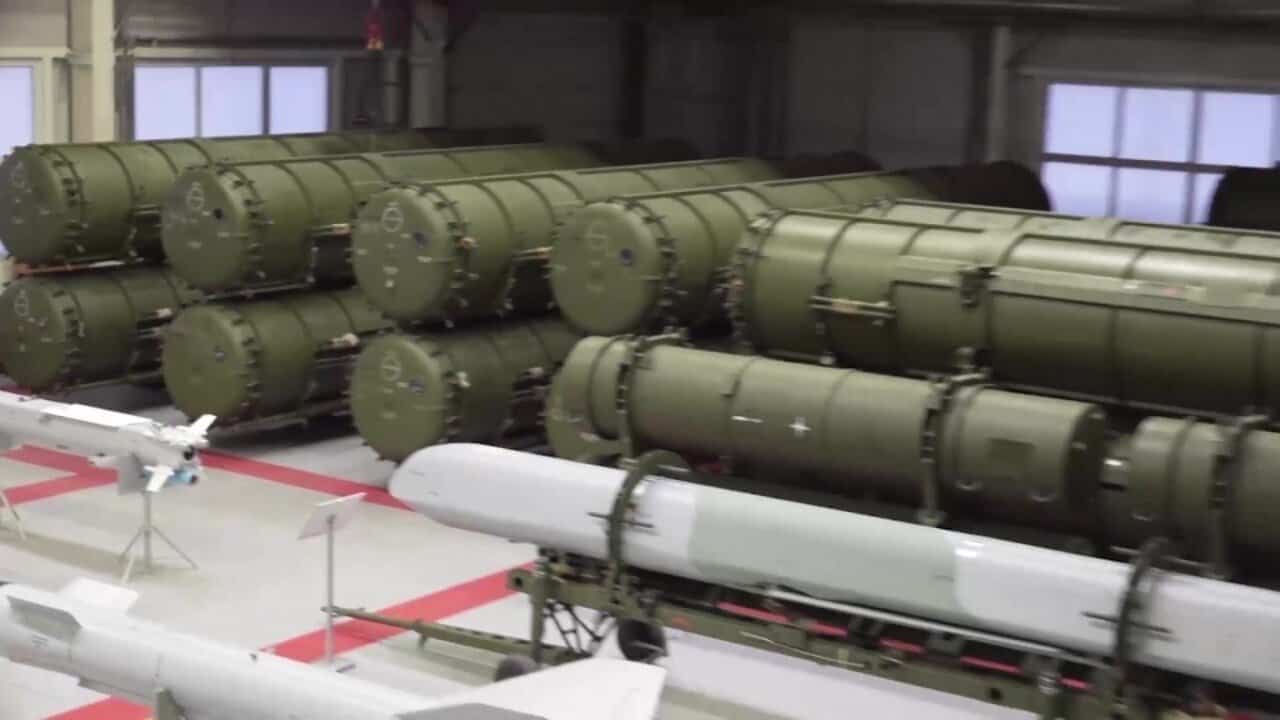
Reports detailing the components found in downed Russian missiles—ranging from navigation systems to guidance chips—reveal a devastating pattern. These aren't Soviet-era relics; they rely on microprocessors, sensors, and advanced machining tools developed and manufactured primarily in the US, Germany, and East Asia. How does this military technology bypass the strictest controls? The answer lies in the maze of third-party brokers, shell companies, and legal gray areas.
The official narrative suggests comprehensive sanctions have starved Moscow. The reality is that sophisticated evasion networks, perfected over decades, treat sanctions like a complex game of Whac-A-Mole. A chip ordered for a 'non-military industrial robot' in a seemingly neutral nation suddenly finds its way into a flight control unit for a hypersonic cruise missile. This flow of global supply chain components is the lifeblood of Russian defense manufacturing right now.
The 'Why It Matters': Who Really Wins?
The beneficiaries of this shadow trade are twofold. First, the intermediary economies that profit from re-exporting goods under dubious pretenses. They gain short-term economic advantage while externalizing the geopolitical risk. Second, and most cynically, the architects of the evasion networks—the intelligence-backed firms specializing in circumventing export controls. They thrive on complexity.
The losers are obvious: the nations defending their sovereignty and the Western companies whose intellectual property is effectively being weaponized against democratic values. The biggest systemic loser is the concept of effective economic deterrence. If sanctions can be so comprehensively gamed, what leverage do global powers truly possess?
We must stop viewing sanctions as a simple switch. They are a fluid battlefield. The current system prioritizes ease of trade over rigorous end-use verification. This loophole benefits those who profit from conflict and instability. For deeper context on the impact of trade controls, see the analysis from institutions like the Peterson Institute for International Economics (PIIE).
The Prediction: Where Do We Go From Here?
The current approach—relying on public shaming and reactive blacklisting—is too slow. My bold prediction is that within the next 18 months, we will see a radical, unilateral shift by the US and EU toward **'Source Certification Mandates'** for all critical dual-use exports. This means the original manufacturer, not just the immediate buyer, will be legally and financially liable for verifying the final destination of high-end components, even through three layers of intermediaries. Failure to implement this will result in the complete erosion of sanctions efficacy, leading to a dangerous escalation in capabilities, not a reduction.
Key Takeaways (TL;DR)
- Russian missiles rely heavily on sophisticated, Western-origin dual-use technology.
- Sanctions evasion is highly organized, exploiting third-party brokers and legal gray zones.
- The current system rewards complexity and indecisiveness in export control enforcement.
- Future effectiveness hinges on shifting liability directly onto the original technology producers.
Frequently Asked Questions
What does 'dual-use technology' mean in this context?
Dual-use technology refers to materials, software, or equipment that have legitimate civilian applications but can also be adapted or used for military purposes, such as high-precision CNC machines or advanced microprocessors.
Are Western companies knowingly selling components to Russia?
While direct sales are banned, many components enter Russia via complex, indirect supply chains involving intermediary nations and shell corporations that obscure the final destination, often exploiting loopholes in existing export control laws.
What is the proposed 'Source Certification Mandate'?
This is a proposed regulatory shift where the initial manufacturer of a critical component is made legally and financially responsible for tracing and guaranteeing the end-use of that item, even after multiple resales.
How does this impact the war's duration?
The continuous supply of these components allows Russia to sustain and potentially upgrade its advanced missile capabilities, directly prolonging the conflict and increasing the technological asymmetry.
Related News

The Silent Victory: Why Iran's New Radiography Tech Isn't About Safety, It's About Sanctions-Proofing the Energy Grid
Iran achieving domestic industrial radiography tech mastery signals a seismic shift in energy security and sanctions evasion.
Dubai's Architects Are Building a Ghost City: The Real Reason for Alatau City's Tech Hub Hype
The Burj Khalifa architects are designing Alatau City, but this isn't just about tech; it's a geopolitical chess move in the global technology race.
