The Foam Conspiracy: Why Your AI Breakthrough is Just Old Physics Masquerading as Genius
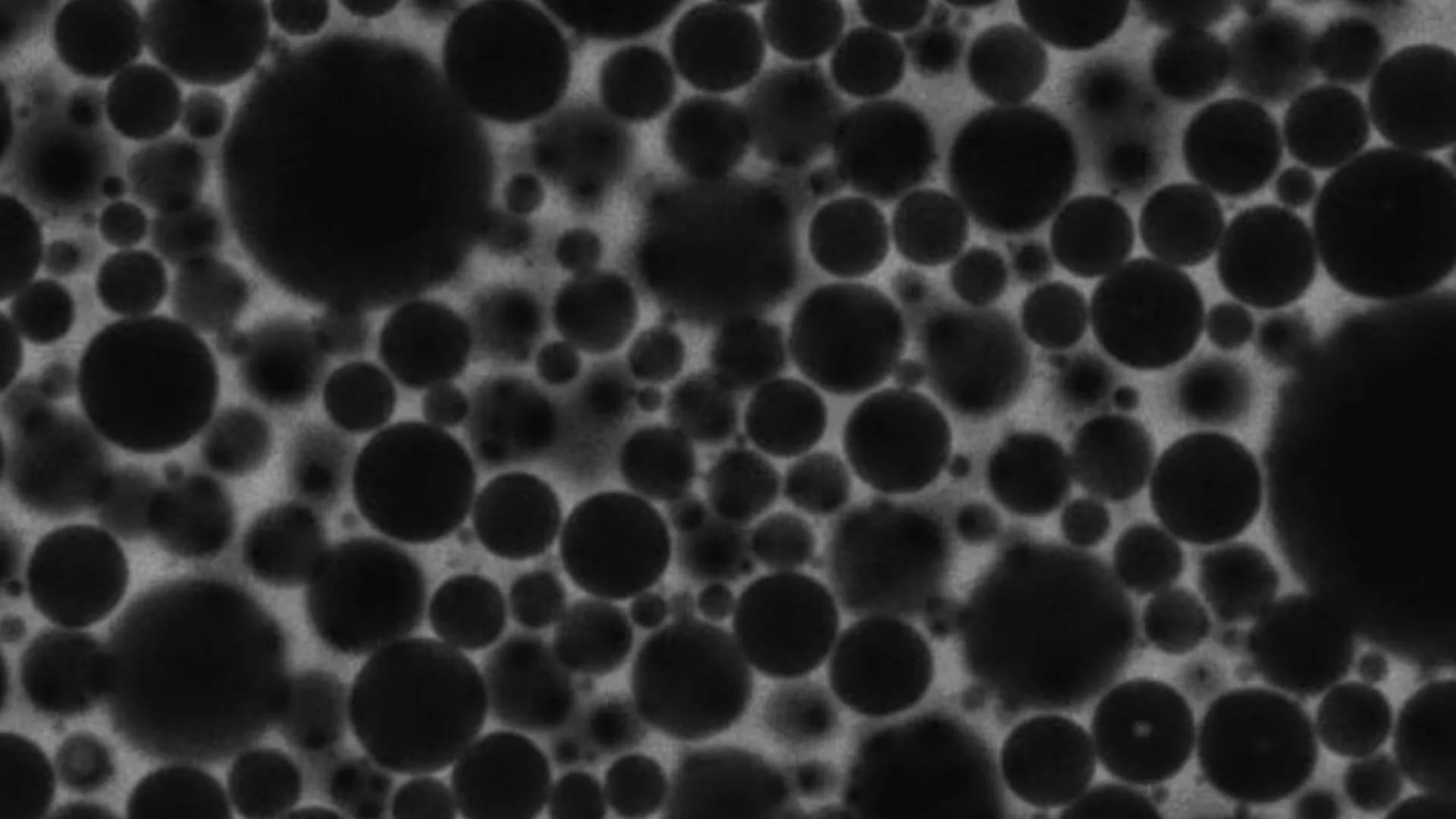
Forget deep learning hype. The secret logic of artificial intelligence is hiding in kitchen soap. Unmasking the real winners of this 'foam' discovery.
Key Takeaways
- •AI optimization mirrors the stable configurations found in granular physics, like foam.
- •The discovery challenges the narrative of AI as purely emergent complexity.
- •The shift signals a move from massive computational scaling to physics-informed constraints.
- •Materials scientists and physicists stand to gain significant influence over future AI development.
The Hook: The Illusion of Novelty
We are constantly being sold the myth of the 'new' breakthrough in artificial intelligence. Every week, some lab unveils a model that learns faster or sees clearer. But what if the most profound insight into modern AI wasn't born in a server farm, but in a glass of beer? Scientists are now pointing to the chaotic, beautiful mathematics governing everyday foam—microscopic bubbles shifting and merging—as the underlying blueprint for how complex AI systems process information. This isn't just neat science; it’s a massive red flag about where we are placing our bets in the AI revolution.
The 'Meat': Physics Trumps Code
The recent findings suggest that the complex decision-making pathways in neural networks mimic the energy minimization and structural organization seen in granular materials, specifically foams. Think about it: when soap bubbles pack together, they find the most efficient, stable configuration. Researchers found that AI algorithms, when optimized, fall into strikingly similar, predictable patterns of 'cell division' and 'merging' that minimize computational energy. This means the 'intelligence' we are celebrating might not be emergent complexity, but rather the universe forcing algorithms into the path of least resistance. We aren't building minds; we are just finding the most stable physical arrangement that solves a problem.
This discovery grounds the ethereal world of machine learning in hard, observable physics. It’s a powerful reminder that computation, no matter how sophisticated, is still bound by thermodynamics and geometry. The real story here is not the AI, but the physics it reveals. If the structure of optimized AI is predictable—if it naturally gravitates toward foam-like states—then true, unpredictable AGI might be structurally impossible under current paradigms.
The Unspoken Truth: Who Really Wins?
The immediate winners are the established physics and materials science giants, not necessarily the AI startups. This research validates decades of work in soft matter physics, re-centering the conversation away from pure computer science jargon. The losers? Anyone selling the 'magic box' narrative. If the underlying logic is universal physics, the competitive edge shifts from proprietary algorithms to who can better model and manipulate these physical constraints. Furthermore, whoever controls the foundational physics models—the actual mathematical laws governing these 'foam states'—gains leverage over the next generation of AI optimization.
The Prediction: The Great Simplification
Where do we go from here? Expect a massive, cynical pivot in AI research funding over the next two years. Instead of throwing infinite compute power at larger models, venture capital and government grants will flood areas focused on 'Physics-Informed Neural Networks' (PINNs) and material science interfaces. The focus will shift from *building* bigger models to *constraining* existing models using physical laws, leading to smaller, more energy-efficient, and ultimately, more stable AI. The breakthrough won't be a smarter algorithm, but a smarter *physical constraint* on the algorithm. This means the current era of unchecked, brute-force scaling is ending.
Key Takeaways (TL;DR)
- AI optimization patterns strongly resemble the physical behavior of everyday foam.
- This suggests AI intelligence is less emergent magic and more predictable physical minimization.
- The real winners are those rooted in classical physics and materials science, not just pure software.
- Future AI progress will likely come from physical constraints, not simply more processing power.
Frequently Asked Questions
What is the connection between foam and artificial intelligence?
Scientists found that the way complex neural networks organize themselves to solve problems mirrors the energy-minimizing structures formed by bubbles in foam, suggesting a fundamental physical principle underlies AI optimization.
Does this mean current AI is not truly intelligent?
It suggests that current AI optimization paths are predictable and bound by universal physical laws, rather than being purely novel or emergent. It doesn't negate their utility, but it demystifies their underlying mechanism.
What is the 'Unspoken Truth' about this discovery?
The unspoken truth is that the competitive edge in AI may soon shift away from software developers and toward experts in soft matter physics and materials science who understand these underlying physical constraints.
How will this impact future AI research?
It is predicted to cause a pivot away from brute-force scaling toward 'Physics-Informed Neural Networks' (PINNs) to create more efficient and stable systems by leveraging known physical boundaries.

DailyWorld Editorial
AI-Assisted, Human-Reviewed
Reviewed By
DailyWorld Editorial