The Evolution Lie: Why Replaying Life's Code Reveals a Terrifying Truth About Progress
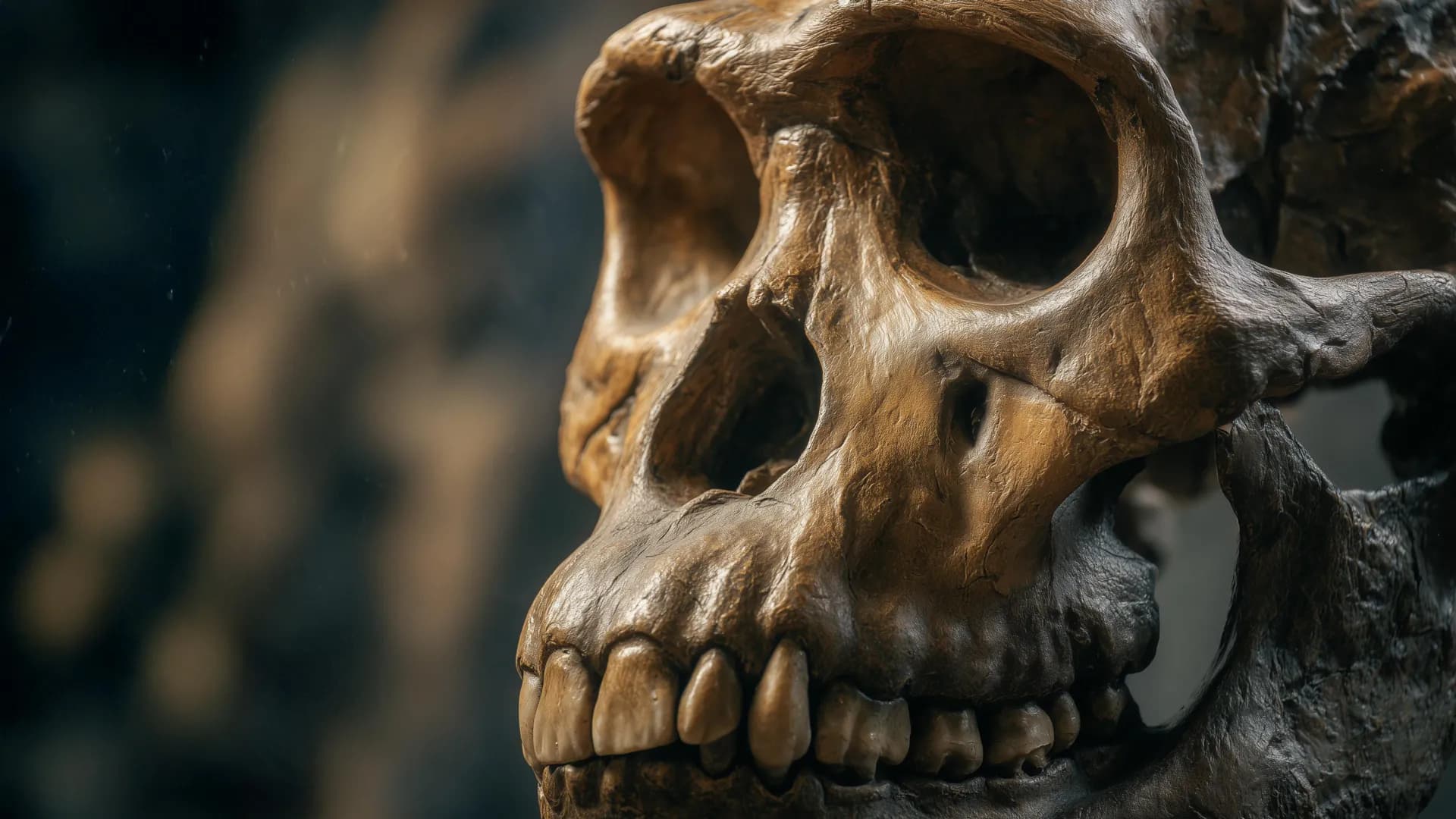
Scientists just replayed evolution, and the 'surprise' isn't what they claim. Unpacking the hidden implications of predictable biological paths.
Key Takeaways
- •Replaying evolution shows organisms repeatedly converge on similar functional solutions, suggesting limited biological novelty.
- •This challenges the idea of radical, unpredictable evolutionary progress, favoring deterministic outcomes.
- •The hidden consequence is that complex life paths might be computationally inevitable rather than miraculous accidents.
- •Future research will likely focus on identifying the environmental constraints that force this convergence.
The Evolution Lie: Why Replaying Life's Code Reveals a Terrifying Truth About Progress
The news cycle is buzzing about a recent breakthrough in evolutionary biology. Scientists, using advanced laboratory methods, have successfully 'replayed' the evolutionary path of microorganisms, observing adaptation unfold in real-time. The official narrative suggests a neat, predictable outcome—a validation of Darwinian theory. But that’s the surface gloss. The real story, the one that demands our attention regarding natural selection and the future of life itself, is far more unsettling.
We are obsessed with the concept of progress, assuming that complex life is the inevitable, upward trajectory of biology. This experiment, however, suggests something else entirely: evolutionary convergence isn't just likely; it might be computationally determined. When researchers rewind the tape and press play again, the resulting organisms—though genetically distinct—often arrive at functionally identical solutions.
The Unspoken Truth: Predictability Kills Surprise
The hidden agenda here isn't about proving Darwin right; it’s about proving that the universe of biological possibility is far smaller than we imagine. If you run the simulation enough times, the outcome locks in. This has massive implications beyond petri dishes. If the fundamental forms of life—the architecture of complex systems—are predetermined by environmental pressures, what does that say about our own perceived uniqueness?
Who wins? The reductionists and the determinists in the scientific community gain validation. They can now argue that certain biological outcomes, perhaps even certain cognitive structures, are not accidents of history but inevitable endpoints. Who loses? The romantics, the proponents of radical contingency, and frankly, anyone who believes in true, unconstrained novelty. If evolution is a closed loop, innovation is just iteration.
This research directly challenges the narrative of radical, unpredictable change that underpins much of our excitement about synthetic biology and the future of human enhancement. If we try to engineer a better organism, are we just guiding it down a well-worn path?
Why This Matters: The Economic and Existential Stakes
In the grand scheme, this isn't just about microbes; it’s about complexity theory. If the pathway to multi-cellularity, or even intelligence, is a high-probability outcome under specific constraints, it changes our search for extraterrestrial life. We stop looking for bizarre aliens and start looking for variations on a theme we already know. This deepens the Fermi Paradox: if intelligent life is so easy to evolve, where is everyone? Perhaps they evolved into forms so predictable they simply collapsed back into equilibrium.
For investors in biotech, this suggests that true disruptive evolution might be harder to engineer than hoped. We are not discovering entirely new biological blueprints; we are optimizing known ones. The real gold lies in understanding the constraints that force the convergence, not just the endpoints themselves.
What Happens Next? The Great Convergence Alarm
My prediction is that the next five years will see a massive pivot in evolutionary research funding away from purely random mutation studies and toward constraint mapping. We will see intense efforts to find the 'evolutionary choke points'—the environmental factors that force convergence. This research will inevitably bleed into artificial intelligence. If biological evolution converges on optimal forms, expect AI development to follow suit, hitting predictable performance plateaus faster than expected. The future isn't about creating something radically new; it's about recognizing the patterns we are locked into. This realization is the true surprise of evolutionary biology.
The ultimate lesson from replaying evolution is humility. We are not the product of infinite possibility, but perhaps the latest, slightly tweaked iteration of a very old, very sturdy design.
Frequently Asked Questions
What is evolutionary convergence, and why is it surprising?
Evolutionary convergence is when unrelated species independently evolve similar traits as a result of having to adapt to similar environments or ecological niches. It is surprising when it happens rapidly in controlled experiments, suggesting evolution is less random and more predictable than previously assumed.
How does this relate to the search for alien life?
If evolution frequently converges on similar solutions on Earth, it suggests that intelligent life elsewhere might follow predictable biological architectures, making them potentially easier to recognize, or conversely, explaining why we haven't found them if they quickly reach a stable, non-expanding evolutionary state.
Who benefits most from the findings on predictable evolution?
Scientists focused on biological determinism and those developing constrained AI models benefit, as it validates the idea that outcomes can be modeled and predicted based on starting conditions and environmental pressures.
What is the critical difference between this study and traditional evolution research?
Traditional research observes evolution as a historical, one-time event. This study 'replays' the process under controlled conditions, allowing researchers to test the reproducibility of evolutionary outcomes, which is a much higher bar for scientific validation.
Related News

The Toxic Truth: Why Air Pollution is the Silent Architect of the Alzheimer's Epidemic
We talk about genetics, but the real Alzheimer's accelerant is in the air. Discover the dark side of particulate matter and cognitive decline.

The Climate Conspiracy: How Ancient Ice Wars Forged Modern Humans (And Why Academia Ignores It)
New research on flickering glacial climate reveals the true crucible of early human evolution. We analyze the hidden costs of this environmental chaos.
The Hidden Truth About Your Fingers: Why Finger Length Ratio Is The Unspoken Metric For Human Brain Evolution
Forget skull measurements. The real secret to human cognitive leaps might be hiding in plain sight: your hand. We analyze the new finger ratio findings.

DailyWorld Editorial
AI-Assisted, Human-Reviewed
Reviewed By
DailyWorld Editorial