The Dirty Secret Behind Kazakhstan's Water Miracle: Who Really Pays for Reusing 'Toxic' Drainage?
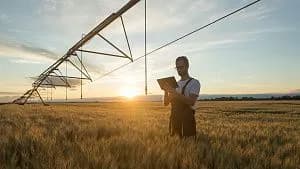
Kazakhstan's new irrigation technology promises water security, but the hidden cost of reusing drainage water demands critical analysis.
Key Takeaways
- •The technology addresses immediate water needs but risks long-term soil salinization.
- •The primary beneficiaries are likely large agricultural operations capable of early adoption.
- •This innovation heightens regional water security tensions with downstream neighbors.
- •The hidden cost is the massive infrastructure investment needed for effective, non-contaminating recycling.
The Hook: Desert Mirage or Genuine Revolution?
In the arid heartlands of Central Asia, water is the ultimate currency. When reports surface that Kazakhstan is pioneering a new irrigation technology capable of recycling drainage water, the immediate reaction is applause. It sounds like a clean, green solution to the region's chronic water stress. But stop the ticker tape. A truly world-class analysis demands we ask: What is the unspoken truth lurking beneath this headline about water scarcity solutions?
The Meat: More Than Just Recycling
The official narrative, highlighted by outlets like TV BRICS, focuses on efficiency. Kazakhstan, a nation heavily reliant on agriculture and struggling with the legacy of Soviet-era water mismanagement, is reportedly developing a system to treat and reuse agricultural runoff. On the surface, this is brilliant resource management. Drainage water, often laden with salts, residual fertilizers, and heavy metals, is usually flushed into evaporation ponds or left to degrade groundwater quality. By treating this effluent, Kazakhstan attempts to close the loop, securing vital water resources for crops.
However, the devil is in the details—specifically, the water management infrastructure required. Reusing drainage water isn't just about a new filter; it's about a complete overhaul of conveyance systems to prevent re-contamination. Who is funding this massive infrastructure pivot? And more importantly, what are the long-term ecological costs of repeatedly cycling water with increasing salinity levels back onto the fields?
The Unspoken Truth: Winners and Losers
Who truly wins here? The immediate victors are large-scale agricultural conglomerates who can afford the upfront investment in the proprietary technology and the required monitoring systems. They gain short-term yield stability.
The losers? Smallholder farmers and, potentially, the environment itself. If the technology isn't universally subsidized or mandated, this creates a dangerous divergence: high-tech, water-secure mega-farms operating alongside traditional farms that are increasingly starved of clean water or forced to use less efficient methods. Furthermore, the 'recycled' water, while usable, often carries a higher salt load. Over time, this exacerbates soil salinization, a slow-motion disaster that renders land permanently unproductive. This isn't a silver bullet; it’s a sophisticated trade-off where today's water security might be bought with tomorrow's soil fertility.
Why It Matters: Geopolitics of Thirst
This local innovation has massive geopolitical implications. Central Asia is defined by transboundary rivers like the Amu Darya and Syr Darya. When one nation aggressively maximizes its internal water use—even recycled water—it directly impacts downstream neighbors like Uzbekistan and Turkmenistan. Kazakhstan asserting greater control over its own water cycle, even through ingenuity, shifts the regional power dynamic. This technological leap is less about environmentalism and more about **water security** as a strategic national asset, a lesson the entire arid world is watching closely. For more on the broader challenges of water in arid regions, see the analysis from the World Bank on sustainable agriculture.
What Happens Next? The Prediction
My prediction is that within five years, this technology will face significant pushback from neighboring states citing downstream impacts, forcing Kazakhstan into complex, high-stakes bilateral negotiations. The current technology rollout will be bottlenecked not by engineering failures, but by international diplomatic resistance. Expect the next major development to be not a technical upgrade, but a multilateral treaty attempting to govern the *quality* of recycled discharge, not just the quantity.
Frequently Asked Questions
What is the primary environmental risk of reusing agricultural drainage water?
The primary risk is increased soil salinization. Drainage water often contains high concentrations of dissolved salts; repeated use concentrates these salts in the topsoil, eventually damaging crop viability.
How does this Kazakh innovation impact neighboring countries?
It indirectly impacts neighbors by potentially reducing overall outflow into shared river basins or by changing the chemical composition of discharged water, affecting downstream water quality and availability.
Is this new irrigation technology widely available to all farmers in Kazakhstan?
It is unlikely to be immediately widespread. Such advanced systems require significant capital investment, suggesting early adoption will be concentrated among larger, more capitalized agricultural enterprises.
Related News

The Satellite Spy War: Why Big Energy Is Secretly Terrified of Germany’s New Pipeline Surveillance Tech
German tech is launching satellite surveillance for global pipelines. The real story isn't security; it's control and the future of energy infrastructure monitoring.

The Quiet Coup: How Cornell's 'Precision Nutrition' Tech Will Redefine Global Power (And Who Gets Left Behind)
Cornell's Mehta Group pushes 'precision nutrition' tech. This isn't about health; it's about data control in the future of food security.

The Digital Twin Deception: Why Your Virtual Replica is the Ultimate Corporate Spyware
Forget smart cities; the real threat of **digital twin technology** isn't efficiency—it's absolute behavioral surveillance. Analyzing the NSF's push for **simulation modeling**.
