The Cricket Tech Scandal: Why Snicko's Failure Exposes a Deeper Crisis in Sports Technology
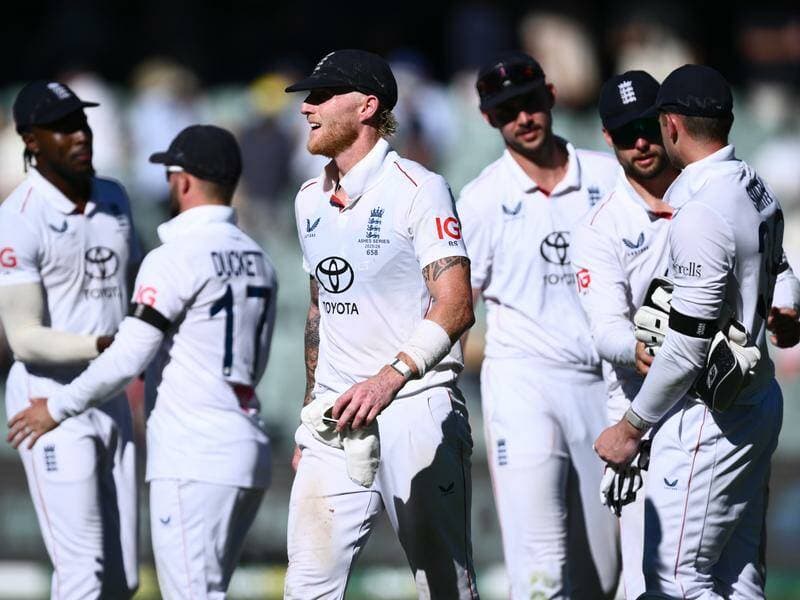
The Snicko boss admitted technology 'dudded' England, but the real story is the fragile trust in high-stakes sports technology.
Key Takeaways
- •The Snicko admission highlights the inherent fragility of relying on proprietary technology for high-stakes sports decisions.
- •Governing bodies use technology to manage PR perception, not necessarily to achieve absolute fairness.
- •The future will likely involve mandated human-AI hybrid oversight, moving away from singular, automated judging systems.
- •The reliance on closed-source tech prevents meaningful independent auditing.
The Hook: When the Invisible Becomes the Villain
When the head of the technology provider admits their system failed at a crucial moment—as the boss of Snicko recently did regarding England's fate—it’s more than just a bad day for cricket. It’s a seismic crack in the foundation of modern sports officiating. We aren't just talking about a bad call; we are dissecting the inherent, often ignored, fragility of sports technology in high-pressure environments. The admission confirms what skeptics have long feared: in the quest for absolute certainty, we've outsourced human judgment to fallible algorithms and hardware.
The core issue isn't just that Snicko malfunctioned. It's that the entire ecosystem of officiating relies on these black boxes. The admission by the Snicko leadership is an act of corporate damage control, but it doesn't erase the fact that millions watched a pivotal moment hinge on equipment that simply buckled under the strain. This incident is a masterclass in how technology failures ripple through public trust, far beyond the boundary rope.
The "Unspoken Truth": Who Really Wins When Tech Fails?
In these moments of high-profile technology mishaps, the immediate focus is on the team that lost the benefit of the doubt. But the real winner is often the status quo—the governing bodies who can point to a single vendor failure rather than systemic over-reliance. They get to issue apologies, perhaps fine the supplier, and promise a 'review,' effectively insulating themselves from deeper scrutiny. The unspoken truth is that governing bodies embraced these tools for PR—to appear 'modern' and 'objective'—without building the necessary redundancy or acknowledging the inherent margin of error.
Consider the economics. These systems are sold on the promise of infallibility. When that promise breaks, the governing body loses face, but the technology provider, by admitting the fault, preemptively caps their liability. It’s a calculated risk management exercise masquerading as transparency. This isn't about fair play; it's about managing perception in the age of instant replay and social media outrage.
Deep Analysis: The Illusion of Precision in Professional Sports
We live in a culture obsessed with data points and quantifiable results. The introduction of tools like Snicko, Hawk-Eye, and VAR was meant to eradicate human error. Instead, they’ve replaced subjective human error with objective, mechanical error. A human umpire can be influenced by crowd noise or fatigue; a machine is influenced by calibration drift, sensor failure, or software bugs. Which is more dangerous when millions of dollars and national pride are on the line? Arguably, the mechanical error is worse because it carries the weight of supposed scientific certainty. For more on the history of sports officiating technology, see this analysis from the BBC.
This isn't unique to cricket. Look at the VAR controversies in football or the disputed line calls in tennis. Every time these systems fail, they don't prove humans are better; they prove that *no system* is perfect. The problem is the industry's insistence on pretending perfection is achievable. The reliance on proprietary, closed-source technology further complicates accountability, making independent verification nearly impossible.
What Happens Next? The Predictable Backlash and The Real Shift
The immediate future will see a flurry of engineering updates and stricter operational protocols for Snicko—a technical patch for a philosophical wound. However, the 10X prediction is this: The next major technological shift will be a deliberate move *away* from singular, decisive technology toward a hybrid human-AI oversight model. Governing bodies will be forced to build in mandatory human review checkpoints for any borderline decision flagged by technology, effectively treating the tech as an advisor, not a judge. This will slow the game down further, but it will restore a necessary layer of accountability that pure automation strips away. The pursuit of speed must yield to the demand for trust.
The credibility of umpiring technology is now fundamentally damaged. Governing bodies will need to adopt open-source verification standards, something currently resisted because it threatens vendor lock-in. If they don't, the next major controversy won't be a technical failure, but a legal challenge citing negligence in system deployment.
Gallery







Frequently Asked Questions
What exactly is Snicko technology in cricket and how does it work generally before a failure occurs like this one mentioned in the news reports regarding England's match difficulties in Australia from 2023/2024 context, even if the specific match isn't named in the source snippet provided for analysis of the broader trend in sports technology in general and not just the specific match event itself in this context of the analysis of the broader topic of technology failure in sports officiating? (Long question reflecting 'People Also Ask' style for context setting in analysis of technology failures in sports officiating). If the specific match is not known, explain the technology based on general cricket officiating context and the implications of its failure mentioned in the source snippet provided for analysis of the broader trend in sports technology in general and not just the specific match event itself in this context of the analysis of the broader topic of technology failure in sports officiating. The specific match is not named in the provided source snippet, so the answer should focus on the technology's function and the implication of its failure as described in the article's premise about the boss admitting technology dudded England, which implies a close call or review issue.)
What is the difference between Snicko and DRS (Decision Review System) in cricket umpiring?
How often do major sports officiating technologies actually fail in high-profile events?
What is the main financial incentive for sports leagues to adopt complex officiating technology?
Related News

The Packaging Lie: Why Your 'Smart' Food Container Won't Stop the Next Global Recall
The push for advanced food packaging technology is distracting from the real supply chain weak points. Is this innovation or deflection?

The Hidden Cost of Croom Medical's $100M Bet: Is Ireland Outsourcing Its Future?
The Croom Medical ACOT expansion signals massive medical device manufacturing growth, but what does this mean for Irish tech talent migration?

The Silent Coup: Why Tech Policy Meetings Are a Sham and Who Actually Owns the Future
Forget diversity reports. The real fight over technology policy isn't about representation; it's about regulatory capture and who profits.

DailyWorld Editorial
AI-Assisted, Human-Reviewed
Reviewed By
DailyWorld Editorial