The Climate War Isn't About Science—It's About Syntax: Unmasking the Language of Political Control
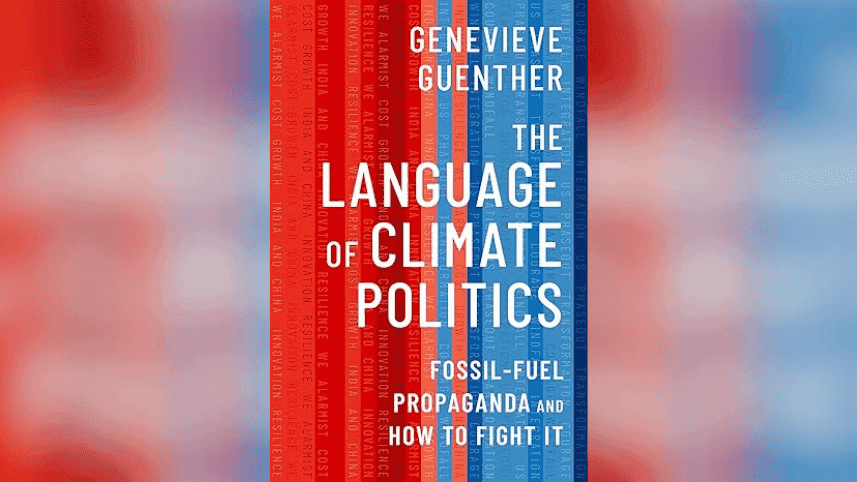
The battle over climate change is secretly a war over terminology. Discover the hidden linguistic tactics driving political paralysis.
Key Takeaways
- •The debate over climate change is fundamentally a battle over terminology used to drive specific political outcomes.
- •Urgent or emotional language serves to bypass critical analysis of proposed economic and regulatory solutions.
- •The real winners are those who successfully shift the focus from measurable action to ideological framing.
- •The next phase of political action will be driven by 'Climate Pragmatists' using risk management language, not moral appeals.
The Hook: Are You Being Programmed by Pronouns?
We are drowning in climate change discourse, yet we make no progress. Why? Because the conversation has been hijacked. It's no longer a debate about atmospheric physics; it’s a meticulously engineered battle over climate politics terminology. The recent focus on how language is framed, as highlighted by organizations tracking this rhetorical minefield, reveals a deeper, more cynical strategy: control through semantics. The real battleground isn't the ice caps; it’s the dictionary.
Forget the data for a moment. Look at the words. Terms like 'global warming' versus 'climate crisis,' or the insistence on 'existential threat.' These aren't accidental choices; they are strategic weapons designed to elicit specific emotional and political responses. When you hear 'climate justice,' understand that the underlying goal is often not ecological remediation but a massive redistribution of economic power. This is the unspoken truth of climate science communication.
The Meat: Who Wins When We Argue Over 'Net Zero'?
The review of climate language reveals a sophisticated playbook. On one side, activists and aligned media push for urgent, emotionally charged vocabulary to mandate immediate, sweeping action. This creates a sense of panic, which is the perfect condition for accepting unprecedented government intervention and regulatory overreach. On the other, entrenched interests weaponize skepticism, not by refuting facts, but by demanding 'balance' or by deploying jargon that confuses the public.
The real winners in this linguistic tug-of-war are the entities who successfully shift the debate away from verifiable, measurable engineering solutions and toward abstract, emotionally manipulative ideological framing. If the public is constantly arguing about whether to call it 'disaster' or 'adjustment,' they aren't questioning the multi-trillion dollar industries being created or destroyed by the proposed 'solutions.' This semantic distraction is far more effective than outright denial. It stalls action indefinitely while allowing the infrastructure of the new green economy to be built, often benefiting the very corporations now championing the change. This is the core of modern environmental policy.
Consider the term 'Net Zero.' It sounds clean, achievable. But dig into the fine print—often buried in dense regulatory documents—and you find reliance on unproven carbon capture technologies or complex carbon offsetting schemes that allow high-emitting sectors to continue business as usual for decades. The language promises immediate purity; the reality promises delayed, opaque compliance.
The Prediction: The Rise of the 'Climate Pragmatists'
Where do we go from here? The current polarization, fueled by linguistic warfare, is unsustainable. The public is growing weary of hyperbole and demands tangible results, not just better slogans. My prediction is a sharp pivot toward the 'Climate Pragmatists'—a politically agnostic bloc who will explicitly reject the activist lexicon and the denialist defense.
These pragmatists will succeed by adopting language focused purely on **risk management, national security, and technological advantage**. They won't talk about saving the planet; they will talk about securing energy independence through next-generation nuclear and efficient grid modernization. This shift in focus—from moral imperative to economic and geopolitical necessity—will be the only way to bypass the entrenched linguistic traps currently paralyzing effective policy. Expect major political figures to start deliberately using neutral, engineering-focused terms to signal a break from the current culture war.
The future of effective climate action hinges not on finding better science, but on forging a common, unexploitable vocabulary. Until then, the language of climate politics will remain the single greatest barrier to actual progress.
Frequently Asked Questions
What is the primary goal of controlling climate change terminology?
The primary goal is to frame the issue in a way that favors specific political or economic agendas, either by inducing panic to push for rapid, sweeping regulation or by sowing enough doubt to maintain the status quo.
Why is the term 'Net Zero' considered a linguistic trap?
It is often criticized because it allows high emitters to rely on speculative future technologies or complex offsetting schemes rather than immediate, drastic emissions reductions, thereby delaying true accountability.
What does 'Climate Politics' specifically refer to in this context?
It refers to the strategic use of language, framing, and lobbying efforts surrounding environmental science to achieve political power, regulatory change, or economic advantage, rather than focusing purely on scientific consensus.
What is the difference between climate science communication and climate politics?
Climate science communication aims to accurately convey data and findings. Climate politics involves strategically selecting and deploying terms (like 'crisis' vs. 'variability') to influence public opinion and legislative outcomes.
Related News

The Judicial Bomb: Why Teaching Kids About Corruption Is NCERT's Most Dangerous (and Necessary) Power Play
The NCERT syllabus revision exposing students to 'corruption in the judiciary' is more than education; it's a calculated political move.

The Silent Coup: How US Aid Cuts Are Weaponizing Global Science and Who Really Benefits
The reported cuts to US science aid aren't just budget trimming; they are a geopolitical strategy eroding global scientific literacy and trust.

The Invisible Cartel: Who Really Profits From 'Global Health' Aid?
Forget the headlines. The real story in global health isn't charity; it’s the opaque supply chains and the political leverage wielded by logistics giants.
