The 'Authentic Source' Lie: Why Technology Is Actually Destroying Truth, Not Saving It

Discover the hidden cost of digital authenticity. We analyze how pervasive **technology** is weaponizing the search for truth, revealing who truly benefits from the information chaos.
Key Takeaways
- •The digital economy incentivizes ambiguity and conflict, making absolute truth unprofitable for major platforms.
- •The quest for a single 'ultimate source' is a distraction; the real shift is toward localized, high-trust information bubbles.
- •Cynicism born from information fatigue is the most successful outcome for actors seeking narrative control.
- •Future information access will rely on 'unbundled', subscription-gated communities rather than open web searches.
The modern quest for the “ultimate authentic source” is a fool’s errand, weaponized by the very technology we claim will save us. We are drowning in content, yet starving for certainty. The discourse, often framed around finding reliable information in a post-truth world, misses the central, uncomfortable reality: the infrastructure of the modern internet is designed to monetize *engagement*, not *veracity*. This isn't about fake news; it's about engineered ambiguity.
The Unspoken Truth: Authenticity as a Product
When a publication—even a respected, niche one like The Alabama Baptist—discusses finding an 'ultimate' source, they are appealing to a deep human craving for stable ground. But in the digital economy, stability is bad for business. Volatility drives clicks. The real winners in this information arms race are not the truth-tellers, but the algorithms that dictate visibility. They thrive on the friction between competing narratives.
Consider the economic incentive. If a single, unimpeachable source existed for every topic, the need for endless content aggregation, commentary, and rebuttal would vanish. **Technology** platforms, from social media giants to search engines, have a vested interest in maintaining a contested information landscape. They profit from the ad impressions generated by the ensuing outrage and debate. The search for **digital authenticity** thus becomes a treadmill, perpetually running but never reaching the finish line.
Deep Analysis: Erosion of Institutional Trust
We often blame bad actors for eroding trust. That's lazy analysis. The deeper issue is the democratization of publishing, which has simultaneously democratized the capacity to *disrupt* trust. Every established institution—be it religious, governmental, or journalistic—now faces an infinite number of peer competitors, all leveraging the same sophisticated distribution **technology**. This levels the playing field in a dangerous way. A poorly researched blog post, amplified by smart targeting, can achieve the same reach as a Pulitzer-winning investigation, provided it hits the right emotional chord.
The result is a cultural fatigue. People aren't just confused; they are exhausted. This exhaustion leads to cynicism, which is perhaps the most valuable outcome for those who wish to control the narrative. If nothing is true, then everything is permissible. This shift—from seeking truth to seeking tribal validation—is the true legacy of unchecked digital expansion.
What Happens Next? The Great Unbundling
My prediction is that the current model of centralized, platform-dependent information delivery collapses under its own weight of unreliability. We are heading toward a **digital authenticity** renaissance rooted in extreme localization and verified, subscription-gated communities. People will pay premium prices for guaranteed signal over noise. This 'Great Unbundling' means abandoning the idea of a universal Google search for truth and retreating into smaller, curated ecosystems where reputation is enforced by real-world ties, not algorithmic boosts.
The platforms lose power when users stop seeking universal consensus and start prioritizing closed-loop trust networks. This isn't a return to the past; it’s a fractal future where trust is earned repeatedly within small, high-trust contexts, making mass virality the antithesis of reliability.
External Context Check:
- For context on the economics of attention, review how major platforms prioritize engagement over quality: Reuters on Platform Accountability.
- Explore the historical context of media trust erosion: Pew Research on Media Trust.
- Understand the mechanics of algorithmic amplification: The New York Times on Algorithms.
Frequently Asked Questions
What is the 'Unspoken Truth' about online authenticity?
The unspoken truth is that the technology platforms distributing information profit directly from the conflict and debate generated by uncertain or competing narratives, disincentivizing the establishment of a single, undisputed authentic source.
How does technology weaponize the search for truth?
Technology weaponizes it by providing infinite amplification tools to narratives that generate high engagement (often emotionally charged or controversial ones), regardless of their factual basis, thereby overwhelming genuinely vetted information.
What does 'The Great Unbundling' of information mean?
It means users abandoning generalized platforms like major search engines and social media feeds in favor of paying for highly specific, reputation-verified, and often closed communities where trust signals are stronger than mass virality.
Is technology inherently bad for finding truth?
No, technology itself is neutral. However, the current dominant business model—the attention economy—is structurally misaligned with the goal of disseminating objective, verified truth.
Related News

The Hidden War: Why Arista, Cadence, and Palo Alto Stock Surges Signal a Tech Reckoning
Beyond the analyst hype, the quiet strength of ANET, CDNS, and PANW reveals a dangerous consolidation in the 'picks and shovels' of the AI economy.
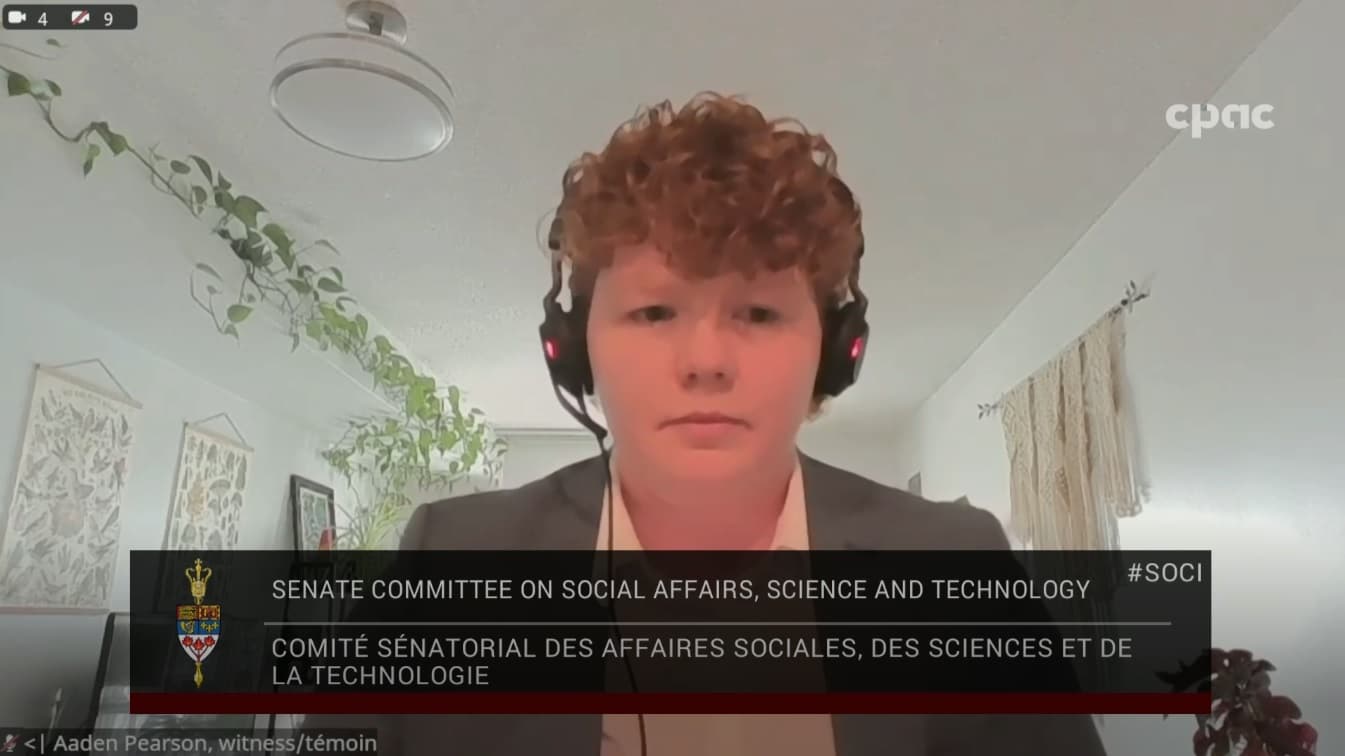
CPAC's 2026 Tech Briefing: The Silent Coup Behind the 'Social Affairs' Facade
Forget the pleasantries. The February 12, 2026 CPAC session on Social Affairs and Technology signals a seismic shift in digital governance and **AI regulation**—and you're not invited to the boardroom.

The Hidden Cost of 'Digital Health': Why Rady and CHOC's Tech Push Isn't About Your Kids
Investigating the true winners in pediatric healthcare technology adoption, beyond the glossy press releases from Rady Children’s and CHOC.

DailyWorld Editorial
AI-Assisted, Human-Reviewed
Reviewed By
DailyWorld Editorial