The Ariel Mission's Secret Weapon: Why OPAL Isn't Just About Finding Planets, It's About Crushing NASA's Exoplanet Supremacy
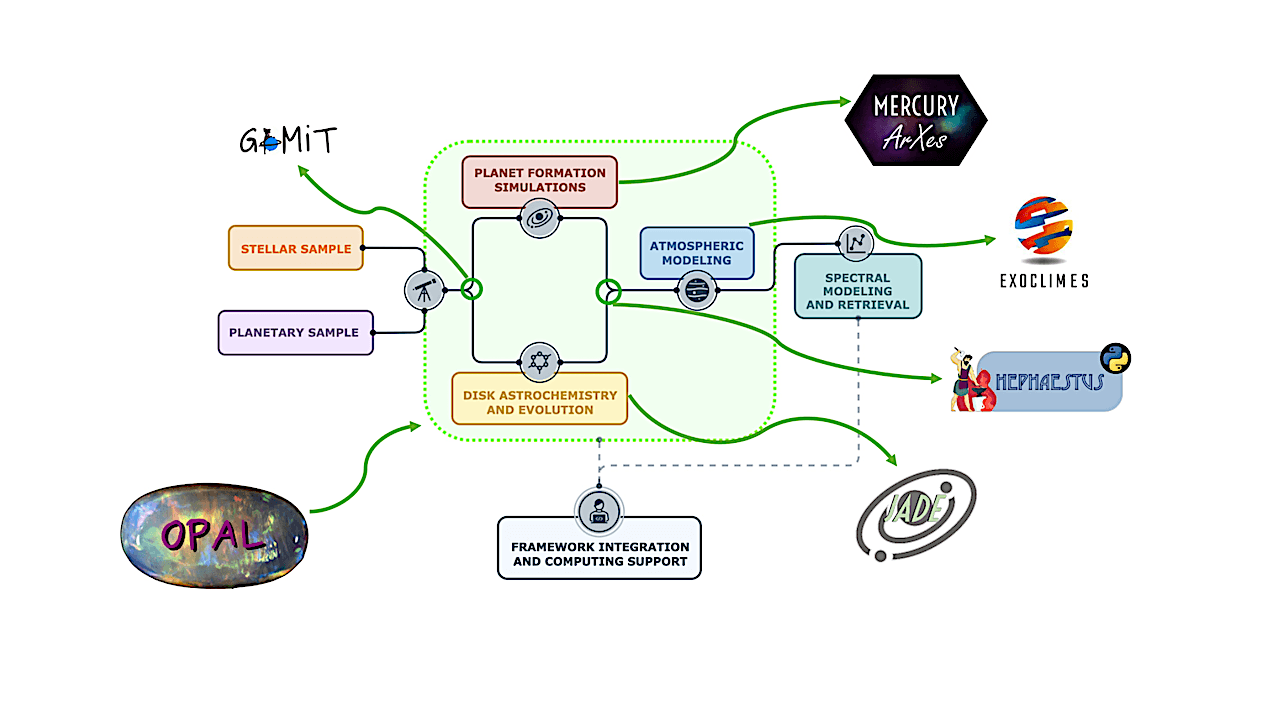
The ESA's OPAL project for the Ariel mission is a massive undertaking, but the unspoken truth is about geopolitical dominance in exoplanet science.
Key Takeaways
- •OPAL is strategically designed to give ESA control over the interpretation framework for Ariel's atmospheric data.
- •The project shifts focus from exoplanet detection to deep, contextualized atmospheric analysis.
- •This move represents a geopolitical effort to challenge American dominance in fundamental astrophysics research.
- •Expect future data analysis to diverge significantly based on OPAL-derived versus NASA-centric formation models.
The Hook: The Quiet Coup in Cosmic Cartography
Everyone is focused on the flashy numbers: the thousands of exoplanet discoveries and the search for biosignatures. But the real story behind the European Space Agency’s (ESA) Origins Of Planets For ArieL (OPAL) Key Science Project isn't just about planetary formation; it’s about a calculated, strategic push to reclaim the narrative dominance currently held by NASA. This isn't just science; it's a high-stakes geopolitical chess match played out across light-years.
The Ariel mission, set for launch, is designed to characterize the atmospheres of hundreds of known exoplanets. OPAL is the crucial ground-level infrastructure—the “end-to-end campaign”—ensuring that the data Ariel collects is pristine, contextualized, and, crucially, interpreted by European scientists first. This focus on atmospheric characterization, while scientifically sound, is the key differentiator. While TESS and JWST primarily focus on detection and initial spectral snapshots, Ariel, powered by OPAL’s preparation, aims for the deep dive into atmospheric chemistry.
The Unspoken Truth: Data Ownership and Scientific Hegemony
Who truly wins here? Not the public, initially. The winners are the consortiums and national space agencies funding OPAL. By controlling the preparatory pipeline—the modeling, the calibration standards, and the initial data processing protocols—European scientists are effectively building a proprietary filter through which all future Ariel data flows. This preemptive control over methodology is far more valuable than a single discovery. It ensures that the foundational papers, the ones that define the next decade of exoplanet research, are authored and validated within their sphere of influence.
The losers? Largely, the American-led data science community that might otherwise have integrated Ariel’s findings into their existing, NASA-centric models. This isn't mere academic rivalry; it’s about setting the standard for what constitutes a 'valid' exoplanet atmosphere. If OPAL’s modeling proves robust, it forces NASA’s next-generation instruments to calibrate against European benchmarks. This is a subtle but profound shift in the global scientific power structure.
Deep Analysis: Why Context Trumps Discovery
The age of simply *finding* planets is over. We know there are billions. The new frontier is *understanding* them. OPAL’s entire existence hinges on providing the necessary context for Ariel's atmospheric observations. Think of it like this: finding a strange chemical signature on an alien world is worthless without a robust model of how terrestrial planets form and evolve under extreme conditions. OPAL is building those models from the ground up, focusing heavily on the physics of accretion and migration—the very foundation of planet formation.
This focus is a direct counterpunch to the current obsession with habitability. While everyone chases the next Earth 2.0, OPAL ensures that the scientific community understands *why* Earth is the way it is, by rigorously testing formation theories against the most diverse sample set Ariel will provide. It’s a move from opportunistic discovery to systematic, theory-driven investigation. For more on the historical context of international space collaboration, see the overview on the European Space Agency’s history.
What Happens Next? The Great Model Schism
My prediction is stark: Within five years of Ariel’s primary mission, we will see a significant divergence in published exoplanet atmospheric compositions between papers primarily citing NASA instruments (like JWST) and those utilizing Ariel/OPAL data. These differences won't be observational errors; they will be methodological schisms based on the underlying assumptions baked into the OPAL framework versus legacy American models. This will force a global scientific reckoning on which formation theories best explain the observed diversity. Expect intense, highly publicized academic friction between the two camps.
The scramble for data access and the subsequent integration of OPAL’s methodologies into international observatories will define the next era of astrophysics. This is the quiet war for cosmic truth, fought with algorithms and peer review. Check out NASA’s current exoplanet catalog for comparison.
Gallery

Frequently Asked Questions
What is the primary goal of the ESA's Ariel mission?
The primary goal of the ARIEL (Atmospheric Remote-sensing Infrared Exoplanet Large-survey) mission is to characterize the atmospheres of roughly 1,000 known exoplanets across a wide range of sizes and temperatures to understand how planets form and evolve.
How does the OPAL project relate to the Ariel mission?
OPAL (Origins Of Planets For ArieL) is the Key Science Project that develops the end-to-end infrastructure—the models, calibration standards, and analysis pipelines—necessary to process and interpret the high-quality atmospheric data collected by the Ariel space telescope.
What is the difference between Ariel and NASA's JWST for exoplanet study?
While JWST excels at detailed characterization of a few small targets, Ariel, supported by OPAL, is designed for a large-scale survey (over 1,000 targets) focused on statistical understanding of atmospheric composition across diverse planetary types.
Why is 'planet formation' a key part of an atmospheric mission?
Understanding the atmospheric composition (what gases are present) directly informs scientists about the planet's history, including where it formed in its star system and how it migrated, which are core elements of planet formation theory.

DailyWorld Editorial
AI-Assisted, Human-Reviewed
Reviewed By
DailyWorld Editorial