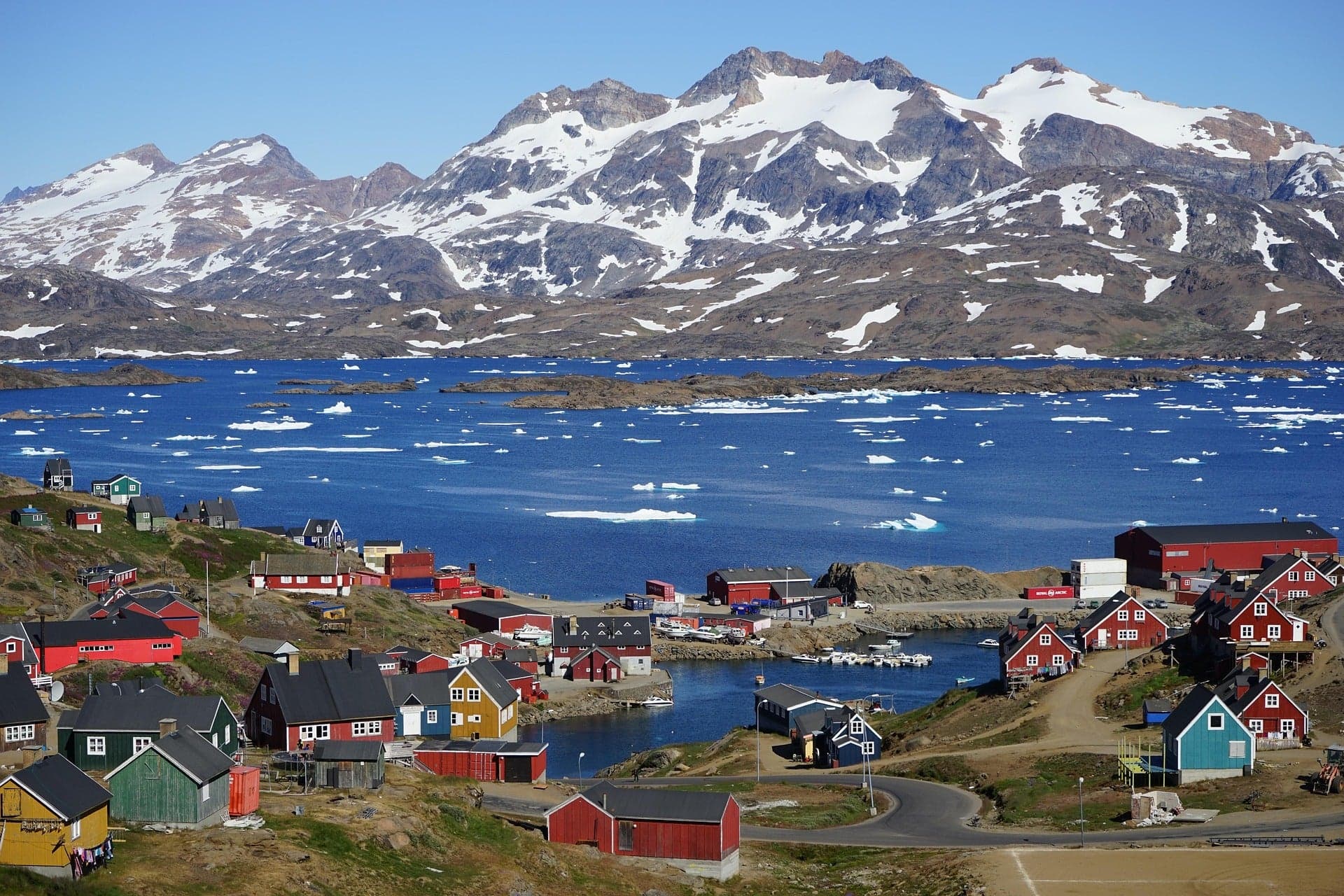
The fraying US-Greenland science partnerships hide a brutal truth: it's not about climate change, it's about rare earth mineral dominance.
Are US-Greenland scientific collaborations truly dissolving due to academic friction, as suggested by recent reports like the one from the University of Colorado Boulder? **The unspoken truth is far more cynical.** This isn't a story about grant funding or mismatched research priorities; it's a high-stakes geopolitical chess match played out on melting ice sheets. The real battleground is the seabed, rich with the **rare earth elements** critical for modern defense systems and green energy transitions.
### The Illusion of Pure Research
When the headlines focus on the 'thin ice' of academic cooperation, they deliberately obscure the economic engine driving the friction. Greenland, achieving greater autonomy, is realizing the immense value locked beneath its permafrost and coastal waters. The US, historically the dominant scientific partner, is finding its access challenged by actors who offer more immediate, tangible investment—namely, China and increasingly, European powers looking to secure supply chains independent of American influence.
Consider the context: The race for **critical mineral supply chains** is the defining economic conflict of the 21st century. Greenland holds vast deposits of neodymium, dysprosium, and lithium. Scientific partnerships, while ostensibly about climate modeling and glaciology, inevitably pave the way for resource exploration and infrastructure development. When the US relationship falters, it’s because Greenland is hedging its bets, seeking partners who will build mines and processing facilities, not just publish papers. This is **geopolitics disguised as atmospheric
science**.
### Who Truly Wins and Who Loses?
The primary loser in this perceived 'breakdown' is the long-term, foundational American research infrastructure in the Arctic, which relied on decades of established trust. The short-term winner is Greenland’s sovereign ambition. They are leveraging their unique position—a crucial strategic location bordering the North Atlantic—to extract maximum economic benefit from their resources. China, despite public apprehension in the West, often offers capital investment and infrastructure development rapidly, bypassing slow-moving US bureaucratic processes. The US focus on climate science is noble, but it’s insufficient leverage against a nation offering concrete development deals.
This shift signals a major realignment. The West is scrambling to maintain influence in a region rapidly becoming militarized and economically contested. The narrative of 'failed partnership' conveniently shifts blame away from Washington’s failure to compete with aggressive foreign investment strategies in securing these vital resources. **The integrity of Arctic science is now intrinsically tied to mineral extraction rights.**
### What Happens Next? The Prediction
We predict a rapid bifurcation: The US will pivot from broad scientific partnerships to **highly transactional, defense-oriented agreements** with Greenland, focusing narrowly on surveillance, navigation, and strategic military positioning, effectively turning research into intelligence gathering. Simultaneously, Greenland will accelerate resource deals with non-US entities, prioritizing speed and capital injection over long-term environmental oversight favored by American institutions. This will lead to a volatile, short-term boom in Arctic mining activity, creating massive environmental liabilities that the US will inevitably be asked to help clean up later. The era of amiable scientific exchange is over; welcome to the era of **Arctic resource nationalism**.
---
**Key Takeaways (TL;DR):**
* The US-Greenland science rift is primarily driven by the global race for **critical mineral supply chains**, not academic disagreements.
* Greenland is strategically leveraging its autonomy to secure direct economic investment for its mineral wealth.
* Expect US engagement to shift from broad research to narrow, defense-focused transactional agreements.
* This signals the end of purely collaborative Arctic science, replaced by resource nationalism.