The AI Health Spy: Why That University Hackathon Winner Hides a Terrifying Privacy Nightmare
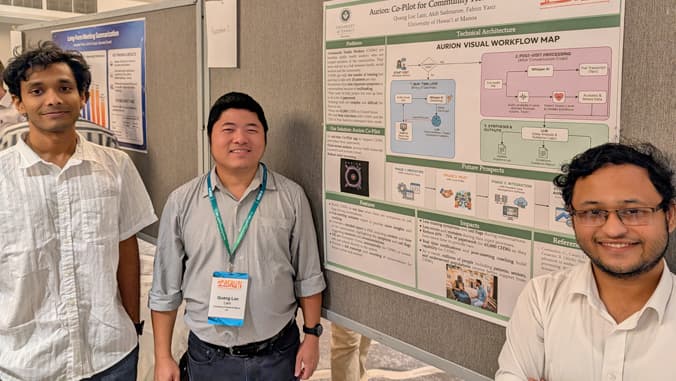
This new AI tool detecting 'hidden health distress' isn't just progress; it's a blueprint for mass surveillance. Unpacking the true cost of automated wellness checks.
Key Takeaways
- •The AI tool normalizes continuous, passive biometric monitoring across daily activities.
- •The true winners are the entities that gain access to this new, highly sensitive data stream.
- •Bias in training data risks disproportionately flagging already vulnerable populations.
- •Expect rapid enterprise adoption under the guise of 'risk mitigation' rather than genuine care.
The Hook: Are We Trading Health for Hyper-Vigilance?
Another international hackathon concludes, another supposed victory for humanity. This time, it’s the University of Hawaii System team claiming the crown for an AI tool designed to detect hidden health distress. On the surface, it’s a heartwarming story: technology saving lives, predicting crises before they manifest. But peel back the veneer of altruism, and you find the real story: the accelerating normalization of algorithmic intrusion into our most private biological states. This isn't just about spotting depression; it’s about normalizing constant, passive biometric monitoring.
The 'Meat': Beyond the Hackathon Hype
The technology, reportedly analyzing subtle cues—perhaps vocal inflections, typing cadence, or even visual micro-expressions—aims to flag individuals in acute psychological or physiological decline. The immediate application seems noble: flagging a student on the brink or an employee suffering burnout. But who controls the data streams feeding this AI health engine? And what happens when the definition of 'distress' inevitably broadens beyond immediate crisis?
The winners celebrate a trophy. The real winner is the infrastructure that stands ready to ingest this data. Think about the implications for insurance underwriting, employment screening, or even law enforcement profiling. The victory isn't in the code; it's in the successful validation of a new data acquisition vector. This is the latest frontier in predictive analytics, moving from predicting stock market swings to predicting your next breakdown.
The 'Why It Matters': The Erosion of the Private Self
We are witnessing the slow, voluntary surrender of cognitive autonomy. For decades, we fought for the right to keep our medical records private. Now, we are building tools that monitor us in real-time, without consent forms signed at the moment of observation, only retrospective acceptance buried in terms of service. This AI tool thrives on continuous surveillance. If your job requires you to use the software, or your university mandates the monitoring for 'safety,' you are perpetually under the lens.
This isn't about preventing suicide; it’s about preemptive control. Imagine an employer flagging an employee exhibiting 'distress' patterns just before a major negotiation, leading to a quiet reassignment or termination based on an algorithm’s subjective interpretation. This is the core danger. The model is trained on data sets that inherently carry societal biases, meaning marginalized communities, already facing systemic stress, will likely be flagged more frequently, leading to disproportionate scrutiny. This development fundamentally shifts the balance of power toward institutions.
What Happens Next? The 'Wellness' Panopticon
My prediction is this: Within three years, the most successful enterprise software packages will integrate this kind of passive health monitoring as a standard 'HR/Safety compliance' feature. Companies won't deploy it under the guise of 'caring'; they will deploy it under the guise of 'risk mitigation.' Insurance companies will demand API access to this data to adjust premiums. Furthermore, expect a massive pushback—not against the technology itself, but against mandated use. We will see the rise of 'unmonitored zones' or 'digital detox' movements as a luxury good, available only to those who can afford to opt out of the constant AI health scan. The push for predictive analytics will inevitably collide with the fundamental human need for unobserved existence. Read more about the ethics of digital surveillance here: Reuters on Digital Rights.
The Unspoken Truth: Who Really Wins?
The students win recognition. The University wins prestige. But the true victors are the data aggregators and the platform providers who can now monetize the subtle signals of human suffering. They have weaponized empathy.
Frequently Asked Questions
What is the primary ethical concern with AI detecting hidden health distress?
The primary concern is the erosion of privacy and the potential for mission creep, where data collected for well-being is later used for punitive measures like employment screening or insurance denial.
How might this AI tool affect workplace dynamics?
It could lead to a culture of 'algorithmic presenteeism,' where employees feel pressured to mask any signs of stress to avoid being flagged by monitoring software, potentially worsening burnout.
Where do similar predictive analytics technologies currently exist?
Similar predictive analytics are already used in financial fraud detection and targeted advertising, but applying them to granular psychological states marks a significant escalation in surveillance scope. For context on surveillance history, see <a href="https://www.britannica.com/topic/panopticon">Britannica on the Panopticon</a>.
Are there high-authority examples of AI bias in healthcare?
Yes, numerous studies have shown that algorithms used for healthcare resource allocation can exhibit bias against minority groups if the training data reflects historical inequities in care access. See reporting from the <a href="https://www.nytimes.com/">New York Times on AI Bias</a>.
