The $80 Billion Lie: Why Advanced Packaging Hype Masks a Geopolitical Chip War Disaster
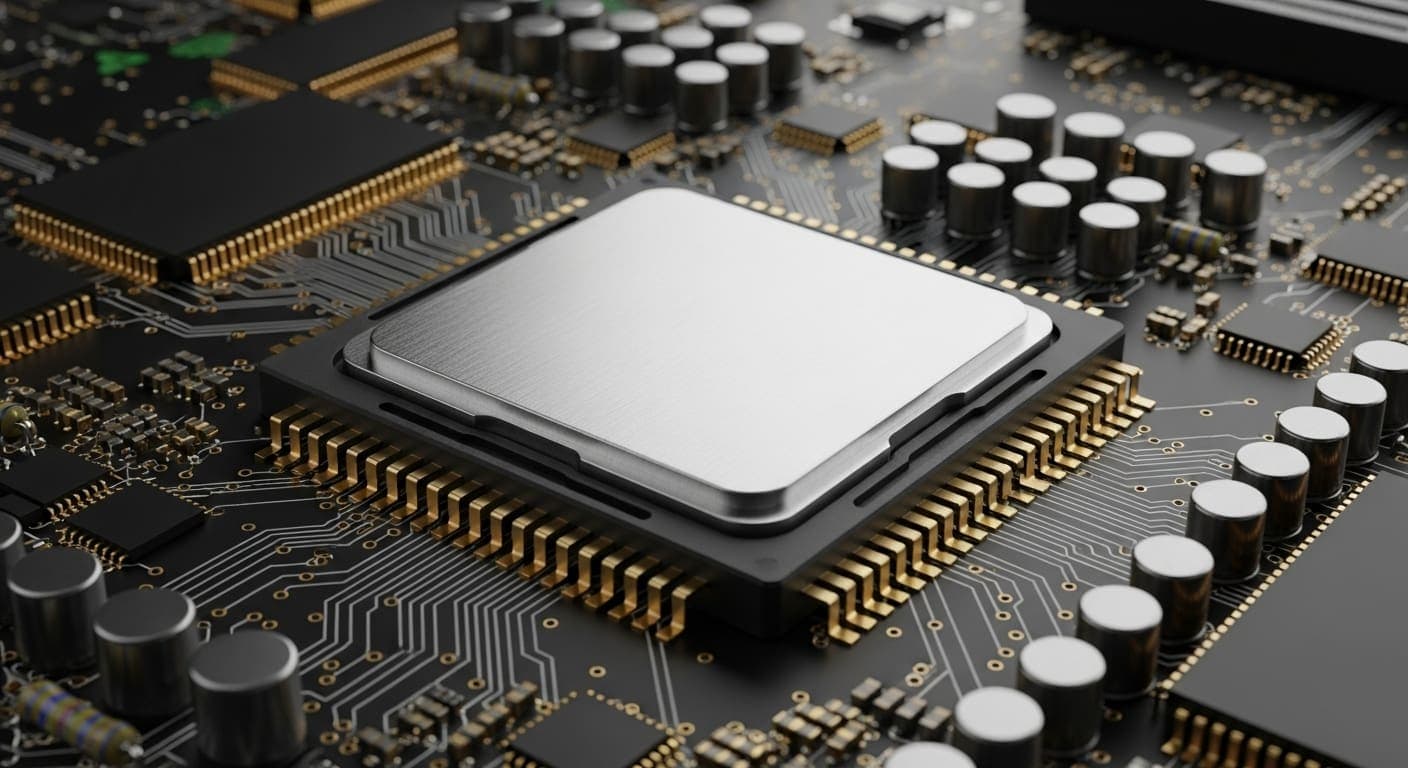
SkyWater's $80B advanced packaging forecast is here, but the real story is the hidden bottleneck in global chip sovereignty.
Key Takeaways
- •Advanced packaging capacity, not just wafer fabrication, is the critical bottleneck for future high-performance chips.
- •The $80B projection masks a massive technical hurdle that current Western players struggle to meet at scale compared to Asian incumbents.
- •Expect aggressive consolidation or forced partnerships as governments realize onshoring packaging expertise is harder than building fabs.
- •The complexity in heterogeneous integration could lead to higher end-product costs despite market growth.
The headlines scream growth: SkyWater Technology is projecting an eye-watering $80 billion advanced packaging market by 2033. On the surface, this looks like the semiconductor industry finally solving its scaling woes—the triumphant end of Moore’s Law fatigue. But look closer. This isn't a story about innovation; it's a story about desperate necessity and a colossal, under-discussed geopolitical choke point. We need to talk about advanced packaging, and more specifically, who is actually positioned to profit from this supposed boom in semiconductor manufacturing.
The Unspoken Truth: Packaging is the New Fabrication
For decades, the industry worshipped at the altar of shrinking transistors on silicon wafers. Now, we’ve hit the physical limits, and the solution isn't smaller nodes; it’s stacking, connecting, and integrating existing components smarter. This is the realm of advanced packaging—think chiplets, 3D stacking, and hybrid bonding. It allows companies like AMD and Nvidia to create performance monsters without relying solely on TSMC’s bleeding-edge fabrication plants (fabs).
The unspoken truth? Advanced packaging capacity is the *new* bottleneck. Fabrication is hard, but heterogeneous integration—the ability to flawlessly connect logic, memory, and specialized accelerators using technologies like fan-out wafer-level packaging (FOWLP)—is exponentially harder and requires specialized, often proprietary equipment and expertise. The market projection of $80B by 2033 is less a confident forecast and more a desperate prayer that the West can catch up to Asia’s decades-long lead in assembly, testing, and packaging (ATP).
The Geopolitical Realignment: Winners and Losers
Who really wins in this scenario? Not the chip designers (the Apples and Intels) who will still demand the best performance. The true winners are the specialized foundries and packaging houses that possess the intellectual property for these complex interconnects. SkyWater itself is positioning itself in this space, but their challenge is scale. The incumbents—ASE Technology Holding in Taiwan, Amkor Technology, and the packaging arms of major Asian players—already control the lion's share of this complex ecosystem.
The losers are the governments banking on 'onshoring' chip production. Building a leading-edge fab is one massive hurdle; building the ecosystem of packaging partners required to support it is another, perhaps more insidious, one. If the US and Europe cannot rapidly scale advanced packaging capacity, their multi-billion dollar fab investments become partially stranded assets, unable to produce the final, high-value components needed for AI and defense systems. This isn't just about supply chain resilience; it's about national security being dictated by the speed of epoxy curing and copper redistribution layers.
What Happens Next? The Consolidation Wave
The $80B market will not be carved up evenly. My prediction is that we will see aggressive, government-subsidized consolidation within the next five years. Expect major Western semiconductor firms—Intel, perhaps even Micron—to either acquire smaller, nimble packaging specialists or be forced into joint ventures with the Asian incumbents to secure necessary technical know-how. The 'decoupling' narrative will prove impossible to maintain in the high-end packaging sector. Furthermore, the complexity will drive prices up faster than the volume can absorb, meaning consumers might see performance gains slow down even as the market value inflates. The battle for advanced semiconductor packaging supremacy is about to get very messy.
For context on the sheer complexity involved, one can review the fundamental physics of modern transistors [https://www.ibm.com/topics/transistors]. The shift in focus mirrors historical industrial revolutions where the final assembly process proved to be the ultimate gatekeeper [https://www.reuters.com/technology/].
Frequently Asked Questions
What is the difference between advanced packaging and traditional chip manufacturing?
Traditional manufacturing focuses on shrinking the transistor size on a single monolithic die. Advanced packaging focuses on integrating multiple smaller, specialized dies (chiplets) together using sophisticated 3D stacking and high-density interconnects to achieve performance gains without relying solely on smaller process nodes.
Why is advanced packaging so important for AI hardware?
AI accelerators require massive bandwidth between compute units and high-bandwidth memory (HBM). Advanced packaging techniques like 2.5D and 3D integration allow these components to communicate much faster and more power-efficiently than if they were separated on a traditional circuit board.
Which companies currently dominate the advanced packaging market?
The market is heavily concentrated, with major players including ASE Technology Holding (Taiwan), Amkor Technology (US), and the packaging divisions of major Asian foundries. Western efforts are focused on rapidly expanding capacity and developing proprietary technology.
What does the $80B market size by 2033 actually signify?
It signifies the industry's acknowledgment that packaging technology is now as crucial, if not more crucial, than the front-end process node shrink for continued performance scaling. It reflects a massive investment shift required to overcome physical scaling limits.
Related News

The $10 Billion Lie: Why the Rocky Mountain IP Institute Hides the Real Tech War
The annual Rocky Mountain IP Institute convenes, but the real battle for **technology** dominance isn't in the lecture halls—it's in the shadows of **patent litigation**.

The Addiction Lie: Why YouTube's 'Viewer Value' Claim is Just Genius PR for Surveillance Capitalism
YouTube executives preach 'viewer value,' but the real goal of their massive platform is far darker than mere entertainment.

The $7.8 Billion Bet: Why Gilead's Arcellx Buyout Signals the Death of the Solo CAR-T Dream
Gilead's massive $7.8bn acquisition of Arcellx isn't just about pipeline depth; it’s a brutal market consolidation signal in the competitive **biotech M&A** landscape.

DailyWorld Editorial
AI-Assisted, Human-Reviewed
Reviewed By
DailyWorld Editorial