The 2050 Tech Mirage: Why the Experts Are Wrong About the Future of Innovation
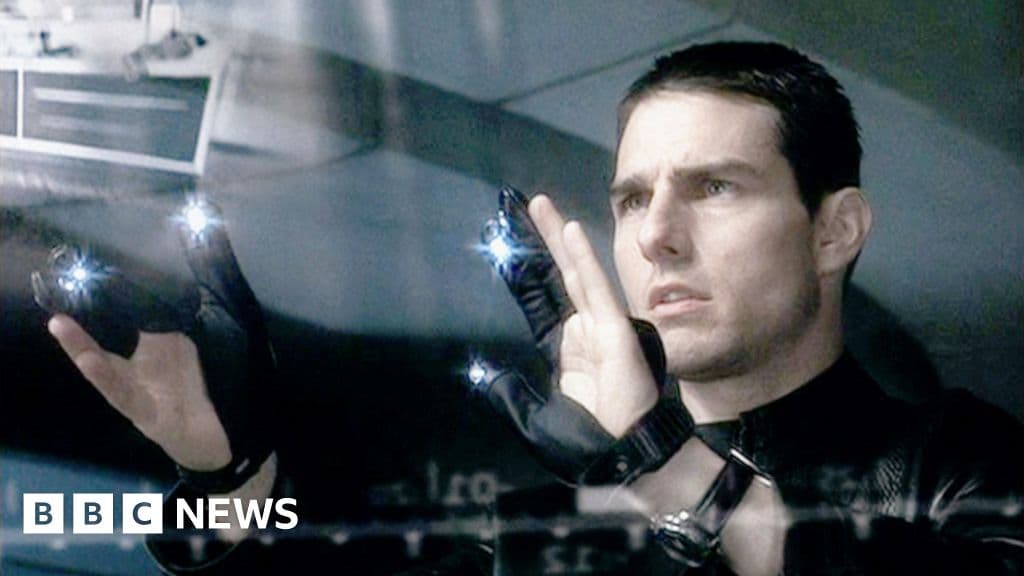
Forget flying cars. The real 2050 technology battle isn't about gadgets; it's about control. Analyzing the future of technology.
Key Takeaways
- •The major technological battle by 2050 will be over centralization of AI infrastructure, not consumer gadgets.
- •The biggest losers will be the cognitive middle class whose expertise is absorbed by proprietary, closed-loop AI systems.
- •The likely future is 'Algorithmic Feudalism,' where convenience trades for total digital compliance.
- •Experts often overlook the hidden agenda of regulatory capture in advanced computing.
The annual parade of future of technology predictions is upon us, polished by well-meaning futurists predicting seamless AI integration and ubiquitous personalized medicine by 2050. It’s a comforting narrative. It’s also almost certainly wrong. While experts focus on the visible advancements—the quantum leaps in processing power or the near-immortality promised by bio-engineering—they are missing the crucial, cynical truth: the most significant technological shift by 2050 won't be about what we can do, but what we are allowed to do. This is the hidden agenda behind the next wave of technological innovation.
The Great Filter: Centralization vs. Decentralization
The consensus paints a picture of decentralized utopia: open-source AI, personal fabrication, and individual sovereignty powered by blockchain. This is wishful thinking. The true winners of the next three decades will be the entities—governments and mega-corporations—who manage to centralize the crucial choke points of the emerging technology landscape.
Consider AI. Everyone talks about AGI, but the real power lies in the proprietary, closed-loop training data sets and the sheer computational infrastructure required to run advanced models. By 2050, the ability to access, verify, or even imagine outside the sanctioned algorithmic guardrails will be the ultimate luxury. The technology won't be democratized; it will be bureaucratized. Those predicting a world of empowered individuals are ignoring the historical precedent: every powerful tool eventually becomes a tool of management.
The Unspoken Losers: The Middle Class of Cognition
Who loses? Not the ultra-rich, who will own the means of production (both digital and physical). Not the poorest, who will be minimally affected by algorithmic governance, living largely outside the fully digitized sphere. The losers are the professional cognitive class—the lawyers, mid-level managers, coders, and analysts whose value proposition relies on processing complexity that AI will absorb.
Their skills become obsolete faster than they can reskill. They are trapped between the proprietary systems of the elite and the basic needs of the un-digitized masses. This creates a massive socio-economic rift, not between the rich and poor, but between the Algorithm Owners and the Algorithm Subjects. This is the structural failure experts conveniently ignore when discussing brain-computer interfaces.
Where Do We Go From Here? The Prediction of 'Algorithmic Feudalism'
My prediction is that by 2050, we will not live in a cyberpunk dystopia of neon and grime, but in a hyper-efficient, aesthetically pleasing system I call Algorithmic Feudalism. Everything necessary for life—access to credit, optimized healthcare routes, educational modules, even approved social interaction—will be mediated by proprietary, opaque systems controlled by a handful of global tech trusts.
Freedom won't be restricted by physical walls, but by digital permissions. Want a better loan rate? You must consent to deeper biometric monitoring. Want access to advanced education? Your loyalty metrics must be impeccable. The technology won't enslave us with force; it will gently guide us into perfect compliance through optimized convenience. The experts focus on the speed of the internet; we should be focusing on the gates.
To understand the current trajectory of digital control, look at the historical parallels in centralized infrastructure control, such as the early days of railroads or the modern control of global finance. For deep context on how centralized power structures evolve, read about the historical impact of infrastructure monopolies [Reuters]. The fight for technological ethics today is a fight for the very definition of autonomy tomorrow [The New York Times]. The underlying physics of computation might change, but human nature—and the desire for control—does not [Stanford Encyclopedia of Philosophy].
Gallery



Frequently Asked Questions
What is the main flaw in most 2050 technology predictions?
Most predictions focus on performance increases (faster chips, better health) while ignoring the critical issue of centralization and who controls access to these powerful new tools.
What does 'Algorithmic Feudalism' mean for the average person?
It means that essential life services—like finance, healthcare access, and education—will be granted or denied based on opaque compliance scores dictated by proprietary AI systems owned by a few entities.
Which jobs are most at risk from the predicted 2050 technological shifts?
Jobs relying on processing complex, non-routine information that can be codified—such as mid-level legal analysis, specialized coding, and management—face obsolescence as proprietary AI absorbs these functions.
Are quantum computing breakthroughs guaranteed by 2050?
While significant progress is expected, the article argues that the immediate impact of quantum computing will be restricted to state and corporate actors capable of building and maintaining the necessary infrastructure, further centralizing power.
