Seagate's Stock Surge Isn't About Hard Drives—It's About the AI Data Hoarders You Never Hear About

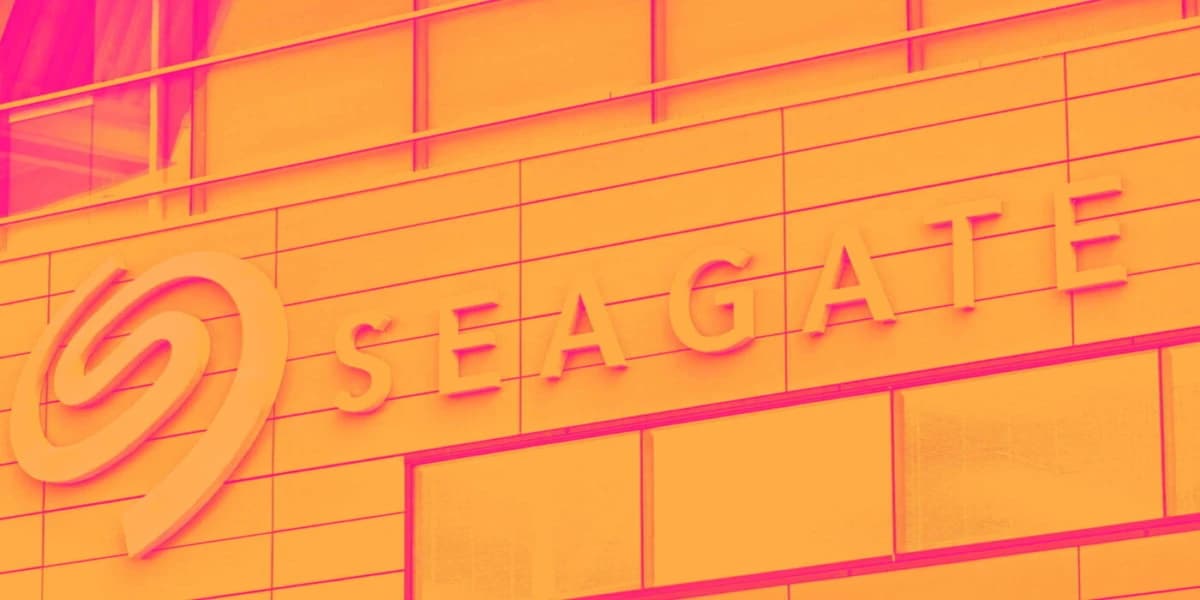
Seagate Technology (STX) shares are spiking, but the real story isn't consumer tech; it's the hidden infrastructure fueling the AI arms race.
Key Takeaways
- •Seagate's stock surge is a proxy indicator for AI industry's massive data hoarding problem.
- •The current high demand for HDDs is a short-term inventory restocking phase for LLM training data.
- •The future of AI storage will rapidly shift toward high-speed SSDs, challenging STX's core business model.
- •Geopolitical control over high-density storage is becoming a strategic national asset.
The Hook: The Unspoken Truth Behind Seagate's 'Surge'
Why is Seagate Technology (STX) stock suddenly surging? Most analysts will point to a vague recovery in the enterprise storage market or perhaps some minor uptick in PC sales. That's the surface noise. The real, unnerving truth is that this rally isn't about selling more external drives to consumers; it’s about the desperate, almost pathological need for massive, centralized data storage required by the Artificial Intelligence behemoths. This isn't a storage cycle recovery; it's an infrastructure panic.
We are currently witnessing the largest, most inefficient data hoarding spree in history. Every LLM, every deep-learning model, every synthetic media farm requires petabytes of raw, accessible data—and that data needs a physical home. Seagate, alongside its primary competitor Western Digital, owns the keys to this kingdom. If you want to store the future, you have to rent space on their platters.

The 'Meat': Why Enterprise Storage is the New Oil
The headline news focuses on the stock price, but the underlying mechanism is far more significant. The current explosion in generative AI means that companies are not just collecting data; they are duplicating it, backing it up, and archiving it across multiple tiers of storage. This creates an artificial demand floor for high-capacity hard disk drives (HDDs) that solid-state drives (SSDs) cannot yet match economically for sheer bulk storage. This is where Seagate Technology (STX) thrives.
The contrarian view? This boom is inherently fragile. It relies on the continued belief that current AI models are the best we have. If a major breakthrough renders the last three years of training data obsolete, the massive data centers built today become expensive, spinning tombstones. Who loses? The companies betting heavily on archival capacity.
The Deep Dive: Who Really Wins (and Loses)?
The ultimate winners are the cloud hyperscalers—Amazon, Microsoft, Google—who negotiate massive, multi-year procurement deals with manufacturers like Seagate. They extract the best pricing. The losers are the mid-tier data centers and specialized AI startups who get squeezed by rising procurement costs and operational overhead. Seagate’s stock surge is a direct reflection of the cloud giants' insatiable, non-negotiable appetite for physical storage capacity.
Consider the geopolitical angle. Control over data storage is rapidly becoming a national security issue. Access to reliable, high-density storage solutions, often manufactured under strict licensing agreements, is now a strategic asset. This elevates the importance of companies like STX far beyond standard cyclical tech plays. For more on the broader semiconductor and storage landscape, see reports from respected industry bodies like the Semiconductor Industry Association.
Where Do We Go From Here? A Bold Prediction
The current reliance on massive HDD arrays for AI training sets is a temporary bottleneck, not a permanent solution. My prediction is this: within 18 months, we will see a significant pivot. As flash memory costs drop and density improves, the market will rapidly transition away from the highest-capacity HDDs for active AI workloads. Seagate Technology (STX) will see its enterprise growth plateau sharply after this current inventory cycle finishes restocking the AI training pools. The next surge won't be in HDDs; it will be in specialized, high-end SSD arrays designed for near-instantaneous data retrieval, forcing STX to rapidly pivot its entire manufacturing focus or face irrelevance in the *next* generation of compute infrastructure. This rally is the last hurrah for the spinning magnetic platter in the high-stakes AI game. Read more about the evolution of flash memory here: Reuters.
Key Takeaways (TL;DR)
- STX's spike is driven by AI data center expansion, not consumer demand.
- The rally reflects hyperscalers' urgent need to archive training data.
- This reliance on massive HDD capacity is a temporary phase, not a long-term trend.
- The next major storage shift will favor high-speed SSDs for active AI workloads.
Gallery
Frequently Asked Questions
Is Seagate's stock surge sustainable in the long term?
No. The current surge is likely tied to a temporary inventory restocking cycle driven by the immediate needs of large language model training. Long-term sustainability depends on Seagate's ability to pivot rapidly into next-generation, high-speed SSD solutions, as pure HDD density plays are nearing obsolescence for cutting-edge AI.
What is the main driver behind the increased demand for enterprise storage?
The primary driver is the exponential growth of Artificial Intelligence development. Every new model requires training on petabytes of data, leading to massive, centralized storage build-outs by cloud providers, which directly benefits HDD manufacturers like Seagate.
How does this rally compare to previous storage market cycles?
This cycle is fundamentally different because the demand is inelastic and strategic, driven by capital-intensive AI projects rather than cyclical consumer spending. However, it is also more volatile, as the underlying technology (AI models) could render today's data archives less relevant much faster than in previous cycles.
Are solid-state drives (SSDs) a direct threat to Seagate's HDD business?
Yes. While SSDs are currently more expensive for archival storage, their performance advantages and declining cost curves mean they are rapidly displacing HDDs in active and semi-active storage tiers necessary for high-performance AI computing. This poses an existential threat to STX's reliance on high-capacity magnetic media.
Related News

The $10 Billion Lie: Why the Rocky Mountain IP Institute Hides the Real Tech War
The annual Rocky Mountain IP Institute convenes, but the real battle for **technology** dominance isn't in the lecture halls—it's in the shadows of **patent litigation**.

The Addiction Lie: Why YouTube's 'Viewer Value' Claim is Just Genius PR for Surveillance Capitalism
YouTube executives preach 'viewer value,' but the real goal of their massive platform is far darker than mere entertainment.
The $7.8 Billion Bet: Why Gilead's Arcellx Buyout Signals the Death of the Solo CAR-T Dream
Gilead's massive $7.8bn acquisition of Arcellx isn't just about pipeline depth; it’s a brutal market consolidation signal in the competitive **biotech M&A** landscape.

DailyWorld Editorial
AI-Assisted, Human-Reviewed
Reviewed By
DailyWorld Editorial