Ideaforge's Drone Dream Hits Turbulence: Why Deepening Losses Signal a Dangerous Reality Check for Indian Tech
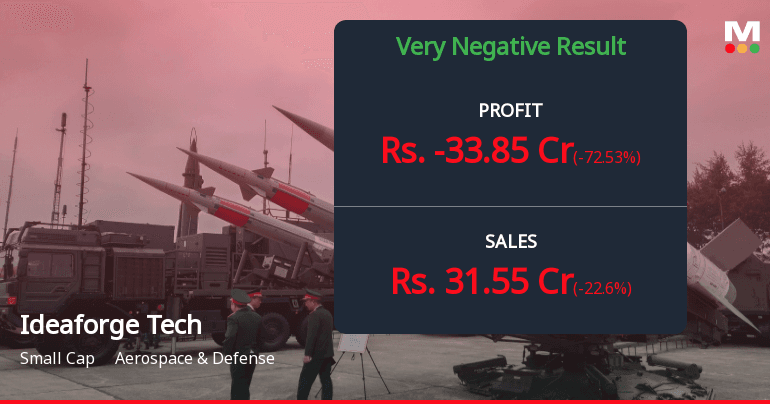
Ideaforge Technology's Q3 FY26 results reveal more than just a dip; they expose the brutal economics of the drone sector and challenge the 'India growth story' narrative.
Key Takeaways
- •Deepening losses expose structural issues beyond simple 'revenue volatility' in the defense tech cycle.
- •Reliance on slow-moving defense contracts creates unsustainable working capital strain.
- •Ideaforge must rapidly pivot to high-margin commercial drone applications to avoid a liquidity crunch.
- •The current valuation likely does not reflect the high capital intensity and long sales cycles of hardware manufacturing.
The Unspoken Truth: Drone Hype vs. Hard Cash
The news cycle is buzzing with Ideaforge Technology's deepening Q3 FY26 losses, framed by analysts as mere 'revenue volatility.' This is a dangerous simplification. The real story isn't about a bad quarter; it's about the systemic, brutal economics facing India's burgeoning aerospace technology sector. While the government pushes 'Make in India' and the defense establishment throws contracts at domestic players, the underlying financial structure of companies like Ideaforge suggests a fundamental mismatch between valuation hype and sustainable profitability. We must analyze this through the lens of capital intensity and the long, slow cycle of defense procurement.
The key takeaway from the latest figures is not the loss itself, but the persistence of the loss despite increased market visibility. High-growth technology stocks are supposed to scale rapidly, absorbing fixed costs. Ideaforge, a leader in the Indian drone market, is showing the opposite trend: costs are outpacing the ability to convert high-profile orders into reliable, recurring revenue streams. This isn't just about delays in customer payments; it’s about the high operational burn required to maintain R&D leadership in a sector where technological obsolescence is measured in months, not years.
Why This Matters: The Defense-Industrial Complex Trap
The narrative surrounding Indian defense tech has always been colored by national pride. However, defense contracts—Ideaforge's bread and butter—are notoriously slow-moving and subject to bureaucratic inertia. This creates a feast-or-famine revenue cycle. When a company relies heavily on large, infrequent government or defense orders, managing working capital becomes an exercise in financial tightrope walking. The current losses suggest they are overleveraged in anticipation of these large orders, or they are underpricing their technology to win crucial initial contracts, hoping to make it up on long-term maintenance—a margin that is rarely guaranteed.
Furthermore, the global technology stock landscape is shifting. Venture capital is demanding efficiency, not just ambition. Ideaforge’s struggle is a microcosm of a broader challenge: Can hardware-centric, long-cycle businesses thrive under the valuation expectations set by pure-play software SaaS companies? The answer, right now, appears to be a resounding no. This volatility will likely scare off institutional investors looking for predictable growth, pushing the stock back towards its intrinsic value rather than its perceived potential.
What Happens Next? A Necessary Contraction
My prediction is that Ideaforge is entering a necessary, painful contraction phase. To survive the next 18 months, they must aggressively pivot away from pure defense dependency toward higher-margin, quicker-turnaround commercial applications (e.g., infrastructure inspection, precision agriculture). If they fail to diversify their revenue base rapidly, they face a severe liquidity crunch when the next major defense order inevitably gets pushed into FY27 or FY28. The market will punish this lack of agility severely. The 'winners' in this space will not be the ones with the biggest government contracts, but those who can achieve operational profitability using private sector speed.
For a deeper look at the challenges facing capital-intensive manufacturing in India, see the analysis from the Reuters business section on supply chain financing.
The Image That Tells the Story
The image of the downward arrow, often used to signify a drop, perfectly encapsulates the current sentiment—a visual representation of financial gravity pulling down speculative valuations.  This isn't a temporary dip; it’s a structural reckoning for a high-tech firm facing low-tech financial realities.
Gallery




Frequently Asked Questions
What is the primary reason for Ideaforge Technology's deepening losses in Q3 FY26?
The primary reason appears to be the persistent mismatch between high operational and R&D costs required to stay competitive and the slow, volatile nature of revenue realization from large defense and government contracts.
How does Ideaforge's performance reflect on the broader Indian drone market?
It highlights the financial fragility of hardware-centric defense technology companies. While the market is growing, achieving profitability requires significant operational efficiency and diversification away from solely relying on government tenders.
What is the predicted necessary next step for Ideaforge?
The company needs an aggressive strategic pivot towards quicker, higher-margin commercial drone applications to stabilize cash flow and prove operational scalability outside of the defense sector.
Related News

The Oregon Auto Show's Tech Mirage: Why Today's 'Innovation' is Tomorrow's Obsolete Hardware
The Oregon International Auto Show is back, but is it showcasing true automotive technology breakthroughs or just selling shiny distractions? We analyze the real winners.

The AI Mirage: Why Your 'Smart' Tools Are Actually Just Expensive Consultants for the Elite
Forget the hype. The true cost of artificial intelligence isn't computational power; it's the centralization of decision-making power.

The GPUaaS Lie: Why On-Prem AI Infrastructure Is Actually A Vendor Lock-In Trap
The rush to build **on-prem AI infrastructure** using **GPUaaS** models isn't about control—it's about a new form of dependency. Analyze the hidden costs.

DailyWorld Editorial
AI-Assisted, Human-Reviewed
Reviewed By
DailyWorld Editorial