Evolution's Hidden Blueprint: The One Experiment That Just Broke Darwinism (And What It Means For AI)
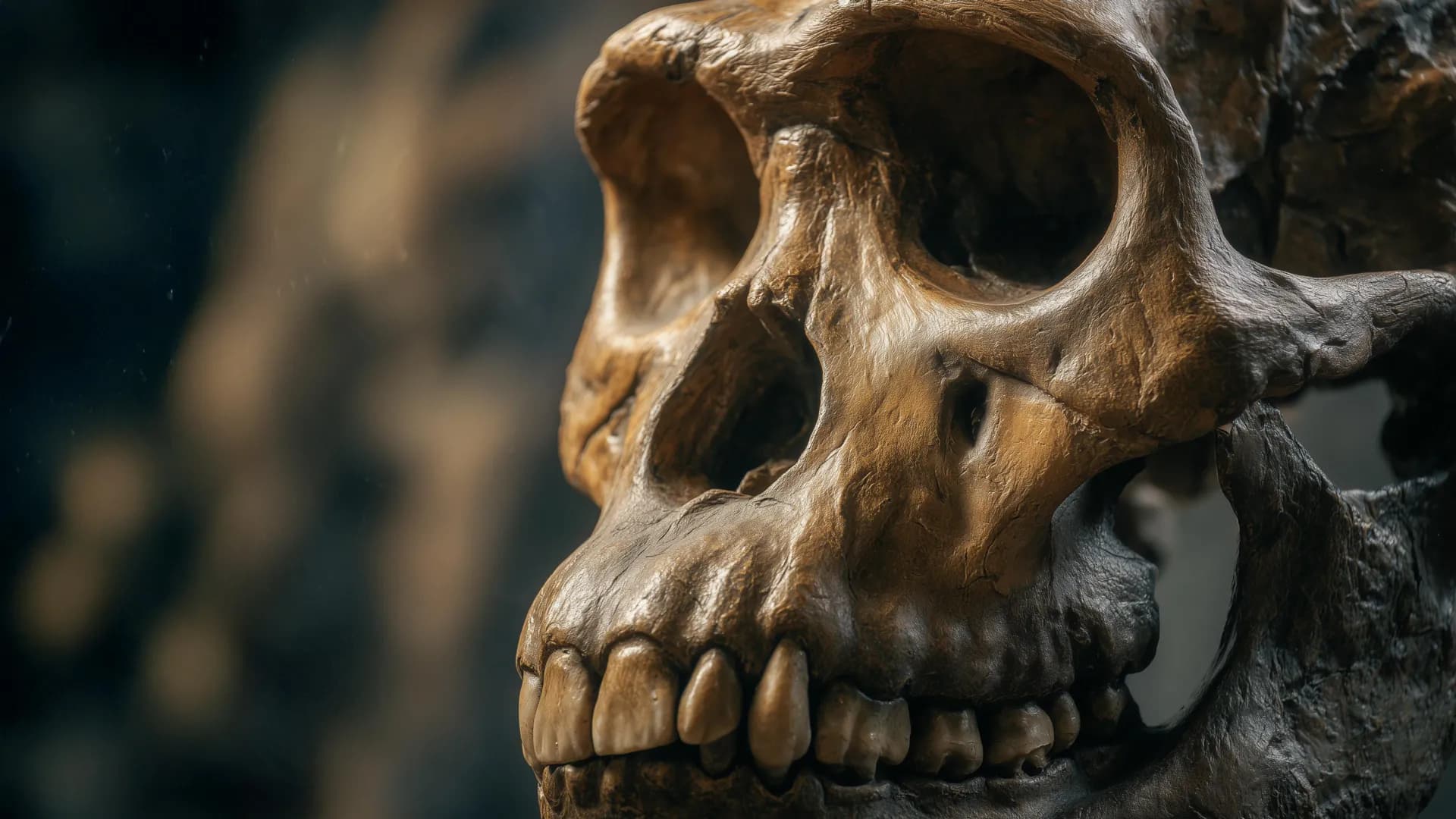
Scientists replayed evolution, revealing a shocking predictability that challenges core tenets of natural selection. Read the real implications.
Key Takeaways
- •Replaying evolution experiments showed surprising convergence, suggesting outcomes are often predetermined, not random.
- •This predictability validates the engineering approach to biology, accelerating drug and material discovery.
- •The finding challenges the philosophical view of life as purely contingent or accidental.
- •Future AI development will likely pivot toward guided, deterministic evolutionary programming over pure random search.
The Illusion of Chance: Why Replaying Evolution Isn't Random Anymore
The narrative has always been comforting: evolution is a messy, sprawling, almost accidental journey dictated by random mutation and the harsh lottery of natural selection. But a recent, groundbreaking experiment—where scientists essentially hit the 'rewind and replay' button on microbial evolution—just delivered a seismic shock to this understanding. They found that when you start the same evolutionary process twice under identical conditions, the outcome isn't just similar; it’s often startlingly identical. This isn't just a finding; it’s a **scientific paradigm shift** that demands we re-evaluate our relationship with randomness, particularly as we chase the holy grail of Artificial General Intelligence (AGI).
The core finding, often obscured by sanitized press releases, is the crushing weight of **deterministic evolution**. When the starting line is the same, the finish line seems pre-ordained. This flies in the face of the classic understanding that small, initial variations would send two parallel experiments down wildly divergent paths. Instead, the researchers observed the same beneficial mutations popping up again and again. Think of it: if evolution, over billions of years, has a preferred solution to a given environmental stressor, what does that imply about the complexity of life? It suggests that the universe is less a chaotic mess and more a highly efficient, albeit slow, optimization engine.
The Unspoken Truth: Who Really Wins When Predictability Reigns?
The immediate winners here are the computational biologists and, ironically, the engineers building the next generation of machine learning algorithms. If evolution is predictable, it means the search space for 'optimal solutions'—be they biological structures or complex code—is far smaller than previously assumed. The hidden agenda? To tame complexity. If we can map the deterministic pathways of biology, we can build software and materials that bypass eons of trial and error.
But there’s a loser: the romantic notion of radical contingency. If evolution is largely predetermined, then the uniqueness of *Homo sapiens* becomes less a miracle of cosmic luck and more an inevitable outcome of planetary physics under specific chemical constraints. This has profound philosophical implications for our perceived specialness. For a deeper dive into the principles of evolution, see the foundational work on evolution on Wikipedia.
Why This Matters: The AI Arms Race and Biological Engineering
This predictability changes the game for synthetic biology and AI development. We have been using evolutionary algorithms (like genetic algorithms) in computing for decades, largely assuming the process was exploratory and slow. Now, knowing that nature often converges on the same answer rapidly suggests we can engineer systems—from drug design to novel materials—with far greater confidence. The ability to reliably predict the next successful adaptation is the key to unlocking true biological control. This research validates the premise that we can accelerate evolution in the lab, not just observe it. For context on the scientific method behind these experiments, look at reports from authoritative sources like Reuters.
What Happens Next? The Age of Engineered Convergence
My bold prediction is that within the next decade, we will see the first large-scale, commercially viable application of 'Pre-Evolved' biological components. Instead of screening millions of random enzyme variants, engineers will use these newly mapped deterministic pathways to design the *most likely* successful variant from the outset. This will revolutionize sustainable manufacturing and medicine. Furthermore, AGI researchers will shift focus from pure random search to **guided evolutionary programming**, using these biological constraints as the scaffolding for creating intelligent systems that solve problems more efficiently than brute-force learning models. Expect major investment shifts away from purely generative AI toward systems focused on optimization via simulated, predictable evolution. Check out current trends in Nature Science Journal for related research.
The surprise isn't that evolution works; it’s that it works like a well-written piece of software with predictable subroutines. The universe is writing code we are only now learning to read.
Frequently Asked Questions
What does 'deterministic evolution' mean in this context?
It means that when evolutionary processes start under identical initial conditions, they tend to arrive at the same or very similar successful outcomes, suggesting that 'randomness' plays a smaller role than previously thought.
How does this discovery relate to Artificial Intelligence (AI)?
It suggests that the search space for optimal solutions in AI (like finding the best algorithm or network structure) might be much smaller and more predictable, allowing engineers to design solutions rather than stumble upon them.
Who are the primary beneficiaries of knowing evolution is more predictable?
Synthetic biologists, material scientists, and researchers focused on creating highly optimized, robust systems, as they can now engineer for known evolutionary endpoints.
Did the scientists break Darwin's theory of natural selection?
No, they refined the understanding of it. Natural selection is still the mechanism, but this research suggests the input (mutation) is less random than assumed, leading to more predictable evolutionary paths.
Related News

Beyond the Blades: The Hidden Engineering War Deciding Bobsled Supremacy
The supposed 'science' of bobsledding is a smokescreen for an industrial arms race. We decode the real engineering secrets driving Olympic speed.
The Atomic Ghost: Why Imaging Light-Matter Crystals Changes Everything (And Who’s Already Cashing In)
Scientists just imaged a 'supersolid' made of light and atoms. This isn't just physics; it's a blueprint for the next computing revolution.

DailyWorld Editorial
AI-Assisted, Human-Reviewed
Reviewed By
DailyWorld Editorial