Edmonton's Transit Safety Tech: The Billion-Dollar Distraction Hiding a Deeper Crisis

New transit safety technology in Edmonton is being hailed as a fix, but it ignores the core issue: systemic failure.
Key Takeaways
- •The new technology is a costly, reactive measure that masks deeper systemic social issues.
- •The primary winners are the technology vendors, not necessarily the daily commuters.
- •True safety requires human presence and social intervention, not just automated monitoring.
- •Over-reliance on tech deflects from politically difficult decisions regarding poverty and mental health services.
The Illusion of Instant Safety: Why Edmonton's New Tech Won't Solve Transit's Real Problems
Edmonton is rolling out shiny new transit safety technology, promising a future where bus and LRT incidents vanish like morning fog. On the surface, this is a win. Who argues against safer public transit? But peel back the PR layer, and you find the familiar pattern: a costly, reactive technological band-aid applied to a deep, systemic wound. The real conversation isn't about AI monitoring; it's about resource allocation and societal breakdown.
The buzz centers on advanced surveillance, perhaps predictive analytics or improved emergency response integration. This is the modern civic playbook: when public trust erodes due to rising visible disorder—crime, addiction crises, mental health emergencies on public platforms—the solution is always more cameras, more sensors, more data processing. We are investing heavily in public transit security upgrades, treating symptoms rather than curing the disease.
The Unspoken Truth: Who Really Wins Here?
The primary beneficiaries of this technological pivot are not the daily commuters, but the vendors selling the software and hardware. This is a multi-million dollar contract pipeline that thrives on fear. Cities facing budget crunches often prioritize visible, high-tech fixes over the messy, difficult work of social intervention. You can track every movement on the LRT system, but if the root causes driving desperate behavior—poverty, untreated mental illness, inadequate supportive housing—remain untouched, the technology merely becomes a very expensive witness to ongoing failure.
Furthermore, this massive influx of surveillance data raises serious questions about privacy and civil liberties. Are we building a panopticon for everyone just to catch a few outliers? The focus shifts from community safety through presence and support to safety through absolute monitoring. This is a critical philosophical misstep in Edmonton transit planning.
The Deep Dive: Safety vs. Security Theatre
True public transit safety isn't achieved through better algorithms; it's achieved through robust community presence. Historically, transit safety relied on visible, well-supported transit ambassadors and partnerships with mental health professionals who de-escalate situations before they become police matters. Technology is excellent at capturing evidence *after* an event. It is terrible at proactive, human-centric intervention.
The contrarian view is that this technology deployment is a deflection. It allows city leadership to claim they are “acting decisively” on safety concerns without having to tackle the politically volatile issues of social housing investment or policing reform. If the technology fails to stop an incident, the narrative can pivot: “The system detected it too late.” If it works, the narrative is: “Our investment paid off.” It’s a no-lose situation for the politicians, but a long-term drain on actual community resources.
What Happens Next? A Bold Prediction
Within 18 months, we will see reports highlighting the technology's success in *identifying* incidents faster, leading to positive press releases. However, we will simultaneously see a sustained, or even slightly increased, incidence of low-level disorder and feeling of unsafety among riders. Why? Because the technology only addresses observable behavior; it does nothing to change the socio-economic conditions that breed that behavior. The city will then be pressured to purchase Phase Two: even more sophisticated, expensive monitoring tools, cementing a cycle of tech dependency instead of social investment. We predict a major, high-profile failure of the system to prevent a crisis situation, leading to a public inquiry focused not on the tech's failure, but on the underlying social services gap it was meant to mask.
This isn't just about Edmonton; it’s about how North American cities are choosing to manage complexity: by automating oversight rather than investing in human connection. For more on the challenges of urban surveillance, see analysis from the ACLU on digital policing here.
Gallery


Frequently Asked Questions
What specific type of technology is being implemented on Edmonton transit?
While specific details are often proprietary, these rollouts typically involve AI-enhanced CCTV monitoring, real-time data analytics platforms, and improved emergency communication links designed to speed up response times.
Is this technology proven to reduce crime rates?
Technology often proves effective at increasing the *detection rate* of incidents, which can lead to faster police response. However, studies show that technology alone rarely causes a sustained, significant reduction in underlying crime or disorder without concurrent social programs.
What are the main privacy concerns with transit surveillance upgrades?
The primary concerns revolve around the aggregation of vast amounts of personal movement data, the potential for mission creep (using safety data for unrelated enforcement), and the lack of transparent oversight on how algorithms make decisions.
How does this compare to strategies used in other major cities?
Many leading cities, such as those in Scandinavia, focus more on 'eyes on the street' through increased operator presence and community liaison programs, viewing technology as a supplementary tool rather than the primary driver of safety.
Related News
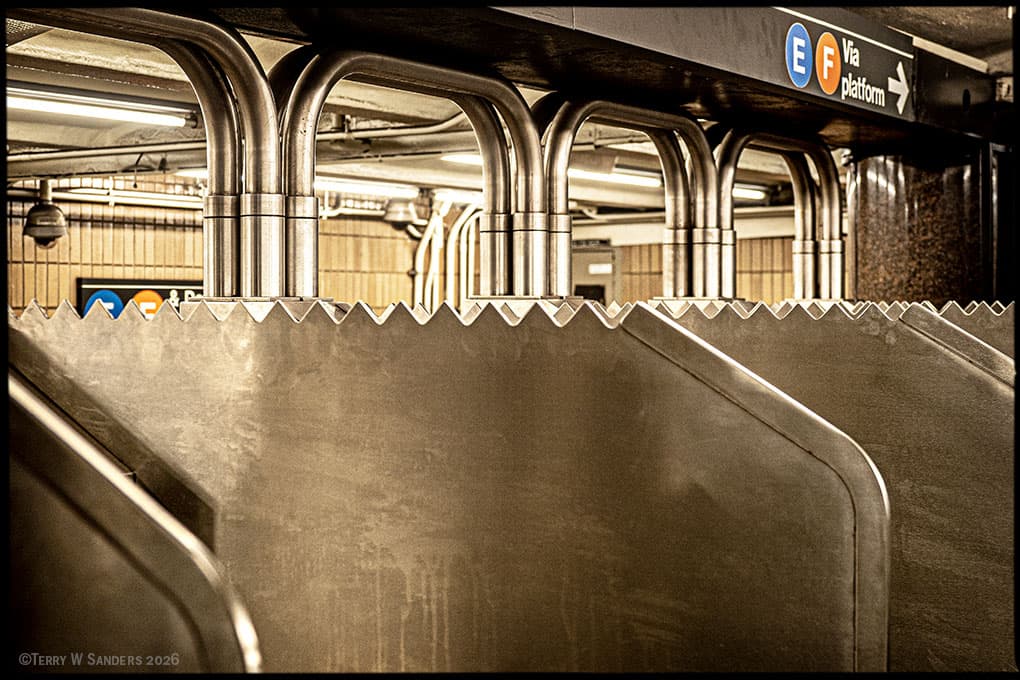
The MTA's 'Shark Teeth' Are Not About Fare Evasion—They're About Data Collection
The NYC subway's new 'shark teeth' turnstile dividers aren't just for stopping fare jumpers; they signal a deeper shift in transit security and surveillance.
The Surveillance State on the Subway: Why Edmonton's New Transit Tech Is a Trap, Not a Shield
Edmonton's new transit safety tech promises security, but it masks a deeper surveillance creep. Is this smart policing or social control?
