Davos Unmasked: The Secret War for AI Supremacy Hiding Behind Tariffs and Taiwan Talk

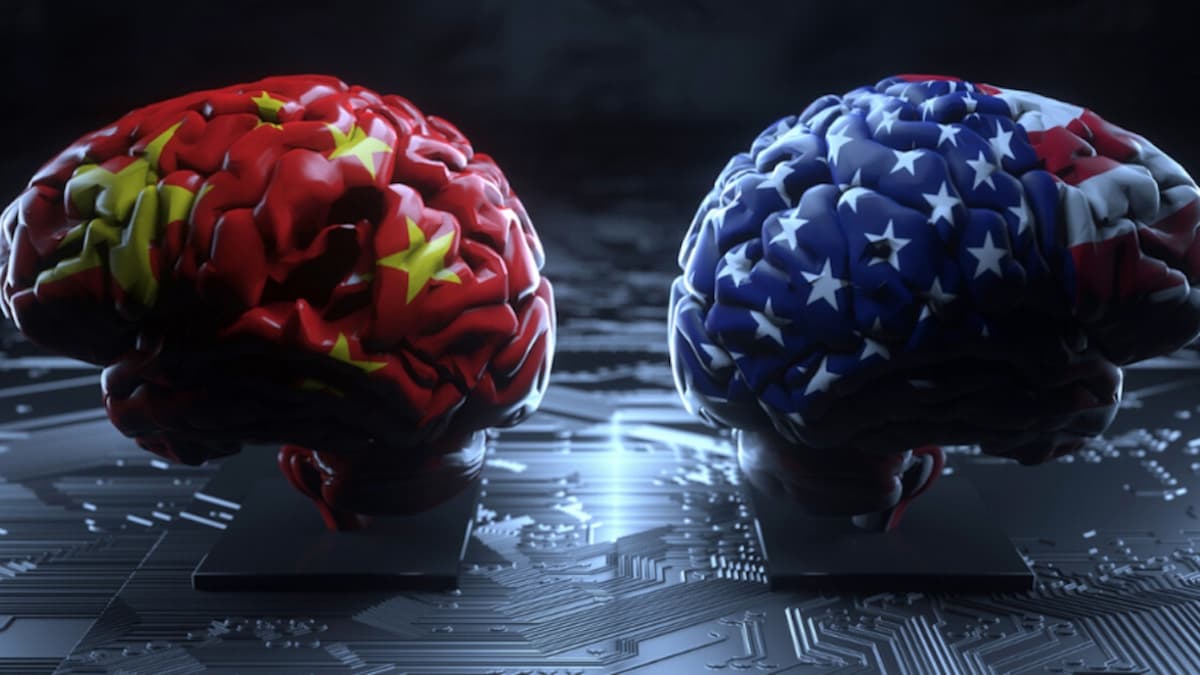
The US-China tech standoff isn't about trade deficits; it's a desperate race for **AI dominance**. We break down the real stakes.
Key Takeaways
- •The core conflict between the US and China is the race for AI supremacy, not just trade imbalances.
- •Tariffs and export controls are tactical moves in a strategic war for control over advanced chip manufacturing.
- •Taiwan's semiconductor industry represents the single greatest geopolitical choke point globally.
- •The future points toward a permanent, expensive bifurcation of global digital ecosystems.
The Specter of Davos: Beyond the Diplomatic Theater
The recent Davos discussions regarding US-China relations—framed by the tired narratives of tariffs, semiconductor export controls, and the ever-present shadow of Taiwan—are a smokescreen. The real battle, the one that will define the 21st century, is the **technology** arms race, specifically concerning Artificial Intelligence and quantum computing. Forget bilateral trade deficits; this is about geopolitical survival.
When experts convene in Switzerland to “discuss” these issues, they are merely signaling intent. The unspoken truth is that both Washington and Beijing understand that whoever achieves scalable, unconstrained **AI dominance** first controls the global operating system. Tariffs are just the friction points; the core conflict is technological sovereignty.
The Hidden Cost of Chip Wars
The relentless focus on advanced semiconductor manufacturing—the CHIPS Act in the US, the massive state subsidies in China—reveals the panic. This isn't just about economic competition; it's about access to the foundational layer of future power. China’s strategy, heavily reliant on state-directed investment, aims for self-sufficiency, viewing reliance on Western fabrication (like TSMC) as an unacceptable strategic vulnerability. Conversely, the US strategy is not just to slow China down, but to create an insurmountable lead in the cutting-edge nodes necessary for training the next generation of large language models (LLMs).
Who really wins? Not the consumer, certainly. The ultimate winner is the nation that successfully walls off its most critical R&D ecosystems. The loser is the global supply chain, forced into expensive, redundant duplication. This fracturing of the **technology** landscape slows innovation globally, benefiting only the state actors who prioritize control over collaboration.
The Taiwan Calculus: A Silicon Tripwire
Taiwan is not merely a geopolitical flashpoint; it is the single most critical choke point in the entire global **technology** infrastructure. Any disruption there—whether through conflict or blockade—instantly cripples both US and Chinese access to the chips that power everything from data centers to advanced weaponry. The Davos chatter about stability is performative. The hard reality is that the military posturing around the island is inextricably linked to the semiconductor supply chain. It’s the ultimate collateral damage contingency plan.
What Happens Next? The Great Decoupling Accelerates
The path forward is not one of gradual de-escalation. My prediction is that we will witness a formal, albeit tacit, bifurcation of the digital world within the next five years. We are heading toward two distinct, incompatible technological spheres: one aligned with US/Western standards and one rooted in Chinese infrastructure. This decoupling will accelerate investment in domestic, proprietary stacks—from operating systems to networking hardware—making cross-compatibility a nightmare. Expect more aggressive industrial policy, not less, as nations realize that digital infrastructure is the new national defense.
The era of seamless global **technology** exchange is over. We are entering the age of fortified digital empires.
Gallery


Frequently Asked Questions
What is the primary focus of the US-China technology conflict?
The primary focus is achieving dominance in foundational technologies like Artificial Intelligence (AI), quantum computing, and the advanced semiconductor manufacturing necessary to power them.
How do tariffs relate to the technology war?
Tariffs are a secondary tool used to slow down the opposing nation's economic growth and disrupt their access to critical components, but the main goal is technological supremacy, not trade balance correction.
What is the significance of Taiwan in this dynamic?
Taiwan, home to TSMC, controls the majority of the world's most advanced semiconductor fabrication. Any conflict or blockade there would instantly paralyze the global technology sector, making it a vital strategic leverage point.
What does 'technology decoupling' mean for global businesses?
Decoupling means companies will increasingly have to choose between operating in a US-aligned or China-aligned digital sphere, leading to redundant infrastructure investment and reduced interoperability.
Related News

The Hidden Cost of 'Tech Freedom': Why China's Digital Expansion Isn't About Openness, It's About Control
The narrative of 'technology giving room to roam' masks a deeper geopolitical shift. Analyze the true winners of global digital infrastructure.

Thucydides' Tech Warning: Why AI Doesn't Change Human Nature (And Who Really Loses in the Next Conflict)
Forget the hype. Thucydides' lessons on power, fear, and human nature are the definitive guide to understanding modern **military technology** and **geopolitical strategy**.
The US-China Science 'Race' Is a Lie: Here's Who's Actually Losing the Innovation War
Forget the hype. The real story behind the US-China science race isn't about who publishes more papers, but who controls the foundational technology stack.
