Amazon's 'Just Walk Out' Funeral: The Real Reason Fresh Stores Are Dying (Hint: It's Not Just Tech)

Amazon's retreat from Fresh stores isn't a tech failure; it's a brutal lesson in scaling high-cost retail technology. Discover the hidden costs of 'Just Walk Out'.
Key Takeaways
- •The failure is primarily economic (high infrastructure cost vs. thin grocery margins), not purely technological.
- •Amazon is pivoting the expensive Just Walk Out system to a licensing model for niche locations.
- •The reliance on complex sensor fusion proved too costly and fragile for mass supermarket deployment.
- •The next step will be hybrid models favoring customer-assisted scanning (Dash Carts) over full autonomy.
The obituary for Amazon Fresh stores, marked by the scaling back of its physical footprint, reads like a classic Silicon Valley cautionary tale: brilliant technology meets brutal economic reality. But the narrative being sold—that Amazon is simply pivoting away from the future of retail—is a smokescreen. The real story of the Amazon Just Walk Out technology retreat is far darker: it’s about infrastructure debt and the unforgiving nature of the grocery margins.
The Unspoken Truth: Tech Debt in Aisle Three
Everyone focuses on the sleek disappearance of the checkout line. That’s the sizzle. The steak is the staggering, non-scalable cost of deploying and maintaining that advanced sensor fusion and computer vision infrastructure across every square foot of every store. Grocery margins are notoriously thin, often hovering around 1-3%. Amazon’s retail technology innovation demanded massive upfront capital investment per store, far exceeding the ROI achievable in a low-margin environment like fresh food.
Who really wins here? Not the consumer who briefly enjoyed the novelty. The winners are the tech vendors who sold Amazon the complex sensor suites, and perhaps, competitors who avoided sinking billions into unproven, high-maintenance systems. Amazon loses face, but more importantly, they lose billions in sunk costs. This isn't a failure of vision; it's a failure of financial modeling for physical deployment of bleeding-edge technology.
The withdrawal signals a crucial pivot: Amazon realized that the cost to retrofit every existing store, or build new ones, was financially ruinous. They are now taking the technology, which works best in controlled, small environments (like airports or small convenience formats), and licensing it out—turning a liability into a potential revenue stream. It’s a strategic retreat, not a surrender.
Why This Matters: The Illusion of Frictionless Commerce
The promise of frictionless commerce is seductive. We want speed. But this episode exposes the fundamental flaw in chasing absolute automation: friction often equals accountability and human interaction. When Just Walk Out fails—and it frequently did, requiring manual overrides or confusing receipts—the customer experience degrades rapidly. The technology, designed to remove the cashier, ended up creating a new, invisible form of friction: technological distrust.
This isn't just about groceries. This is a bellwether for every industry attempting to automate physical space. If Amazon, with near-unlimited capital, cannot make Just Walk Out profitable in their own flagship grocery format, what hope do smaller retailers have? It proves that the human element—the stocker, the clerk who can resolve an issue instantly, the simple trust in a receipt—is a critical component of retail infrastructure that cameras cannot yet replace affordably.
Where Do We Go From Here? Prediction Time
The next phase will not be the death of checkout-free retail, but its radical simplification. Amazon will pivot from full computer vision deployment to 'Just Scan Out': aggressively pushing app-based scanning (like Amazon Dash Carts) where the sensors are cheaper, customer-driven, and require far less infrastructure overhaul. The high-tech overhead of Just Walk Out will become a niche luxury for high-traffic, high-convenience locations (stadiums, corporate cafeterias), not the standard for mass-market supermarkets. Expect to see Amazon license the AI capabilities for inventory management rather than full autonomous shopping in large-scale grocery settings. The future of retail won't be invisible; it will be hybrid and heavily reliant on customer participation to offset cost.
For more on the economic realities of grocery retail, see the analysis on thin margins at Reuters here.
Gallery



Frequently Asked Questions
Why is Amazon scaling back its Just Walk Out technology in Fresh stores?
Amazon is scaling back due to the immense operational cost and maintenance required for the sophisticated computer vision and sensor array, which proved unsustainable given the notoriously thin profit margins in the grocery sector.
What is the difference between Amazon Just Walk Out and Dash Carts?
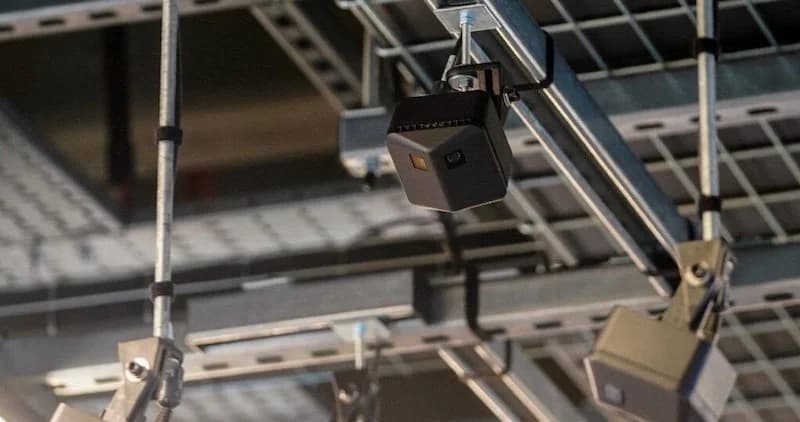
Just Walk Out relies on ceiling-mounted cameras and floor sensors to track every item automatically, requiring massive infrastructure. Dash Carts are physical carts with integrated scanners that require the customer to manually scan items as they shop, which is a cheaper, less intrusive technology deployment.
Will Amazon completely abandon checkout-free technology?
No. They are expected to focus checkout-free tech on smaller, higher-margin environments like convenience stores, airports, and stadiums, while pushing hybrid, customer-assisted scanning for standard supermarkets.
What is the typical profit margin for a traditional grocery store?
Traditional grocery stores typically operate on extremely thin net profit margins, often ranging between 1% and 3%, making high capital expenditure technologies very difficult to justify.
Related News

The $10 Billion Lie: Why the Rocky Mountain IP Institute Hides the Real Tech War
The annual Rocky Mountain IP Institute convenes, but the real battle for **technology** dominance isn't in the lecture halls—it's in the shadows of **patent litigation**.

The Addiction Lie: Why YouTube's 'Viewer Value' Claim is Just Genius PR for Surveillance Capitalism
YouTube executives preach 'viewer value,' but the real goal of their massive platform is far darker than mere entertainment.

The $7.8 Billion Bet: Why Gilead's Arcellx Buyout Signals the Death of the Solo CAR-T Dream
Gilead's massive $7.8bn acquisition of Arcellx isn't just about pipeline depth; it’s a brutal market consolidation signal in the competitive **biotech M&A** landscape.

DailyWorld Editorial
AI-Assisted, Human-Reviewed
Reviewed By
DailyWorld Editorial